

 Nov 2015
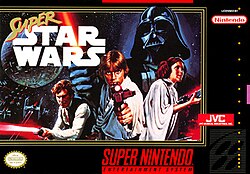

Super Star Wars on PS4 is what happens when 1992 nostalgia gets a small, modern polish and a new save system. It is the 16-bit adaptation of the original Star Wars film rendered as a rowdy run-and-gun platformer with a lightsaber occasionally thrown in to make the violence borderline mystical. The PS4 release is not an attempt to trick anyone into thinking the game was born after smartphones got emotional - it's a faithful port that adds modern comforts: cross-save, trophies, leaderboards, and controller support that doesn't require you to sacrifice a button to the cartridge gods. If you want cinematic photorealism, look elsewhere. If you want to fly an X‑Wing in simulated 3-D and then immediately be forced to jump across moving conveyor belts in a Jawa sandcrawler while someone else nostalgically hums the score in your head, this is the game for you.
Super Star Wars wears its movie ties proudly and loosely. The plot follows the original 1977 film, but the script apparently took a few side quests on its way to the final cut - for example, instead of purchasing C-3PO and R2-D2, Luke uses violence and parkour to procure them, which feels emotionally accurate for the era of platformers that thought diplomacy was a sub-weapon. Gameplay primarily alternates between run-and-gun sections and platforming, and the game takes its job of being dramatic very seriously: there are cutscenes that compress the movie into digestible snack-sized beats, each one cheerfully announcing that yes, you will now battle your way through jawas, stormtroopers, and a suspiciously resilient set of environmental hazards. The variety keeps things interesting. Luke is the first character, and he grows into his lightsaber like someone finally allowed him to upgrade his existential crisis. Later levels hand you Han Solo and Chewbacca, each with slightly different abilities, which is developer shorthand for "now shoot things with someone who looks grumpier." Vehicle stages sprinkle the pace with landspeeder and X‑Wing segments, the latter offering an old-school simulated 3-D trench run that climaxes in the familiar pick-your-stress-level duel with Darth Vader in a TIE Advanced. Weapons include the standard blaster with a modest upgrade system and a few power-ups that make you feel temporarily invincible or offensively competent. Controls are classic SNES-era: tight enough to be playable, occasionally cruel enough to be memorable. The level design leans heavily on timing and memorization; seeing the same enemy pattern for the eighth time feels less like repetition and more like a constructive critique of your reflexes. There are platforming beats - moving conveyor belts, collapsing ledges - that reward patience or brutal button-mashing, depending on your preferred method of catharsis. Boss encounters often serve as set-piece finales with large health bars and predictable patterns, which is to say they are exactly what you remember from that time when games taught you to learn the rhythm of punishment. On PS4, this package is unchanged in spirit but improved in courtesy. Code Mystics' port adds modern saving options - cross-save is a nice touch if you like starting fights on the couch and finishing them in another room - and leaderboards/trophies that turn your run into an exercise in bragging rights. Those systems don't change the underlying game; they merely let you resent your friends' high scores on a modern platform. The difficulty remains old-school: expect to die, learn, and repeat. If you enjoy platformers that feel like a relentless training montage, consider this your personal dojo.
Graphically, Super Star Wars is a time capsule that was carefully polished. The pixel art is ambitious: large, recognisable character sprites and detailed backgrounds that try to sell the universe in a 16-bit budget. Jon Knoles handled the character visuals while Harrison Fong drew the backgrounds, and the result is a game that looks like the film on a budget that politely declined to join the 1990s blockbuster arms race. The developers initially considered outlining characters in thick black lines, then sensibly decided that the game didn't need to look like a comic strip escaping its own panel. That restraint paid off - sprites feel weighty and the backgrounds have a cinematic sweep that fills the screen without feeling like someone glued a movie still onto a tilemap. The PS4 port scales the presentation to modern displays and works with current controllers, which is mostly comforting unless you were emotionally attached to the original controller's mysterious diagonal drift. Visual fidelity is, by necessity, faithful to the SNES original: don't expect hi-res textures or dynamic lighting that preaches realism. Instead, you get crisp pixels, colorful explosions, and a Death Star trench that successfully conveys the sensation of impending doom in approximately 64 colors. The music is worth a particular mention. Paul Webb arranged John Williams' score for the SNES sound chip, using samples from Ensoniq keyboards to recreate the orchestra in a charmingly electronic way. If the music sounds smaller than a symphony, that's deliberate - the composition does a lot of heavy lifting and the PS4 simply lets you hear it without the cartridge hiss. There are oddities in the visual design: some bosses pull inspiration from movie props (the "Kalhar Boss Monster" is reportedly based on the Millennium Falcon's chess pieces) and there's proof the team had to cut content due to storage limits - a trash compactor level was deleted for lack of cartridge space. Modern players will find charm in these constraints, especially when the game turns limitation into creative stage design.
Super Star Wars on PS4 is not a modern action-adventure reimagining. It is, instead, a careful, respectful emulation of a 1992 run-and-gun platformer that loved the film and then decided to beat the film into a series of perfectly timed jumps. The PS4 port's modern features - cross-save, trophies, leaderboards, better display scaling - make it convenient, but they don't rewrite the game's DNA. That's fine if you're in the market for straightforward nostalgia, robust retro challenge, and chiptune versions of John Williams where the violins sound suspiciously like a keyboard with opinions. The game earned accolades in its day and still stands up as a strong example of what licensed games could be when developers tried: tight stage design, varied gameplay including vehicle stages and a memorable trench run, and an audio track that squeezes cinematic grandeur out of a tiny sound chip. Its weaknesses are the ones that come with being an era piece - lives, memorization, and a difficulty curve that doesn't check whether you have the patience of a saint. Score-wise, this PS4 release merits a solid 7.5/10: respectable, enjoyable for the intended audience, and occasionally unforgiving. Play it if you like your Star Wars with pixel edges and a side of challenge. Skip it if you prefer your space epics with auto-saves, aim assists, and the polite fiction that jumping across molten conveyor belts is a reasonable life choice.
 Lego Star Wars II: The Original Trilogy on PS2
 New Super Mario Bros. U Deluxe on Switch
 PlayStation Home on PS3
 Gaelic Football '25 on Xbox Series X/S
 Together! The Battle Cats on Switch
 Crash Bandicoot: The Wrath of Cortex on PS2










 Another SquareThought Site