

 Mar 2018
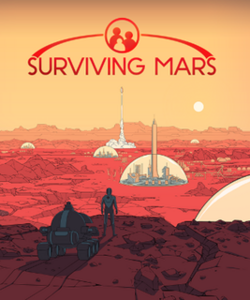

Surviving Mars is a city-builder with a lab coat: it models enough real-world Martian data to make the docents at space museums nod, but it dresses the science in approachable game mechanics. Released across PC and consoles on March 15, 2018, the title positions the player as an Overseer charged with erecting domes, piping oxygen, and keeping humanity from melting into a very red puddle. The game's core technical appeal is its disciplined calculus of abstraction - it takes a handful of hard-science touchstones (local resources, atmospheric constraints, and the MOXIE oxygen maker) and turns them into predictable simulation components, then layers randomness via disasters and the so-called mysteries. For the PS4 audience this means you get a console-friendly, slower-paced colony sim that emphasizes systems interaction and failure states over flashy action.
Under the hood Surviving Mars is a resource network and a people simulator stitched onto a procedural planet map. The resource model is deliberately sparse and deterministic: metals, rare metals, concrete, water and polymers are extractable from the landscape or subsurface, while everything else - food, fuel, machine parts, electronics, power, oxygen - is either manufactured or imported. That split matters for gameplay balance because it forces the player to bootstrap production chains rather than rely on a single universal currency. Money exists, but its role is transactional (exports, sponsor transactions) rather than the omnipotent abstraction seen in many city-builders. This makes logistics and supply chains the real economy: if your oxygen producer clunks out, the failure cascades rapidly into morale and health metrics. The technology tree is another explicit technical scaffold. Split into physics, engineering, social, biotechnology and robotics, the tree functions as both a gating mechanism and a tuning knob. Unlocking robotics, for example, changes the colony's automation budget by enabling drones and prefabricated buildings to take on tasks, while biotech investments shift how you generate food and manage colonist health. The tech tree's categorical separation is a clean design choice for console interfaces: it reduces menu-climbing and provides clear strategic arcs without overwhelming button presses. Colonists themselves are not generic worker blobs. Each has traits, flaws and a specialization, plus dynamic stats for morale, comfort, sanity and health. These are small discrete variables with high consequence: a mismatch between worker type and assigned building is a deterministic efficiency hit; a string of cold waves or dust storms degrades health and increases Earthsickness. The simulation of individual agents elevates Surviving Mars from a pure macro-builder to a micromanagement exercise when things go south. It also gives the mysteries - narrative event-chains like AI revolts or alien contact - room to complicate automated systems and force design reevaluation. Mechanically, the dome-centric construction model is a tight, technically savvy constraint. Instead of sprawling, organic city grids, players must fit modules, buildings, and services inside pressurized habitats, which creates non-trivial spatial optimization problems. Power, water, oxygen loops and maintenance access become layout puzzles. Drones and rovers populated from rockets perform the routine tasks, and because the game models supply lines and manufacturing rather than abstracting them away, placement and redundancy matter. Natural disasters (dust storms, meteor storms, cold waves, dust devils) serve as stochastic interrupts to those systems, exposing single-point failures and rewarding redundancy and layered contingencies. From a systems-design perspective the game's emphasis on loss states is notable. Bad design or bad luck can end the run - this is intended. It shifts player incentives toward conservative engineering: overprovision power, build overlapping oxygen sources, and keep spare parts on hand. On PS4 the control scheme and UI had to map this density of information into a gamepad-friendly layout; the original developers and later Abstraction Games also made mod support a priority on PC, which indicates the underlying architecture is modular and data-driven, suitable for iterative tuning and user content.
Visually Surviving Mars wears its influences proudly: colors and forms lean toward The Jetsons/Futurama-retro-futurism, which is a deliberate contrast to the realistic Martian terrain. That aesthetic choice is a functional UI decision as much as an artistic one. Bright domes and buildings read clearly against bleak red regolith, improving visual parsing when you're juggling multiple overlays and alerts. On the technical side the game uses stylized assets with straightforward LOD and texture budgets, which aids cross-platform performance. The marscape itself is modeled on real Martian data for topology and biome variance, but the rendering prioritizes clarity over photorealism: player-critical objects have distinct silhouettes, and environmental effects (dust storms and meteor impacts) are visually communicative of their gameplay effect rather than just eye candy. Audio and radio stations are worth a nod: radios dynamically shift the mood and provide a low-overhead method of adding narrative flavor without heavy cutscene scripting. Composers George Strezov and Jonatan Palmgren contribute to a soundtrack that supports long session play - ambient, occasionally jaunty, and intentionally background-friendly so it doesn't fight the player for attention. The console port relies on these lightweight audiovisual choices to keep frame-time spikes manageable during large-colony simulations.
Surviving Mars is a thoughtful exercise in translating hard science into manageable gameplay systems. Its technical bones - a split resource economy, a categorical tech tree, per-colonist stats, procedural threats and a dome-based spatial constraint model - work together to create a game where planning and redundancy are as valuable as ambition. The result on PS4 is a competent, measured colony sim that rewards patient system thinkers and punishes hubris. It isn't flawless: the abstraction choices (money as a secondary metric, limited surface resources) will disappoint players seeking a deeper economic sandbox, and the mysteries can sometimes feel like contrived difficulty spikes. DLC and updates (Space Race, Green Planet, Below and Beyond, Martian Express) expand the systems in meaningful ways - terraform mechanics, underground bases, trains - which vindicates the underlying modular architecture and the decision to keep mod support and post-launch content alive. If you want a city-builder that behaves like a persistent engineering problem rather than a decorative urban planner, Surviving Mars on PS4 is a technically sound experience that will make you feel smart - until the meteor shower that ruins your evening. Score: 7.5/10.
 Surviving the Aftermath on Switch
 7 Days to Die on Xbox Series X/S
 Green Hell on Xbox Series X/S
 City Shrouded in Shadow on PS4
 SimCity DS on DS
 Cities: Skylines Remastered on Xbox Series X/S










 Another SquareThought Site