

 Nov 2016
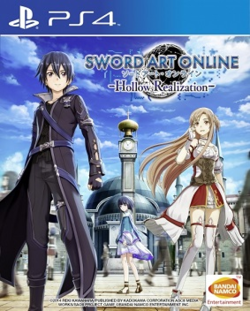

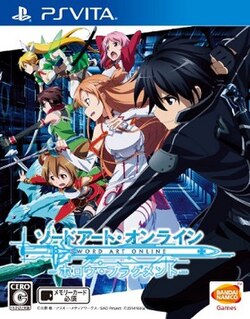
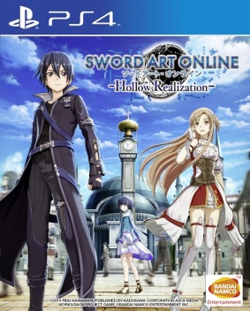
Sword Art Online: Hollow Realization arrives like a polite sequel at your front door: nostalgic, slightly needy, and eager to be noticed. It is the fourth game in the SAO video game lineage and a direct heir to Lost Song, carrying the franchise's habit of handing you familiar faces and slightly new toys. Developed by Aquria and published by Bandai Namco, Hollow Realization drops Kirito and company into Ainground, a one-floor reimagining of Aincrad called 'Sword Art: Origin.' The game promises the comforting fundamentals of JRPGs - loot, levels, dialogue that pauses for five emotional beats - while introducing a few mechanical tweaks and a young AI roommate named Premiere who could be shaped into a hero or a menace depending on how loudly Twitter yells.
Hollow Realization tries to be both a return to form and a small rebellion against the franchise's own convenience. The developer's explicit aim was to give Kirito an honest start at level one, which is a shock to anyone who has become used to franchise protagonists starting as demigods with a souvenir sword and a pedigree. Starting modestly is a sensible move: progress feels earned, and watching numbers creep up is still somehow satisfying, even when you remember this is technically virtual grief therapy. Combat is a hybrid affair. If you liked Hollow Fragment's rhythms, you'll recognize the bones. If you hoped Lost Song's action momentum would take over, you'll appreciate the infusion of more dynamic elements. Parties now consist of four characters - one more than previous iterations - and the engine is tuned for chain attacks and team choreography. The 'Switch' system lets you hop between party members to build combos and string charged and aerial attacks into something that looks good on highlights. The result is a combat loop that mostly rewards timing and teamwork, and every so often throws a 'Named Monster' at you to remind you that the game still has teeth. Hollow Realization also brings an almost absurd level of recruitment ambition: over 300 NPCs appear, and yes, you can recruit them. They are not background wallpaper; handing them equipment builds bonds, which in turn improves their performance. This is a delightful little loop if your brain finds joy in spreadsheets of feelings and stat boosts. Character creation lets you tweak gender, height, figure, and fashion choices to taste, which is important because at some point you will judge an ally as much on their helmet as on their damage per second. The game's party AI and tactics can be surprisingly helpful. You can direct teammates and receive guidance from them, making party synergy feel deliberate rather than accidental. There's even a healing mechanic that allows fallen teammates to rejoin the fight while others still scramble for survival, which is merciful and dramatically convenient. The world design leans practical: Ainground is one large floor rather than a series of numbered floors, which keeps travel less bureaucratic and more inviting for exploration. Enemies are new to the series, and the game tries to keep encounters lively with named bosses that can appear unannounced. For those who like to collect everything, the game's length caters to both casual and obsessive play: the main story clocks in at roughly 30 to 40 hours, but completionists can expect 70 to 100 hours if they want to level to the max and finish every quest. Multiplayer is present but not invasive; you can dip into online play if you enjoy sharing the occasional boss or you just want to show off that your party's fashion sense is inexplicably superior. DLC extends the package - free content like Fighters of the Blue Sky adds characters and PvP, while paid expansions such as Shrine Maiden of the Abyss introduce extra chapters that feel like polite sequels to the main narrative. The post-launch schedule is tidy, with three additional DLC chapters released across 2017 to close some narrative strands. Narrative-wise the game is predictably fan-friendly. Premiere, a 14-year-old AI, accompanies Kirito and is central to the plot's emotional anchor. Bandai Namco ran a genuinely modern promotional experiment where Twitter input could shift Premiere's personality over time, deciding whether she would be a 'good girl' or a 'bad girl.' If you enjoy the idea of crowd-sourced character development, this is the sort of meta-ARPG theatre that will make you smirk and then check your mentions anxiously. Returning franchise favorites - Asuna, Leafa, Sinon, Lisbeth, Silica - are on hand, providing comfort, competence, and a steady supply of helpful exposition whenever the plot needs to remember what it's doing.
On PS4, Hollow Realization looks like an anime that learned basic physics. Environments are colorful and often pleasant, rendering Ainground as a scenic playground for monster encounters and repetitive errands. Character models are faithful to the series' designs and do a competent job of emoting during dialogue and action sequences. Combat animations hit the necessary beats for a game that wants its hits to feel satisfying - sword slashes, charged arcs, and aerial finishers have some weight to them, even if the choreography occasionally loops the same flourish. Performance is generally fine on PS4, with occasional framerate hiccups during the more chaotic fights featuring multiple particle effects and dramatic camera jumps. Cutscenes use Japanese voicework by default and provide subtitles in several languages, which helps if you enjoy lip-sync that politely refuses to align perfectly with dialogue. The audio package is competent: an opening theme by Luna Haruna and an ending by Haruka Tomatsu are pleasant if not the sort of earworms you hum awkwardly in public. The marketing team even made an advertising campaign called 'Sword Art On-Nyaine' that dubiously improves the world by putting cats in it, which suggests the game understands its own ability to charm by association.
Hollow Realization is a game that knows what it is: a mid-tier JRPG for fans who like their character interactions warm, their combat social, and their progress incremental. It does not rewrite genre rules. It polishes familiar mechanisms and adds a handful of social and combat flourishes that mostly land. Its ambition to start players - and Kirito - from level one pays off in pacing, and the recruitment of hundreds of NPCs gives the game surprising breadth for someone who enjoys building teams based on aesthetics and stat curves. Critically, it sits in the mixed-but-pleasant range. Metacritic's PS4 average of 69/100 mirrors what you'll feel: fun in stretches, occasionally plodding, and occasionally awkward when the narrative needs to catch up with itself. IGN and GameSpot landed around average, while Famitsu's scoring was more generous. If you came for fan service and franchise continuity, Hollow Realization will make you feel attended to. If you hoped for an evolution that challenges the series' conventions more radically, you'll be left wanting a sharper edge. Ultimately, pick this up if you like JRPG comfort food with a side of social mechanics and don't mind that some of the meal is reheated. It's competent, often charming, and occasionally brilliant in small moments. It will not change your life, but it might happily eat a few dozen evenings without complaint. That is, in its own quiet way, an achievement worth recognizing.
 Shinobi: Art of Vengeance on Switch
 Sword Art Online: Fatal Bullet on Switch
 Sword Art Online Re: Hollow Fragment Director's Cut on PS4
 Combat Elite: WWII Paratroopers on PS2
 Predecessor on PS4
 Gnosia on Xbox Series X/S
 Arcania: The Complete Tale on PS3
 The Caligula Effect: Overdose on Switch
 The Caligula Effect 2 on PS4
 The Caligula Effect 2 on Switch
 The Caligula Effect: Overdose on PS4










 Another SquareThought Site