

 Jul 2018


Tempest 4000 is the modern neon fever-dream remake of an arcade relic, slapped together by Llamasoft and helmed by veteran weirdo-coder Jeff Minter. On PS4 it arrives as a single-player, high-score-hungry twitch shooter: you pilot the Claw across one hundred geometric prisms and try not to explode. The brief, gleaming instruction manual for survival is simple - survive, clear the lane, and chase leaderboard glory - but the game's entire personality is built on how brutally it tests your reflexes, patience, and ability to read chaos. This isn't a casually relaxing space stroll. Tempest 4000 is an endurance sprint of hand-eye coordination and mental discipline. If you like to die quickly, learn every pattern, and then die faster while trying to shave off a few points from your own best run - congratulations, this is basically your dream job. If you don't, well, expect to be humbled by flashing lights and a techno soundtrack that refuses to let you think for long.
At its heart Tempest 4000 is gloriously, aggressively simple: you control the Claw, a ship that slides around the rim of a geometric prism and shoots down lanes to dispatch incoming enemies and obstructions. Each level is a compact laboratory of pressure and meter-two brainwork - enemies spawn in waves, each with unique behaviours, and the primal goal is survival plus rapid elimination to rack up high scores for the leaderboards. The game gives you one hundred levels and three modes - standard, pure, and endurance - and those modes are basically a way of saying 'pick your flavor of humiliation.' If you want to talk about challenge, Tempest 4000 earns it on three fronts: raw reflex demand, pattern recognition, and resource discipline. Raw reflexes matter because enemies arrive with little patience and zero manners. Sometimes you have a small window to aim and fire before a lane collapses or an enemy reaches the rim; miss it and you either take damage or spend seconds you don't have on recovery. The Claw's movement is quick, but not forgiving - being marginally late to a lane often feels worse than being totally unprepared. This creates a gameplay rhythm of scan, decide, snap - and the game's speed tuning amplifies that rhythm until your thumbs feel like they belong to a different species. Pattern recognition is the part of Tempest 4000 that turns random slaughter into a solvable puzzle. Enemies have predictable spawn points and movement arcs, so high-level play is less about raw twitch and more about anticipating sequences and pre-aiming lanes. Levels frequently repeat enemy motifs, then combine them in new ways to ratchet up mental load. Learning the safe spots and common spawn combinations is essential. The satisfaction of recognizing a sequence and clearing it cleanly is one of the game's core pleasures - and also how you climb leaderboards. If you are the kind of person who memorizes boss patterns in other games, you'll feel at home. If you prefer improvisation, you're still allowed, but the scoreboard won't be impressed. Resource discipline is subtler but no less crucial. Tempest 4000 rewards aggressive clearing - eliminate threats quickly to keep combos and multipliers alive - but aggression comes with risk. The tension between clearing lanes fast and staying safely positioned forces you to manage risk constantly. Pure mode ramps this up by narrowing margin for error (the mode names are blunt instruments: standard for balance, pure for skill-purity, endurance for stamina tests). Endurance mode, in particular, becomes a mental marathon: the music doesn't stop, patterns evolve, and your concentration definitely will waver at some point. That's where stamina, focus, and the ability to reset mentally after a bad wave matter as much as your thumb speed. On PS4 specifically the controls are nice and responsive - no input lag to blame when you get turned into digital confetti. The skill curve is steep but not unfair; early levels teach you to aim and dodge, middle tiers put you in situations that punish sloppy reactions, and the latter half demands both memorization and split-second improvisation. Leaderboard chasing introduces another skill: score optimization. You can clear levels safely and survive forever, but the best scores come from taking calculated risks - chaining clears, maintaining fire rate, and juggling between lanes to keep multiplier timers alive. That kind of play turns Tempest 4000 into a study of risk versus reward where the reward is bragging rights and the risk is a lot of colorful explosions in your face. The game was initially developed with VR ambitions that were removed from the final release, which arguably shaped some design choices: the visual presentation still leans into sensory intensity, and the levels can feel physically demanding on your attention the same way a VR space might. This can be intoxicating and exhausting in equal measure. If you like your arcade games to be short, sharp, and repeatedly humbling, Tempest 4000 will hand you a very bright mirror of your weaknesses and occasionally reward you with the sweet dopamine rush of a clean run.
Tempest 4000 dresses its challenges in a rave suit. The visual package is loud, neon-filled, and unapologetically 1990s-techno inspired. On PS4 the game supports high resolutions and the aesthetic is part of the design: brightness, saturated colors, and flashing effects all help sell the sense of velocity and danger. Aesthetics here are not mere eye-candy - they are part of the feedback loop. When lanes light up or enemies explode into shards of color, your visual cues tell you what you did right or wrong. That said, the same pyrotechnics that make the game feel alive can sometimes be the enemy of readability. In moments of maximum chaos the layers of effects and color can obscure precise enemy positions, which increases the challenge in a way that feels deliberate. Whether that's clever design or cruel spectacle is a matter of taste. For players who appreciate sensory overload and can parse it on the fly, the look amplifies the thrill. For players who prefer clinical clarity for every threat, Tempest 4000 occasionally asks you to trust your instincts rather than pixel-perfect visibility. The techno soundtrack deserves a note here - it pushes tempo and intensity and pairs perfectly with the visual assault. It's not subtle, and that's the point. The music helps maintain momentum and pressure, making repeated attempts feel urgent instead of routine. Combine that with the sharp PS4 performance and you get a sensory package designed to keep you on edge, which aligns perfectly with the game's demands on reflex and focus.
Tempest 4000 on PS4 is a polished, neon-soaked test of arcade skills. It isn't trying to be a contemplative masterpiece; it's a scoreboard machine, a reflex arena, and a pattern-recognition gym all in one. The game rewards players who develop quick reaction times, strong pattern memory, stamina, and the willingness to flirt with risk for the sake of higher scores. Llamasoft's pedigree is visible in the game's relentless sensorial identity and uncompromising challenge, and Atari's polish ensures it runs and looks great on PS4. If you live for leaderboard ladders, here's a crisp, colorful climb that will punish sloppy play and celebrate mastery. If you prefer a gentler, narrative-driven shooter, Tempest 4000 will likely feel like a frenetic disco you weren't invited to. Either way, it's a competent, occasionally maddening revival of the Tempest formula - and for frenetic arcade fans looking to get better through repeated failure (and brilliant, occasional success), this is well worth the time. Score: 7.5/10.
 The Chessmaster 3-D on PlayStation
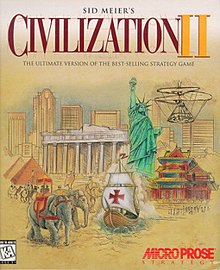
 Civilization II on PlayStation
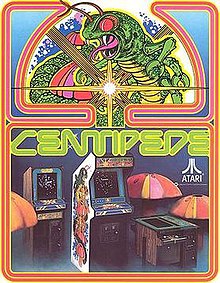
 Centipede: Recharged on Switch
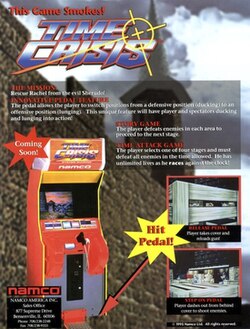
 Time Crisis on PlayStation
 Miss Kobayashi's Dragon Maid: Sakuretsu! Chorogon Breath on Switch
 Yurukill: The Calumniation Games on PS5
 Akka Arrh on Switch










 Another SquareThought Site