

 Nov 2019
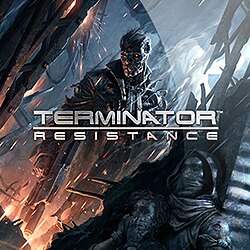

Terminator: Resistance is Teyon's 2019 take on the future war of 2028-2029 Los Angeles, built in Unreal Engine 4 and leaning hard on the original Terminator films' apocalypse aesthetic. You play Jacob Rivers, a Resistance soldier running recon, scavenging, and occasionally facing off with Skynet's machines and infiltrators. On PS4 the game arrived as a single-player, story-driven FPS that attempts to blend narrative beats and choice-led outcomes with shooter mechanics. The reception was decidedly mixed: critics were lukewarm and gave the PS4 version especially low marks on aggregate sites, while many players on PC warmed to it. From a technical vantage point, the game wears its ambitions on its sleeve - open-ish areas, scripted encounters, and a variety of systems (weapon upgrades, NPC factions, branching endings) - but the PS4 port shows where budget scope and platform constraints meet Unreal 4's pipelines in the real world.
At its core Terminator: Resistance is a classical FPS loop: explore a war-torn LA, pick up missions, clear patrols, and move the plot forward through key story sequences. The game implements multiple possible endings, which is commendable for a licensed title and adds replay value beyond the main arc. Combat is mostly conventional: hitscan and projectile weapons, cover-lite engagements, and a mixture of skirmish arenas and scripted set-pieces. Weapon handling trends toward arcade-ish rather than simulation; recoil and bloom are present but modest, and damage numbers favor simple, readable combat outcomes over simulation accuracy. That design makes sense given the single-player focus, but it also means emergent gunplay-where tiny physics quirks or advanced AI create memorable moments-is limited. Enemy AI is functional but conservative. Skynet units are a mix of walkers, aerial units, and human-shaped Infiltrators; their behaviors are generally predictable, relying on sight-lines and patrol routes rather than advanced flanking or adaptive tactics. This predictability turns many encounters into pattern-recognition exercises where you learn the cue for an overhead drone or a centurion walker and respond the same way each time. The inclusion of Infiltrator Mode as a free update is an interesting technical twist: you play a T-800 clearing areas and harvesting intel, which flips the usual player-versus-terminator dynamic and demonstrates the team's willingness to add modular mission types post-launch. Systems design includes scavenging, NPC interaction, and side-questing with faction implications. Choices influence endings, and the branching is implemented via state flags and mission outcomes rather than opaque morality meters - a pragmatic approach that keeps saves and replay testing tractable. DLC 'Annihilation Line' plugs into the campaign as interstitial content with its own missions and scripted boss-like encounters; critics noted it remains roughly on par with the main game, with some incremental improvements but little in the way of fundamental overhaul. On PS4 the game's technical orchestration shows limits: the hardware ceiling pushes artists and engineers toward compromises (texture LODs, draw distance, NPC counts). The console release experienced more critical scrutiny than the PC release, which often happens when framerate, pop-in, and texture fidelity differ across builds. Teyon's team clearly prioritized delivering a coherent single-player campaign and narrative fidelity to the Terminator mythos, but trade-offs in enemy variety and AI sophistication are visible when you play for long stretches.
Terminator: Resistance runs on Unreal Engine 4 and wears the pedigree and constraints of that engine plainly. The art direction nails the bleak, rusted-survivor aesthetic: wrecked freeways, scorched industrial zones, and the neon-grit of a collapsed Los Angeles read well in still frames. The lighting model uses baked and dynamic mixes; interiors benefit from tighter shadowing and local light sources while exterior spaces can feel flatter when distance fog and LOD reduce scene complexity. On PS4 this is amplified: texture resolution steps down noticeably at range, and high-frequency detail (grime, damage decals) tends to appear via tiling materials rather than high-res unique meshes. Character models and animations are competent but not cutting-edge. Jacob and his companions have readable rigs and lip-sync that gets the job done for a narrative-driven title, but facial fidelity and micro-expression nuance lag behind higher-budget contemporaries. Enemy models, particularly the mechanical units, are attractively designed and deliver satisfying silhouettes - the game's composition often frames these machines for maximum cinematic tension. Performance and technical polish are where opinions diverge. The PS4 build carries visual compromises to maintain stability: occasional pop-in on assets, framerate dips during larger scripted battles, and simplified particle effects compared to the PC build. The enhanced PS5 re-release later addressed several of these constraints with improved frame pacing and texture streaming, but on native PS4 hardware players should expect visual and performance trade-offs that reflect the game's budget and the team's scope. Audio-wise the score and sound design are solid; composers Chris Detyna, Leszek Górniak, and Jakub Gawlina deliver a suitably industrial, tension-driven soundtrack and the weapon and machine SFX are well layered, even if some ambient mixing can mask quiet dialog in busier scenes.
Terminator: Resistance is an earnest, technically aware attempt to translate the future-war Terminator setting into a single-player FPS. If your checklist includes branching outcomes, an emphasis on story beats, and mechanically straightforward gunplay, the game will deliver. From a systems and engine perspective the developers made practical choices: Unreal Engine 4 for rapid iteration, state-flag branching for manageable narrative permutations, and modular DLC updates that expanded the gameplay envelope post-launch. The PS4 release shows the consequences of those choices - visual LOD compromises, a conservative AI footprint, and performance trade-offs that contributed to notably mixed critical reception. Fans of the license and players who prioritize narrative over mechanical novelty will find value, especially when playing on PC or in the enhanced versions. For those chasing top-tier technical polish in 2019-era console shooters, the game occasionally feels like a creative reach constrained by platform and budget. It's not a bad game; it's an interesting technical case study in how to ship single-player ambition on limited resources. Score: 6/10.
 The Last of Us Part I on PS5
 Necromunda: Hired Gun on Xbox Series X/S
 Warhammer 40,000: Boltgun 2 on Xbox Series X/S
 PixelJunk Shooter 2 on PS3
 Turok: Dinosaur Hunter on Switch
 Primal Carnage: Extinction on PS4
 RoboCop: Rogue City on PS5
 Rambo: The Video Game on PS3










 Another SquareThought Site