

 Feb 2014
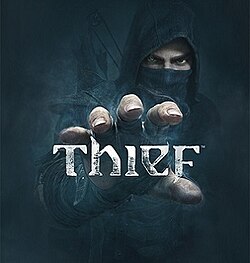

Thief's 2014 reboot sneaks onto the PS4 with the pedigree of a classic franchise and the engineering choices of a studio trying to balance old-school stealth with modern production constraints. Built on Unreal Engine 3 and developed by Eidos-Montréal, this Garrett reboot leans hard on shadow-play and systemic tools (a blackjack, collapsible compound bow, and a grapple Claw) to sell stealth as a mechanical puzzle rather than a corridor shooter with a sneaking sprite pasted on. Critics were split at launch: the stealth foundations were praised, while level topology, story beats and a handful of technical missteps pulled the overall reception towards 'mixed'. This review digs into the nitty-gritty: AI assumptions, level geometry, feature trade-offs, and where the engine and design choices help - or hobble - the fantasy of being an invisible master thief.
From a systems perspective Thief is a study in interplay between player affordances and level design. The player toolbox is compact and deliberately oriented around stealth primitives: concealment in shadow, distraction (oil barrels, noise-making arrows), pickpocketing, and surgical takedowns. The Focus mode is the game's most explicit meta-tool: technically it's a short-duration state change that enhances Garrett's perception (highlighting climbable pipes, extinguishable light sources) and applies a time-slowing modifier to actions like pickpocketing. That's a clever design - it reduces tedium for precise interactions and complements hand-crafted stealth windows - but it also doubles as a band-aid over some inconsistent detection systems. AI architecture is where Thief both shines and stumbles. Designers made the guards 'aware of level design' in the sense that NPCs are programmed with knowledge of likely hiding spots rather than purely reactive blind-searching. This feels like a hybrid of deterministic guard routines with some precomputed awareness baked into the navigation and suspicion heuristics. When it works, guards will flush you out of obvious cover in satisfying ways; when it fails, you get awkward moments where enemies either teleport from lazy pathing or fail to use obvious ledges and chokepoints. Reviews called the AI "sub-par" in places - that manifests as oscillation between competent pre-planned searches and bafflingly narrow situational awareness once alerted. Level layouts attempt to present branching paths and multiple approaches, but the actual spatial topology often funnels the player into design-contrived chokepoints. On paper each map contains several routes, and the tools - grappling Claw, bow, and environmental interactions - encourage exploration. In practice the maps sometimes behave like layered funnels: branches exist, but they reconverge into scripted encounters or narrow corridors that neutralize the benefit of alternative routing. From a level-design viewpoint this is a tension between scripted narrative beats and emergent stealth play; the game tries to serve both and occasionally sacrifices the latter for guaranteed cinematic incidents. Stealth detection relies heavily on light/visibility checks and on-player actions that change the state of the world (extinguishing candles, moving bodies). Visibility is implemented as a combination of shading and boolean state markers for 'shadow' vs 'lit' zones; this is mechanically clean and communicates clearly to players who understand occlusion. Sound propagation is less explicit in the game's documentation but is present via distraction mechanics (bow shots, clanging) that trigger guard investigation behaviors. The removal of an experience point system late in development is worth noting: it simplified progression to cosmetic/equipment upgrades and kept Garrett as a presupposed "master" rather than a baby thief learning the ropes. That's a design signal: Eidos wanted players to be judged by skillful use of systems rather than a grind to unlock competence. Animation and performance capture were treated as a unified asset pipeline: the decision to record voice and movement simultaneously (performance capture) led to swapping the original Garrett voice actor in favor of an actor who could deliver the physical performance. The trade-off here is visible - some critics pointed out lip-sync and voice work that occasionally feel flat against in-engine facial animation. On a technical level this suggests a mismatch between capture fidelity, retargeting rigs and facial blendshape polish. Finally, platform- and engine-level choices matter. Thief shipped on UE3, which at the time meant Eidos was working within an engine that required heavier bespoke lighting and shadow work to hit modern expectations. The game also exposed PC features like Mantle and AMD TrueAudio support, hinting at a cross-platform architecture where certain low-level audio/graphics optimizations were considered, but PS4 players mainly felt the results as a balance between detailed shadowing (good) and occasional frame pacing hiccups (not fatal, but noticeable).
Thief's visual design sells 'The City' with a coherent dark-fantasy aesthetic: Victorian, Gothic and steampunk influences layer together into dense urban spaces. Artistically it's consistent - cobbled alleys, smithies, and ruined cathedrals are lit to prioritize gameplay-relevant contrast: shadows are deep, light sources are high-value objects you can interact with, and geometry is often sculpted to create visual lines that communicate climbability and cover. The lighting system is the game's MVP: dynamic candle and oil-lighting mechanics feed directly into stealth systems and generally behave robustly under UE3's constraints. Shadow sampling and occlusion are effective for the most part, supporting the core conceit that "if you're in shadow, you're safe". Where visuals falter are the classic next-gen migration issues. Character animations are serviceable but occasionally feel disjointed when combined with the voice work; facial animation polish lags behind the body motion capture. Texture streaming and draw-call management on PS4 generally keep a stable image, but during some larger set-pieces you can notice pop-in or compressed texture transitions, symptoms of engine-era limits and development time pressure. Overall the graphics are not about pixel perfection - they prioritize functional, readable visuals that support stealth gameplay, which is the right call for a lighting-dependent stealth title.
Thief on PS4 is a technical mixed bag that will please players who fetishize stealth fundamentals and system interplay, and frustrate those who expect fully emergent, open-ended spaces. The game's mechanical core - shadow-based visibility, Focus mode, gadgetized distraction, and the compact toolkit - delivers satisfying stealth moments and strong replay value: run a map cleanly, then try a lethal route, then try timing every pickpocket without Focus. The cons are tangible: level geometry often funnels you back into scripted encounters, NPC pathing and detection can be inconsistent, and some animation/lip-sync choices undercut narrative immersion. If you value moment-to-moment stealth design and can forgive a few technical and layout sins, Thief is worth a playthrough. If you came for a faithful, flawless resurrection of the classic Thief trilogy, this reboot will feel like a competent but compromised cousin: skilled, occasionally brilliant, and a little clumsy when the lights are turned on. It earns its 'mixed' reputation honestly. Technically interesting, narratively safe, and ultimately a decent toolkit for players who enjoy coaxing emergent stealth out of imperfect systems.
 Kamiwaza: Way of the Thief on PS4
 The Swindle on PS4
 Styx: Master of Shadows on PS4
 Never Stop Sneakin' on Switch
 Stealth Inc: A Clone in the Dark on PS4
 Deus Ex: Human Revolution Director's Cut on PS3
 Deus Ex: Human Revolution on PS3
 Rise of the Tomb Raider on PS4
 Marvel's Guardians of the Galaxy on Xbox Series X/S
 Marvel's Guardians of the Galaxy on PS5










 Another SquareThought Site