

 Oct 2014
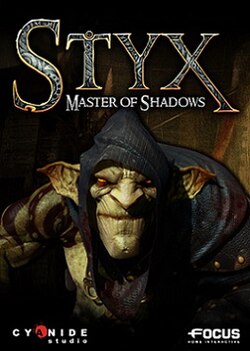

Styx: Master of Shadows is a lean, rat-sized stealth title that parachuted into the mid-2010s stealth renaissance wearing Unreal Engine 3 and a grumpy grin. Cyanide took a relatively obscure goblin antihero and built a game around movement through darkness, a handful of arcane gizmos (invisibility, amber-vision and magical cloning), and level design that rewards patience and planning. On PS4 the package presents itself as a focused, often brilliant stealth toybox with clear technical trade-offs: clever systems and dense level layouts, but a combat model and some engine-era wrinkles that keep it from being a modern classic. This review digs into the technical plumbing-mechanics, AI, systems, engine choices and how they translate to the DualShock 4 experience-without sugarcoating the moments where Styx trips over his own boots.
Core mechanics: Styx is a light-footed stealth toolbox rather than a bruiser. The player is given three interlocking movement/utility systems that define encounters: invisibility, amber-vision, and cloning. Invisibility serves as a short-term evasion tool; amber-vision is a situational scanner that highlights hidden foes and interactive geometry; cloning spawns an autonomous decoy that can scout or disrupt patrols. From a technical perspective those systems combine to create emergent stealth scenarios rather than fixed stealth puzzles. Amber-vision effectively functions as a limited spatial reveal, exposing guard positions and patrol corridors without breaking the stealth loop. Cloning introduces concurrency: you can run two threads of action in parallel (you controlling one Styx while the clone behaves independently), which expands tactical possibilities beyond "hide, wait, strike." That concurrency is the standout mechanical hook-it changes how the AI's state machine must be designed to track multiple stimuli and react realistically. AI and guard systems: The guards are driven by patrol routes with dynamic states that escalate in response to player actions. The game implements a standard alert ladder-idle, suspicious, alerted-with transitions triggered by sightlines, sound events or a clone-induced disturbance. On PS4 the AI demonstrates consistent, readable behavior: patrols are predictable enough to be learned but adaptive enough to punish reckless play. Where the AI shines is in its use of sound and sight cones; the engine surfaces these cues through level design and lighting so players can plan. However, the same system exposes a design tension-Stealth-first design requires a robust sensory model for enemies, and Styx offers this; it does not always translate into satisfying combat. The reception correctly notes that the game's systems disincentivize confrontation. Technically, that's by design: combat is underpowered and deliberately awkward to steer the player to avoid fights. The control-response and animation blending in melee interactions feel stiff and imprecise compared to the stealth systems, which is a deliberate, if blunt, method of discouraging direct engagement. Progression and RPG elements: Instead of a pure sandbox, Styx layers RPG mechanics onto stealth. Experience points unlock six talent trees, which branch into stealth augmentations, lethal options and utility improvements. From a systems perspective this lets Cyanide tune the pacing curve: basic stealth is available immediately; trickier, higher-level options unlock through XP, gating access to more elaborate assassination techniques or clone enhancements. The talent trees are functional and give players meaningful micro-choices without overwhelming them-this keeps the mechanical focus on decision-making during infiltration rather than character theorycrafting. The XP-skill loop encourages repeated approaches to levels, which synergizes with the game's "save often, die a lot" feel. Level design and encounter pacing: Where Styx truly earns technical praise is in level architecture. The Tower of Akenash is constructed as multi-layered arenas with verticality, shadow pockets and interconnected routes. Levels are not flat corridors but contain multiple strata-roofs, gutters, ventilation shafts, and interior catwalks-that create legitimate choices for approach. The engine's handling of occlusion and lighting is central to this design: shadow volumes and light sources matter. The game rewards map knowledge and pre-planning; reading patrol cadence and chaining sightline breaks into a clean route is mechanically satisfying. This is also where the clone mechanic integrates best: clones can thread a different route and create temporal openings for the player. On PS4 the fidelity of these layouts is preserved, and the game's design manages memory and AI pathing so patrols and multi-route interactions remain coherent. Controls and responsiveness: Using a DualShock 4, Styx feels like a game built for a controller-movement, crouch transitions, and ability activation map cleanly to the pad. The disconnect arises in melee and the animation system. Attacks have weighty animations and limited cancel windows, so when the player is forced into combat the inputs feel sluggish. That sluggishness isn't just a tactile complaint; it has gameplay consequences-encounters that rely on hitting a button at a frame-perfect moment to survive detract from the stealth experience. Since the game punishes fighting, combat's technical shortcomings are less catastrophic than they might be, but they remain a conspicuous limitation. Failure states and save model: The game's difficulty curve is tuned around trial-and-error, with checkpoints and saves designed to keep failures frequent but not cruel. The balance favors fast retries, letting players iterate on a route immediately. That design plays well with the game's mechanical systems and encourages a tactical mindset rather than brute force.
Engine and visual architecture: Styx is powered by Unreal Engine 3, an engine that was mature by 2014 but showing its age next to next-gen contemporaries. On PS4, the engine handles the most important technical requirement for a stealth game: robust lighting and shadow fidelity. Styx's visual identity leans on high-contrast environments where shadow pockets are gameplay elements, not just aesthetics. The amber effects-used for amber-vision, cloning and set-pieces-are distinct and readable, which is vital for player feedback. Textures and character models are competent rather than flashy; detail density in distant geometry is appropriately culled to preserve framerate and CPU headroom for AI and pathfinding. Animation and polish: Animation quality is functional and communicates state effectively-walk, crouch, climb and assassination animations are clear. The trade-off appears in combat animation blending and hit reaction; impacts can feel stiff and timing windows narrow. From a technical standpoint this hints at limited animation layers or a conservative blending budget, likely a conscious choice to prioritize stealth movement over melee fluidity. Audio and music: Sound design is utilitarian and tuned for stealth utility. Footsteps, environmental creaks and guard chatter are mixed to provide meaningful cues, which is more valuable in a stealth game than a lush orchestral soundtrack. Composer Henri-Pierre Pellegrin's contributions support atmosphere without overwhelming the aural space needed for gameplay cues. The audio mix keeps the player's attention on actionable sounds-an important technical design choice that pays dividends in gameplay clarity. Performance and optimization: The PS4 build is stable and preserves the game's systems: AI, cloning, and multi-route levels operate reliably. Unreal Engine 3's mature toolset helps here-Cyanide shipped a coherent experience without systemic frame drops or pathfinding collapse. The visual trade-offs (moderate texture resolution, conservative particle budgets) feel intentional to keep CPU and memory available for AI and world simulation.
Styx: Master of Shadows on PS4 is a technically interesting stealth game that chooses its battles and mostly wins them. The pairing of amber-vision, invisibility and cloning produces emergent stealth scenarios, and the level design supports multiple legitimate approaches with verticality and dense shadow choreography. Cyanide's decision to make combat clumsy is an explicit design lever to nudge players toward stealth; as a systems choice it works, but it also leaves a sour note for players expecting a clean hybrid of stealth and melee. Running on Unreal Engine 3 means Styx won't wow anyone with next-gen photorealism, but it delivers the most important visual capabilities reliably: readable lighting, coherent level streaming and stable AI behaviour. If you value mechanical clarity, thoughtful level construction, and the delicious tension of "one wrong move and you start the climb again," Styx will scratch that itch. If you expect polished combat or a modern engine sheen, you'll notice where the game economized. The PS4 version presents a tight, sometimes ruthless stealth simulator with a clever cloning twist and a few rough edges. At a score of 7.0, Styx is recommended for players who love learning systems, exploiting emergent behavior, and savoring clever level design-especially if you don't mind getting your hands metaphorically dirty as you die, respawn, and learn to dance in the shadows.
 Ninja Gaiden: Master Collection on Switch
 Touhou Hyoibana: Antinomy of Common Flowers on Switch
 Never Stop Sneakin' on Switch
 Stealth Inc: A Clone in the Dark on PS4
 Call of Cthulhu: The Official Video Game on PS4
 Call of Cthulhu: The Official Video Game on Switch
 Of Orcs and Men on PS3
 Werewolf: The Apocalypse – Earthblood on Xbox Series X/S










 Another SquareThought Site