

 Mar 2017
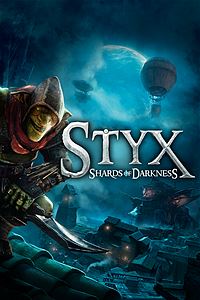

If you like your sneaking served with a side of sarcasm and a goblin who has the social graces of a porcupine, Styx: Shards of Darkness is a strong candidate for your next late-night infiltration binge. Developed by Cyanide and running on Unreal Engine 4, this sequel expands the sneaky toolbox of the first game and leans even harder into deliberate, sometimes mean-spirited stealth design. On PS4 it feels like a compact, slightly scrappy stealth playground: the levels encourage creative planning, the AI is precise enough to punish mistakes, and the options for non-lethal mischief (and lethal outcomes) make every corridor feel like a small, dangerous puzzle to be dissected. This review will focus on what really matters to players who live and die by shadows: the kinds of challenges the game throws at you and the specific skills you'll need to survive them.
Styx is not a run-and-gun game pretending to be sneaky-it's a game that will make you practice patience until patience files a restraining order. The core mechanics stack up into a toolkit that rewards planning and execution: temporary invisibility, the ability to clone yourself, laying traps, ropes and grappling hooks for vertical movement, and plenty of environmental toys that can be exploited for distractions and kills. Each mechanic is simple on its own, but the real difficulty comes from combining them under pressure. The cloning mechanic is the crown jewel of the challenge design. Clones function as both decoys and extra hands; they let you choreograph multi-pronged distractions where one Styx pops a noise over a balcony while the other creeps behind a distracted guard. Managing clones requires timing and spatial awareness - you must anticipate patrol patterns, set lures, and coordinate your main body's moves with the clone's actions. This is where the game teaches you to think like a conductor: instead of reacting to a single guard, you orchestrate three or four moving pieces so that the only noise heard is the sound of opportunity opening. Stealth here is punishingly conditional. Hit the wrong light or step into a poorly chosen line of sight and you'll suddenly have two or three guards converging with the enthusiasm of a crowd at a fire sale. The temporary invisibility is a useful escape, but it's limited enough that it's usually a band-aid rather than a strategy. Learning the windows of invisibility, when to use traps and when to save them, and how to route through high-ground shortcuts with grappling hooks becomes essential. If you try to muscle through encounters with brute force, the game brutally reminds you that Styx is small, squishy, and very easy to embarrass. Verticality is another critical part of the challenges. Ropes and grappling hooks open alternate routes that are often safer and more rewarding than ground-level paths, but they also expose you to new kinds of risks: exposed perches where a single guard's gaze can spoil the whole plan, or high ledges that force clumsy descents when time is short. Using height correctly means learning when to snipe a patrol from above, when to drop silently into a crowd, and when to pivot to another ledge entirely. Resource and risk management are constant decisions. Do you use your invisibility to punch past a tight corridor now, or save it to get you out of a later detection when the alarm level is higher? Do you expend a clone for a one-guard distraction, or hold them for a multi-guard puzzle later on the level? The best runs feel like a careful negotiation with your own impatience, and the game's level design nudges you toward the more creative, slower solutions. Combat is not the focus, but the game's AI makes it clear that when stealth fails, things escalate. Guards communicate and search with purpose, and detection often feels like a manufactured crisis rather than a random event. Boss encounters, like the golem near the end of the campaign, flip the script into a reflex and positioning test: they demand you apply what the levels taught you about movement and timing but under more brutal conditions. While you can engage enemies, the challenge is that combat is rarely forgiving; so surviving a boss fight usually requires learning the arena and using environmental advantages. Multiplayer co-op adds a fun wrinkle: a second player can control a clone, turning the single-player puzzle into a coordination exercise. This elevates the challenge from 'how do I fool the guard' to 'how do we both convince the guard his job is boring'. Co-op rewards communication and synchronous timing, but it also exposes the game's steep difficulty curve-if you and your mate aren't on the same page, alarms will sound like a chorus line of regret. The campaign missions themselves support the core challenges with objectives that force different stealth styles. Missions range from high-tension thefts aboard an airship to sabotage runs inside Korrangar's amber machines. Objectives that require planting evidence, assassinating a target, or sabotaging machinery want you to adapt your approach: social engineering via disguises (dark elf disguises in some sections), ghosting through environments, or mixing stealth with opportunistic kills. Each mission is a lesson in planning: study patrols, spot sightlines, and then accept that even the best plans may crumble-these moments are where the game's challenge bites the hardest, and where the satisfaction of a clean run is sweetest. Overall, Styx: Shards of Darkness rewards a certain player personality: methodical, patient, hungry for pattern-recognition, and willing to rehearse the same scene until the timing is perfect. If you come in expecting cinematic stealth with liberal checkpoints and hand-holding, the game will push back. If you enjoy executing a plan turn after turn and beating the AI at its own routing game, you will find plenty of satisfaction.
On PS4 the game benefits from the jump to Unreal Engine 4 and a larger budget, which shows in varied environments and textured lighting. Thoben's grime and Korrangar's crystalline chambers present contrasting moods that help you read the map at a glance-important when light and shadow are your weapons. The character models and animations are serviceable; Styx himself is expressive in that goblin way, and environmental animation often provides the beats you rely on for timing distractions. There are some rough edges-occasional pop-in and less polished facial animation in NPCs-but these don't impede the core stealth challenge. Visual clarity is what matters most for a stealth title, and for the most part the PS4 build delivers readable, usable environments.
Styx: Shards of Darkness is a deliberately constructed stealth challenge that expects you to think several moves ahead. Its strengths lie in the tools it gives you-clones, traps, invisibility and vertical traversal-and in mission designs that reward patience, timing and careful orchestration. The game's occasional roughness and middling aggregate scores (PS4 Metacritic: 72/100) reflect some uneven moments, but critics who enjoyed it praised its challenging stealth and snarky tone. If your idea of fun is setting up elegant distractions, coordinating clones like a tiny villainous mastermind, and savoring the quiet thrill of a perfect, undetected run, Styx on PS4 is worth your time. If you prefer forgiving systems or run-and-gun heroics, this goblin will test your temper-and probably win.
 Of Orcs and Men on PS3
 Blade of Darkness on Switch
 Never Stop Sneakin' on Switch
 Stealth Inc: A Clone in the Dark on PS4
 Call of Cthulhu: The Official Video Game on PS4
 Call of Cthulhu: The Official Video Game on Switch
 Werewolf: The Apocalypse – Earthblood on Xbox Series X/S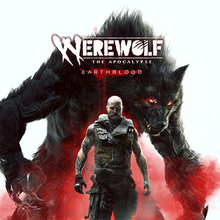










 Another SquareThought Site