

 Feb 2020
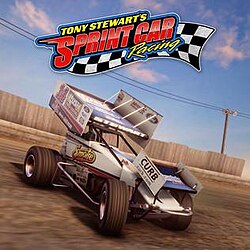

If you told me in 1996 that a sim dedicated to sprint cars would arrive on the mighty PlayStation 4 carrying the name of a modern racing legend, I would have turned the cartridge over, peered suspiciously at the tiny manual and demanded a justification for the expense of ink. Tony Stewart's Sprint Car Racing is that justification, in as blunt and honest a form as the sport it celebrates. Developed and published by Monster Games in collaboration with Tony Stewart himself, this is not a 'cover-your-bases' celebrity tie-in. It is a niche simulator that knows exactly which crowd it wants in the stands and isn't ashamed to leave the rest of the arcade racers to twiddle at the concession stand. Released on February 14, 2020 for consoles, the game brings sprint car racing to life across 24 fantasy tracks, three types of sprint cars and a career that asks players to climb the ladder from All-Star TQ Midgets to the thunder of 410 Winged Sprint Cars. For those who remember the days when a glowing magazine review could single-handedly justify a purchase, this is the sort of focused, specialist title that would have earned a full-page appraisal.
The spine of Tony Stewart's Sprint Car Racing is its career mode, a structured progression that has you beginning in the relatively modest TQ Midgets and working your way up to the apex machines of the All Star Circuit of Champions. This career ladder is straightforward and sensible in its design; there are no cartoonish distractions, no superfluous microtransactions, just the cold arithmetic of practice, qualifying and racing. The game presents three classes of sprint car and 24 fantasy tracks, which is a tidy package: enough variety to keep sessions interesting without diluting the character of the discipline. The tracks are fictional, but the progression from small, nimble machines to the violent, winged beasts of the 410 class effectively communicates the escalating challenge. Multiplayer is treated with appropriate seriousness. A 24-player online mode allows for the mayhem you expect when a field of sprint cars converges on an oval, and an offline split-screen mode preserves the old console-room tradition of couch competition. Those two options are a welcome nod to both modern connected play and retro social gaming. Monster Games has crafted handling that leans toward simulation rather than arcade accessibility. The cars feel planted yet twitchy, a blend that rewards precise throttle control and a certain willingness to be aggressive in traffic. Races demand respect for setup and patience in traffic; charge too hard into a berm and the physics will remind you that sprint cars do not forgive poor judgment. For players who enjoy tinkering, the emphasis on vehicle types and progression is satisfying. For those expecting a pick-up-and-drive street racer, this will be an acquired taste. Career pacing is deliberate; you will earn your promotions through consistent finishes, and the sense of advancement to the next class is gratifying in an old-school way. The absence of real-world tracks or a licensing buffet is not a failing so much as a deliberate choice to focus on core mechanics. If the game has any notable omission, it is the limited depth of off-track presentation: there is little in the way of team management or narrative flourishes. This keeps the experience tight but occasionally makes the career feel like a well-tuned tool rather than a living, breathing campaign.
The source material supplies scant detail about visual fidelity, so any evaluation must be made from the perspective of a seasoned console critic looking for clear signs of polish. On the PlayStation 4, the graphical presentation is competent and workmanlike: cars read well at race pace, the cockpits are serviceable and the tracks have enough visual information to keep you oriented when the dust rises. There is no visual flamboyance here; instead the game favors clarity over spectacle, which suits the needs of a sim where situational awareness is everything. Lighting and texture detail are not the headline acts, but draw distance and frame stability stay within acceptable bounds for console racing. The 24 fantasy tracks provide differing visual personalities without ever attempting photo-realism. Particle effects and the occasional bloom on night sections add atmosphere, but you will not mistake this for a graphical showcase. In typical 1990s review fashion, think of the visuals as a reliable engine under the hood: they do their job admirably, they rarely distract, and they won't show off at the wrong moment. If you want eye candy to haunt your dreams, look elsewhere. If you want readable, functional presentation that supports the racing, this delivers.
Tony Stewart's Sprint Car Racing is a focused, genuine racing sim that will delight fans of dirt oval mayhem and those who take pleasure in incremental mastery. Monster Games and Tony Stewart have provided a package that understands its audience: career progression from All-Star TQ Midgets to 410 Winged Sprint Cars, three car classes, 24 fantasy tracks, and both online and split-screen multiplayer. The game does not try to be everything to everyone, and that restraint is one of its virtues. It sacrifices flash and broad mainstream appeal in favor of a tight, authentic experience. Game Informer awarded the title a 70 percent score, and that is an apt yardstick. For players steeped in the culture of racing sims and for anyone curious about sprint cars, the title is a solid purchase that rewards patience and respect for the craft. For the casual racer craving instant gratification and cinematic polish, this will feel like a disciplined coach who refuses to clap at participation trophies. Scoring it 7 out of 10 is a frank summary: competent, sincere, occasionally rough around the edges, but ultimately successful at what it set out to do. If you appreciate a sim that behaves like a proper piece of racing machinery rather than a theme park ride, put on the headset, rev the engine and remember that the best races are won one corner at a time.
 Roary the Racing Car on DS
 Option Tuning Car Battle on PlayStation
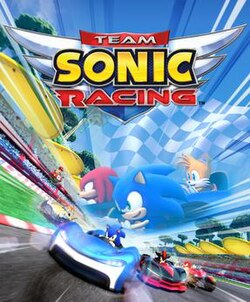
 Team Sonic Racing on Switch
 Garfield Kart: Furious Racing on Switch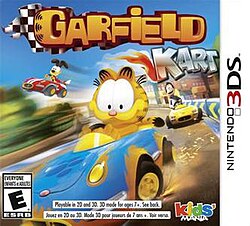
 NASCAR Heat 4 on PS4
 NASCAR Heat 2 on Xbox One
 NASCAR Heat 3 on Xbox One
 NASCAR Heat 4 on Xbox One
 NASCAR Heat Evolution on PS4










 Another SquareThought Site