

 Feb 2022
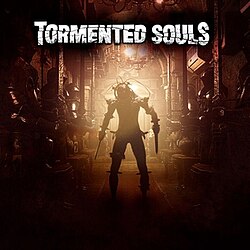

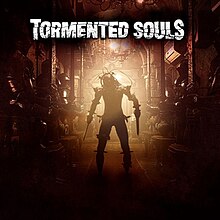
Tormented Souls is that rare breed of game that looks like it was designed by someone who spent their childhood playing the original Resident Evil and then decided modern convenience - like an easy-to-follow map or a generous ammo drop - was a betrayal of the family. Developed by Dual Effect and published by PQube, the title hit PlayStation 4 in February 2022 after a brief saga of cancellations and resurrections that would make its hospital setting jealous. You play as Caroline Walker, whose investigation into a pair of missing twins drags her back into an abandoned hospital that specializes in bad decisions and inexplicable surgical removals. The game leans hard on nostalgia: fixed camera angles, optional tank controls, VHS tapes that let you time travel, and puzzles that insist you think like someone who still labels keys with duct tape. The tone is intentionally earnest about its own retro ambitions. Where modern horror often tries to frighten you by flickering reality and whispering nonsense into your ear, Tormented Souls says 'remember fixed cameras?' and then mischievously blocks your path with a mutated thing that wants to be hugged. It succeeds at being familiar in the exact way a haunted VHS from 1994 would be familiar: grainy, unnerving, and oddly committed to making you walk around the same corridor three times until you find the one drawer you missed. If you came for an experience that smells faintly of old videotape and questionable hospital ethics, this will not disappoint.
Gameplay is a polite throwback, and that's both the charm and the paperwork. Tormented Souls plays like classic survival horror. You explore the decrepit Wildberger Hospital, interact with environmental objects and a handful of NPCs, solve puzzles that occasionally require the patience of a saint, and scavenge for improvised weapons to fend off inhabitants who believe they are both a threat and a drama student. The camera is fixed in most rooms, a design choice that preserves cinematic tension but also ensures you'll misjudge a corner and blame the virtual camera for emotionally assaulting you. Controls are offered in two breeds: modern and tank. If you pick tank controls, congratulations, you have chosen the path of greatest commitment. Movement becomes deliberate, which makes every encounter feel like a negotiation with gravity. If you opt for modern controls, the game is slightly more forgiving but still clings to the core idea that you should be punished for being comfortable. Combat is conservative: ammo is scarce, guns are serviceable but not overpowered, and a good portion of your survival depends on whether you remembered to bring that one item you found ten minutes ago and then absentmindedly left in a locker. Puzzles are the game's social contract with the player. They're logical in a brain-teasing kind of way, often revolving around finding a key item here, using it there, then traveling back in time via VHS to borrow your past self's eyeball. Yes, the plot involves Caroline literally having her right eye removed and then engaging in time travel shenanigans to retrieve said eye from her younger self, because biometric locks are apparently incompatible with contemporary sense. The VHS tapes double as a neat mechanic, letting you slip into the past to alter the present. It keeps the narrative interesting and occasionally earns the title points for cleverness when a solution requires temporal lateral thinking rather than button-mashing. Enemies are designed to be persistent nuisances rather than bullet-sponge bosses. They force you to consider when to fight and when to sprint past, which is satisfying in a primitive, resource-management way. There are occasional set-piece fights, notably against a creature known only as the 'savior' - which, despite its name, seems to be aiming for the role of murderous hobbyist. Story beats are delivered through notes, conversations with a priest (who turns out to be less 'blessing' and more 'family reunion reveal'), and environmental storytelling. Plot twists are on-brand for horror: family secrets, stolen identities, and the revelation that Caroline is actually Emma, kidnapped years earlier. The endings vary based on whether you show mercy to a mutated twin or leave her to her fate, which adds a small but welcome incentive to explore thoroughly and make morally dubious decisions under pressure.
Graphically, Tormented Souls walks the tightrope between retro homage and modern expectations. On PS4 the visuals are competent rather than eye-popping: character models and facial animations occasionally wobble into uncanny valley territory, lighting does the spooky job it's asked to do, and environments have texture work that prefers atmosphere over polish. The hospital itself is the star: moody corridors, clinical rooms festooned with blood stains and suspiciously well-preserved paperwork, and the kind of ventilation shafts that make you immediately regret your career choices. The fixed-camera setup allows the developers to stage scenes like they were business cards for gloom. Shadows are used well, and the VHS sequences add a grainy filter that actually improves immersion and makes you nostalgic for tape formats you never regretted owning. Performance on PS4 is stable in most areas, though loading between angles and certain scene transitions can be a little apologetic about their existence. If you came in expecting next-gen lighting miracles, you'll be politely disappointed. If you wanted a game that looks like an expertly staged 90s horror film with a modern coat of paint, it delivers precisely what it promises and doesn't try to phone in anything it can't commit to.
Tormented Souls is not trying to reinvent the wheel. It's a love letter written in sharpie to the survival horror games of the past, complete with fixed cameras, tank controls, and a plot that treats family trauma as an elaborate key-and-lock puzzle. It succeeds when it leans into those old school mechanics: puzzle design that respects your brain, an atmosphere that genuinely creeps, and a time-travel gimmick that rarely feels gratuitous. It stumbles when modern expectations meet retro ambition: character animations are inconsistent, some encounters feel padded, and the pacing can drag when the game insists you backtrack through yet another corridor that used to be haunted but now only nags. If you're playing on PS4, know that the port arrived a little later than the original next-gen versions, but the experience is intact. Reviews were generally favorable across platforms, and while the PS5 received more mixed reception on Metacritic, the core design remains compelling for fans of classic survival horror. There is an emotional core - Caroline/Emma's fractured identity and the tragic twin story - that elevates it above a mere nostalgia exercise. For anyone who enjoyed the original Resident Evil's tense inventory management, puzzle-driven progress, and cinematic camera work, Tormented Souls makes a polite, blood-stained case for revisiting those ideas. For everyone else, it will read like a deliberately old-fashioned but competent horror game that occasionally expects you to enjoy being mildly inconvenienced for atmosphere's sake. Verdict: solid retro horror with a beating heart and occasional paperwork nightmares - bring patience, and maybe a spare eye.
 Demon's Souls on PS3
 Tormented Souls on PS5
 Obscure: The Aftermath on PS2
 Crow Country on PS4
 Green Hell on Xbox Series X/S










 Another SquareThought Site