

 Aug 2017


Undertale on PS4 is the tiny indie RPG that punched the gaming world in the gut and then apologised by offering you tea. At its surface it's a retro-styled top-down role-player with bullet-hell dodging and turn-based trimmings, but the real game is the cast. Toby Fox wrote a world where every NPC feels like they might be your ex, your kindergarten teacher, or that one friend who always brings snacks. This review is an in-depth character autopsy: I will slice open narratives, examine emotional organs, and occasionally comment on the soundtrack while trying not to get blood on the PS4 DualShock. Expect analysis of arcs, motivations, and how your choices rewrite these people - sometimes literally.
Undertale's mechanics are inseparable from its characters. The battle system presents itself as a neat little joke: you control a red heart and dodge attacks that could be taken straight from a bullet-hell shmup. But each encounter is also a conversation. The ACT menu lets you probe an enemy's personality, flatter them, taunt them, even knit for them if you'll believe it. Those actions aren't just flavor text; they are the levers that alter relationships and outcomes. Playing a fight as a negotiation changes the enemy's attack patterns, tone of voice, and eventual fate - and because the game keeps track of whether you kill or spare, it turns every side character into an existential ledger entry. Consider Toriel, your first substantial relationship. She starts life as a parody of tutorial caretakers, but Fox refuses to keep her shallow. Toriel is maternal without being reduced to a trope: she scolds, shelters, and genuinely grieves for the human child. Her arc is a quiet moral litmus test - if you choose violence in her room, you learn that progression doesn't have to be murder. If you spare and befriend her, the narrative rewards you with an intimate scene that reframes her from 'tutorial mom' to actual person with history and heartache. That design choice is the game announcing itself: characters will react like people, not quest givers. Asgore and Asriel form the tragic backbone. Asgore is a king whose decisions are haunted by loss and the cycles of violence that started with humanity's cruelty. He is goofy at times, but his arc is guilt and resignation; the revelations about his family give weight to the game's moral questions. Asriel's story is the twin tragedy and metaphysical twist: a childfriend turned cosmic calamity. His transformation into Flowey is one of Undertale's most effective shocks - a monster who learned about consequence-free action and used that freedom to become cruel. Flowey's arc is less about redemption and more about the corrosive effects of being untethered from compassion. He taunts you with the mechanics themselves, mocking SAVE, LOAD, and 'LV' as he manipulates you. Through Flowey, Undertale makes gameplay a narrative device: your ability to reload isn't a convenience, it's a lever of moral consequence that the characters and the game itself will respond to. Papyrus and Sans are often filed under 'comic relief,' and yes, they deliver jokes and puns at a comical rate. Yet their arcs are carefully layered. Papyrus is earnest, naive, and desperate for approval; his story is about self-worth and the joy of small wins. Sans hides grief behind sarcasm; he watches and judges the player's cumulative violence. The genius here is that a skeleton who likes spaghetti becomes the character who delivers the game's most crushing moral reckoning on a genocide run. Undyne is the warrior with the purest sense of duty and eventually, in pacifist playthroughs, the most humane heart beneath the armor. Her development from hunter to friend emphasizes that empathy can be earned by action, not just words. Alphys and Mettaton showcase foil arcs about self-image and performance. Alphys, the anxious royal scientist, grows from secretive coding nerd into someone who owns her mistakes and coordinates a rescue that feels like an emotional catharsis. Mettaton, her creation, is a diva that evolves from a TV-host gimmick to someone who craves validation - his arc is a commentary on spectacle and identity, played for laughs and pathos in equal measure. Finally, the moral monster badge goes to Chara and the concept of the player-proxy Frisk. Frisk is a shell for choices: mostly silent, often ambiguous, and an instrument for the player to hurt or heal. Chara, the first fallen child, becomes the narrative's horror in the No Mercy route - an embodiment of what happens when you weaponise the game's mechanics. The three canonical routes - Pacifist, Neutral, and Genocide - are not just endings; they're full character studies. Pacifist lets the cast reclaim dignity and heal wounds; Genocide strips them of agency and forces the story to show the player as the monstrous variable. All of this is tied to quirky metatextual tricks: Undertale remembers your replays, references past runs, and straight-up breaks the fourth wall. It uses the medium to interrogate the player, and the characters are the ones who suffer, forgive, or condemn you for how you answer that interrogation.
Graphically, Undertale divides opinion like pineapple on pizza. Its pixel art is simple, sometimes intentionally ugly, and yet consistently expressive. Reviewers have called it communicative rather than pretty, and that's fair; the minimal sprites force you to project emotion and the writing does the heavy lifting. Where the visuals falter, the music and the animation style compensate. Toby Fox's chiptune-influenced score is a masterclass in leitmotif: themes evolve, return, and remix themselves to underline character beats. 'Hopes and Dreams' and 'Megalovania' are not just background tracks, they are narrative punctuation. The PS4 port keeps the original charm while adding console-friendly extras like achievements and the enigmatic Dog Shrine, proving the game doesn't need flashy shaders to sell a scene - it needs a line of dialogue at exactly the right moment.
Undertale on PS4 remains one of the most character-forward games in modern memory. Its genius isn't that it invents complex systems or photorealism; it's that it turns simple mechanics into moral instruments and fills the Underground with characters who react like real people - petty, loving, absurd, and devastating. The game dares players to ask themselves what kind of person they are when the consequences of their actions are questioned by monsters who have become family. It's funny, it rips your heart out, and it makes you complicit in every outcome. There are a few rough edges: the art's roughness will bother those who want prettier pixels, and some late-game beats lean on heavy-handed symbolism. But those flaws are dwarfed by the emotional clarity of the writing and the audacity of the design choice that lets playstyle rewrite story. For players who like character-driven narratives, moral puzzles, and a soundtrack that will haunt your earbuds, Undertale deserves the almost-reverent fandom it has. On PS4 it plays and feels the same way as it did on PC, and the added console niceties make it easy to recommend. If you want to be a soft-hearted friend to monsters, choose pacifism and prepare to cry into your controller. If you want to find out how far a game will scold you, try genocide and then be prepared: Sans will make you regret everything. Either way, this is a game where every character arc is meaningful and every choice leaves a scar. I give Undertale on PS4 a 9.5 out of 10 - a near-perfect little odyssey that proves video games can be both silly and devastating in equal measure.
 Deltarune on PS5
 Deltarune on Switch
 Combat Elite: WWII Paratroopers on PS2
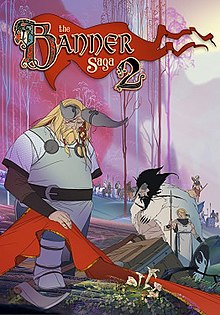
 The Banner Saga 2 on PS4
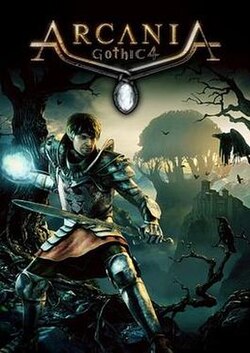
 Arcania: The Complete Tale on PS3
 Gnosia on Xbox Series X/S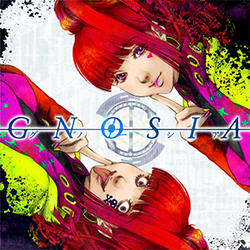
 Deltarune on PS4










 Another SquareThought Site