

 Nov 2016


Volgarr the Viking is the kind of game that looks like it time-traveled from an arcade cabinet, then hit the gym and came back meaner. On PS4 it's a lovingly brutal platformer from Crazy Viking Studios that wears its 1980s inspirations - Rastan, Ghosts 'n Goblins and other muscle-bound classics - like a wolf pelt. The premise is gloriously simple: Odin tasks Volgarr with slaying an evil dragon, and you, the player, volunteer to be both his sword arm and his personal reincarnation machine. The game gives Volgarr a sword, a spear and a wooden shield to start, but little else in the way of hand-holding. That lack of guidance is where the story arc of the protagonist lives: it's told through every death, every treasure chest, and every upgrade that turns a fragile, shield-dependent warrior into a proper mythic nightmare for whatever scaly horror awaits. This review digs into Volgarr not as a catalog of kills but as a character study. Volgarr himself, Odin and the abstract 'dragon' are archetypes rather than novelists, and the arcs here are written in pixel-perfect consequences. The game's difficulty - often praised as fair but punishing - becomes part of how the story is told: each checkpoint reset is a line in Volgarr's saga, tempering him until your thumbs bled enough to earn final absolution (or at least a better ending).
Volgarr's narrative is inseparable from its mechanics. The titular Viking starts with the basic tools of heroic cliché: a sword for close work, a spear for ranged work, and a wooden shield that functions like a fragile conscience. The shield absorbs one unblocked hit, and after it's gone Volgarr becomes very personal with the checkpoint system: the next hit sends him back to the start or the mid-level marker. The early-game Volgarr is therefore an everyman - or every-viking - vulnerable, dependent on precise play and treasure chests for salvation. Those treasure chests are where the character actually evolves. They don't just hand out upgrades like candy; they symbolize rites of passage. Find a chest and Volgarr gains the ability to take more hits or obtain new moves. The spear's dual purpose - a weapon and a way to create temporary platforms - is essential to understanding Volgarr's growth. The spear teaches a new kind of problem-solving: if you can stab a wall and use the spear as a foothold, you're not only attacking monsters, you're changing the battlefield itself. That mechanical shift reads like character development: Volgarr stops being the guy who only reacts and becomes the guy who reshapes encounters. Enemies drop coins and jewels, and the way currency is handled narrates another chapter of Volgarr's journey. Dying costs you a portion of your haul, and only what you carry out of a stage becomes permanent. This sets up a tense micro-arc in every level: chart a careful path to retain your gains or gamble on riskier routes for greater rewards. The story of Volgarr's ascent is written in those decisions - greed, prudence, and the occasional impulsive sprint to a treasure that becomes a fatal misstep. The game's structure reinforces its tale of growth. Levels can be replayed to shave seconds off completion times or to collect special key items. Achieving a level without losing a life rewards you with keys that unlock bonus levels, and those bonus levels are the narrative equivalent of secret shrines: they lead to the best-possible ending. The stakes here produce a meta-arc for the player: Volgarr's push to the best ending requires near-flawless execution, basically demanding a one-credit-clear (1CC) mindset. Critics praised the fairness of this demand - deaths feel earned rather than cheap - but many also noted that asking players to 1CC the game to see its final version is asking for sacrificial levels of dedication. That tension is central to the game's storytelling: is Volgarr's legend earned through skill or through masochism? The role of Odin is brief but narratively vital. As quest-giver he casts Volgarr into action, providing the mythic framework for every mechanical test. Odin doesn't change much; he's the deus ex machina that explains the dragon and legitimizes Volgarr's trials. That sparing storytelling is a design choice: the developers trust gameplay to convey narrative beats, and Odin is simply the opening sentence. The dragon, conversely, is the ultimate narrative endpoint - a faceless culmination of every platforming gauntlet. Defeating it is less about plot twist and more about the existential completion of Volgarr's arc: from fragile shield-bearer to dragon-torturing legend.
Visually, Volgarr on PS4 is a love letter to 8- and 16-bit eras, but one that's been tended like a bonsai: pixel art that's compact, detailed, and carefully animated. The characters and environments read like curated museum pieces of arcade aesthetics - the skeletal remains in the first level are an explicit wink at Rastan - yet the fidelity is modern enough that every enemy telegraphs its attack pattern clearly. That visual clarity matters because the story is mechanical: you need to see and understand threats instantly. The palette, animations and set pieces support the mythic tone rather than overshadowing it. Volgarr's transformations through armor and items feel visually meaningful; when he gains new protection it's not just a number on a menu but a silhouette that looks ready to stare down gods.
Volgarr the Viking on PS4 is not a character-driven epic in the conventional sense - there are no long soliloquies, no slow-burn romances, and Odin doesn't check in with a plot recap card every act. Instead, the game uses gameplay to tell a compact heroic arc: vulnerability to competence, greed to mastery, death to ritual rebirth. Volgarr's story is one you inhabit through repeated trial and error, and the emotional beats land because the mechanics are honest. Critics were broadly positive, citing fair-yet-barbaric difficulty and a level design that channels the best of its inspirations. If you long for a game that asks you to become legendary through practice rather than exposition, Volgarr delivers. If you dislike dying a lot and being politely told it's your fault, this will be a slow-burning hate affair. In the end, Volgarr is a saga about choices - when to risk everything for treasure, when to retreat and secure the gains, and whether you have the patience to chase the best ending. It's a game that treats its protagonist like mythic material: shape him with your failures and he becomes a story worth telling. If that sounds like honest old-school fun with a modern crispness, then grab your controller, sheath your sense of entitlement, and get ready to die gloriously.
 Dead in Vinland on Switch
 Norse By Norsewest on PlayStation
 The Wacky History of Platform Games
 Roblox on PS4
 DreamMix TV World Fighters on PS2
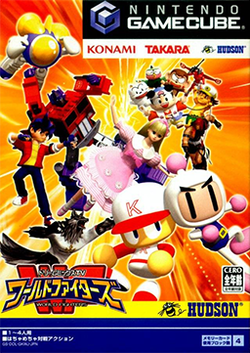 Toki Tori on Switch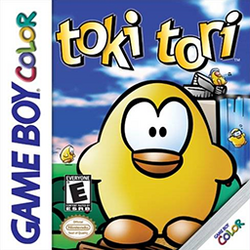










 Another SquareThought Site