

 Aug 2024
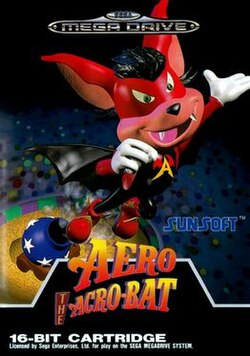

If you grew up in the golden era of cartridge-shaped stress and 16-bit bravado, Aero the Acro-Bat might ring a very familiar bell. Originally flung into the world in 1993 by Iguana Entertainment and fronted by Sunsoft as their plucky circus mascot, Aero is a red, anthropomorphic bat who does the platforming equivalent of juggling chainsaws while wearing a sequined unitard. The PS5 version you can now plug into is not a flashy remake so much as a polite time machine: the Super NES original, dusted off and served to modern consoles on August 2, 2024. It's nostalgic, occasionally infuriating, and somehow still charming about being old-school cool. The premise is gloriously old-school: Edgar Ektor, a rich jerk with a name that sounds like a particularly moody dentist, sabotages the World of Amusement Circus and kidnaps the performers. Aero, the circus' top attraction and resident acrobat, is the one bat for the job. Rescue the troupe, stop Edgar, and try not to fall on any spikes. That last bit is more important than it sounds.
Aero the Acro-Bat plays like a greatest hits album of early 90s platformer tropes. Levels unfurl in traditional 2D slices, large and sometimes labyrinthine, with objectives you must complete to reveal the exit warp. These objectives are the game's way of saying "collect, trigger, avoid, repeat" with style: pass through hoops, stand on platforms until they do a vanishing act, ride roller coasters like a caffeinated theme park employee, and generally mess about with whatever Sunsoft placed in the foreground that week. Combat is refreshingly simple. Aero can lob a handful of limited stars at enemies or perform a diagonal drill attack while airborne. The drill move gives Aero a little aerial swagger, which is handy because the levels often punish hesitation with spikes poking out of places you thought were safe. Spikes in Aero are like that one passive-aggressive comment at family dinner: they kill instantly and without ceremony. Expect to learn the level geometry the old-fashioned way - through repetition and a growing, grudging respect for hitboxes. One charming wrinkle: score matters. If you stack up enough points by the end of a level, you unlock a bonus stage. In the Genesis original this bonus was a vertical platformer where Aero dives into a pool, a delightfully oddball interlude. The Super NES conversion went in a different direction, using Mode 7 to make the bonus stage a simple but fun ride above an overworld map. Mode 7 is the SNES flex of the era, and the SNES bonus stage feels like it's wearing sunglasses and a leather jacket. The game is split into four worlds with five levels apiece, so there are plenty of sprawling stages to chew through. That abundance of space is a double-edged sword: it gives levels personality and a sense of scale, but it also means backtracking and awkward platforming segments when the camera politely refuses to cooperate. Some levels teeter into 'trial-and-error' territory, where you'll memorise jump paths to avoid a sudden, shameful demise. To modern sensibilities that expect precise control and forgiving checkpoints, Aero can feel stubbornly retro. Aero's design and its mechanics were influenced by earlier arcade logic, with David Siller - the character's creator - and a small design team shaping its look and behaviour. The original game was even intended for the NES at one point before 16-bit consoles stole the spotlight, and elements like a mission objective system were conceived but left out of the initial release. Those features later found life in the Game Boy Advance port, which also added conveniences like a battery-backed save, something the originals lacked. If you come to this game expecting modern polish, you'll find some rough edges: occasional awkward platform placements, spikes that feel cruel, and a learning curve that is neither apologetic nor humble. If you come for a compact, retro platformer with character, vintage platforming tricks, and a bat who looks like he moonlighted as a stunt double, you'll have a good time. And if nothing else, Aero's boss of trying to make roller-coaster rides a gameplay mechanic will give you a story to tell at parties about that time you were bested by an animated amusement park.
Aero's visual identity is a playful time capsule. The Super NES version, which is what made the trip to modern consoles in 2024, flexes Mode 7 for a couple of bonus stage flourishes and generally looks like a polished early 90s platformer. Environments are colorful and often cartoony, from circus tents to industrial sets, and Aero himself is designed to be instantly readable on a crowded screen: bright red, cape slightly dramatic, pose eternally ready for applause. The sprite work is charming rather than revolutionary. Animations have character and a bit of exaggerated bounce; enemies are whimsical and sometimes weird (because of course a circus-themed platformer includes things that shouldn't exist inside a tent). However, the level design can feel cluttered at times, with hazards tucked into scenery in ways that are more "gotcha" than "fair challenge." Also, when you're used to modern transparency and crispness, some collision quirks and cramped stage layouts become more obvious, which is less 'retro charm' and more 'oh no not again.' On a technical level, the re-release is faithful to the SNES presentation. If you're playing it on a PS5, expect some scaled-up pixels and the comfort of save states if the publisher included them, but don't expect a full graphical overhaul. This is nostalgia with a fresh coat of polish, not a ground-up remake. That said, the game's aesthetic still pops: it's bright, goofy, and full of personality, which is often more than a lot of modern remasters can claim.
Aero the Acro-Bat on PS5 is a neat little retro snack: equal parts carnival music, unforgiving spikes, and arcade-era platforming logic. It's not flawless, and its design choices remind you unapologetically that it was born in a different era of game difficulty and expectations. Reviews were mixed back in the 90s - scores ranged from mild enthusiasm to harsh dismissal - and the re-release does little to rewrite history. But Aero has charm, and there's a certain thrill in guiding a red acrobat bat through extensive, eccentric levels in an attempt to rescue a troupe of kidnapped performers. If you're a retro enthusiast, or just someone who delights in the weird corners of platformer history, Aero is worth a spin on your PS5. Expect to die, expect to laugh, and expect to develop a grudging affection for a bat in spandex. For newcomers who want a more polished, forgiving platforming experience, contemporary indie platformers might feel more comfortable. For those who like their games with a dash of nostalgia, a splash of difficulty, and a circus soundtrack stuck in their head for the rest of the day, Aero is a delightful throwback that still stands up well enough to make you grin - and occasionally throw your controller, like a true acrobat of emotion.
 Aero The Acro-Bat: Rascal Rival Revenge on Xbox Series X/S
 Aero the Acro-Bat on Switch
 The Wacky History of Platform Games
 Roblox on PS4
 DreamMix TV World Fighters on PS2
 Toki Tori on Switch
 Turok: Dinosaur Hunter on Switch
 Aero the Acro-Bat 2 on Switch
 Frank Thomas Big Hurt Baseball on PlayStation










 Another SquareThought Site