

 Nov 2022
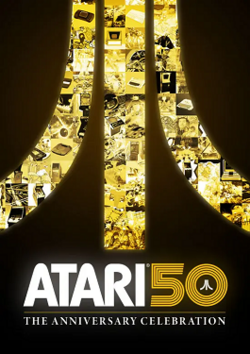

This is not a cartridge you blow on; this is a carefully curated museum you can actually put your hands on. Atari 50: The Anniversary Celebration arrives on the PlayStation 5 wearing the sensible blazer of a stern archivist and the neon sneakers of a classic arcade. Digital Eclipse, the studio that has quietly been turning emulation and preservation into an art form, has produced more than a game compilation here: it's an interactive documentary stitched together with playable artifacts, interviews, manuals, scans and, yes, a very comforting array of save states. If you grew up thinking the words "retro" and "value" went together like Polaroids and hair mousse, prepare to be schooled. If you are the sort of person who believes that old games are just primitive noise, this package will show you how the noise learned to sing. The PS5 version plays the part of the authoritative anthology: 115 games at launch, dozens more arriving via free updates and paid DLC, and six new 'Atari Reimagined' titles produced by Digital Eclipse as modern answers to ancient problems. Reviews across the board have treated Atari 50 as the gold standard for historical compilations, and that reaction is readable the minute you slide into the timeline. The interface leads you down five chronological corridors-Arcade Origins, Birth of the Console, Highs and Lows, The Dawn of PCs, and The 1990s and Beyond-each one a curated setpiece of context and content. This is less of a greatest-hits cartridge and more of a curated biography of a company that changed - and, occasionally, staggered - the fledgling games industry.
Atari 50's central conceit is elegantly simple: tell Atari's story by letting you play pieces of it while showing you how those pieces were made, marketed and received. The timeline is the collection's spine. Each entry is a little diorama-video interviews with creators, scanned design docs, promotional footage and a playable version of the relevant game. The interleaving of primary sources with playable code is the feature that elevates this from nostalgia porn to something approaching pedagogy. You can jump from Nolan Bushnell reminiscing about Pong straight into a crisp emulation of the original arcade, and then swap over to the home 2600 port to see how the same idea was distilled down into a handful of pixels. That juxtaposition is illuminating and, if you're the sort who keeps running notes, dangerously addictive. Controls are thoughtfully implemented. Every original title gets a save state, and you can remap controls or cloak the visuals in a CRT filter if you like the smell of simulated phosphor. The compilation goes beyond plug-and-play to include specific improvements where they make sense: overlays for Star Raiders that explain status, rumble on hyperspace events, and the occasional audio cleanup. For a pack that spans arcade cabinets, the Atari 2600, 5200, 7800, Lynx and Jaguar, the emulation work is impressive. A few games required bespoke solutions-Secret Quest's use of a hardware switch needed custom handling, and the Jaguar emulator was an engineering headache given the sparse and sometimes inaccurate documentation-but the result for the player is a mostly frictionless experience. The new Atari Reimagined games are smart gestures, not cynical cash-ins. Yars' Revenge Reimagined retails the soul of the original while dressing it in modern effects and a fatter audio track; VCTR-SCTR is a brand-new vector-inspired title that feels like someone lovingly reconstructed an idea from a museum scrap; Haunted Houses and Swordquest: AirWorld attempt more ambitious reworkings-3D voxels, modern level designs-without betraying the originals' DNA. Neo-Breakout and Quadratank are short, clever riffs that show Digital Eclipse is not only a preservationist but a small studio still capable of playful invention. No collection is perfect. Some icons are conspicuous by their absence. Licensing snafus and lost rights mean Marble Madness, certain Midway-era arcade splits and a few licensed curiosities like Raiders of the Lost Ark aren't present. Reviewers have also correctly noted that many titles simply haven't aged in a way that will satisfy modern tastes; dozens of 2600 amuse-bouches are historically fascinating but barely entertaining for long stretches. Still, Atari 50's value lies less in making every game endlessly playable and more in letting you witness their birth, context and lineage. You will find yourself spending an hour reading a manual and twenty minutes playing; that ratio is precisely the point.
On the PS5, Atari 50 dresses old pixels in a modern suit without changing their fingerprints. The emulators reproduce original palettes and framerate behavior, and the system's wide-screen presentation tucks original artwork into bezels that feel like museum placards. There's a tasteful CRT shader for people who think scanlines are a lifestyle, but the default presentation remains clean: these are old games and they look like it, but they look like them with reverence. The Reimagined games showcase the team's ability to play with modern rendering-vector wireframes and voxel spook-houses look sharp on a 4K screen while retaining an obvious lineage to the arcade originals. Video interview segments and archival footage are handled with archival care: film scans, commercials and behind-the-scenes clips appear in the timeline at a quality consistent with their provenance. The overall UI is functional and a little formal-think of a museum placard with a gamepad-but clarity is the priority, and the PS5's performance means you spend seconds loading context rather than minutes queuing between exhibits.
This is a collection for people who know that preservation can be pleasurable. Atari 50 is not a nostalgia-stoked greatest hits album designed to wrap joy in a bow; it is a serious, lovingly produced interactive history with playable exhibits. The timeline format makes the set greater than the sum of its pixels: games that might otherwise be dismissed as curios become readable artifacts, and the new Atari Reimagined entries show how old ideas can still inspire new play. A few notable absences and the unavoidable fact that not every 2600 game is a timeless gem keep this from perfection, but these are minor complaints in a package that raises the bar for how the industry should treat its own past. If you grew up in the era, this collection will reward memory with context. If you're younger and only know Atari from hype threads and retro compilations, consider this the definitive primer: it gives you the games, the stories, and the industry bruises that made modern gaming possible. On the PS5, Atari 50 is both a lesson plan and a playroom - stern when necessary, mischievous often, and always respectful. Buy it if you care about how games came to be; rent it if you want to spend an afternoon being thoroughly, pleasantly educated.
 Atari 50: The Anniversary Celebration on Switch
 Atari Recharged Collection 1 on Switch
 Rabbids Invasion on PS4
 A Memoir Blue on PS5
 Dragon's Lair on PS3
 Death Come True on Switch
 Tetris Forever on Xbox Series X/S
 Teenage Mutant Ninja Turtles: The Cowabunga Collection on PS4
 Teenage Mutant Ninja Turtles: The Cowabunga Collection on Switch










 Another SquareThought Site