

 Aug 2022
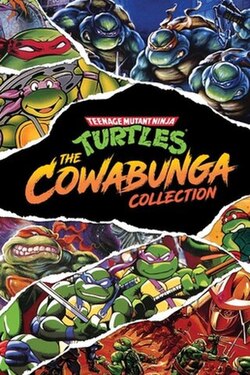

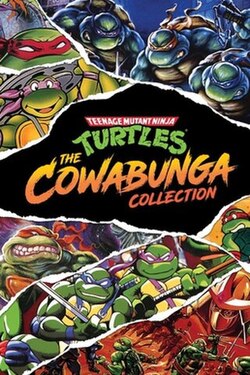
There is an odd sort of comfort in opening a compilation like Teenage Mutant Ninja Turtles: The Cowabunga Collection. It arrives not as a single new game but as a time capsule - one that smells faintly of arcade smoke, worn controllers and the eternal grease-stained promise of extra lives. Digital Eclipse has undertaken the modern imperative of repackaging nostalgia with polish, and Konami has trusted them with thirteen titles that once flickered across CRTs and portable LCDs between 1989 and 1994. If you were raised on Saturday-morning cartoon heroics, coin-op virtues and the indignity of unplugged controllers after a quarrel over who gets Donatello, this collection is intended for you. The Cowabunga Collection is not a mere anthology; it is an act of preservation. Included are arcade and console classics - the NES and arcade Teenage Mutant Ninja Turtles, II: The Arcade Game, the arcade and SNES incarnations of Turtles in Time, The Hyperstone Heist on Genesis, the Tournament Fighters across multiple platforms, and the assorted Game Boy excursions and NES sequels that defined many childhoods. Digital Eclipse layers modern conveniences over the originals: save states, rewind, button mapping, optional online multiplayer in titles that support it, and a surprisingly rich in-game museum filled with development art and design documents. For those who keep one eye on legacy and the other on present comforts, this collection walks a careful line between reverence and practicality.
What defines a beat-'em-up from this era is its rhythm: press, punish, pummel, repeat. The Cowabunga Collection delivers that rhythm in spades. The arcade versions retain their brutish, unrelenting feel; enemies approach in predictable patterns and the screen fills with goons until you learn to exploit formations and weapon pickups. Turtles in Time, in both its arcade and SNES permutations, remains the high note - the game that taught many players the joy of cooperative timing, the thrill of a well-timed throw and the simple poetry of a giant robot transforming into a platform. The NES entries are more deliberate and sometimes exasperating, but they keep the era's stubborn design choices intact: cheap hits, limited lives and levels that demand memorization. The collection's strength is in its fidelity. Digital Eclipse enlisted ROM engineers and archival sleuths to reverse-engineer and restore these titles. The emulation is careful, and where the originals had warts - sprite flicker, nastily long respawn animations, and intermittent slowdown - options exist to mitigate or embrace them. Save states and rewind are not mere band-aids; they change how the games play without rewriting history. A difficult sequence becomes a training exercise instead of a brick wall. Button mapping modernizes the controls without betraying the original layout. Online functionality, added to certain multiplayer-enabled games, is a welcome inclusion even if the matchmaking ecosystem is still at the mercy of player availability. The compilation also deserves credit for inclusivity of versions. Where Konami once released divergent iterations across regions and platforms, The Cowabunga Collection allows you to sample almost all of the variants - Japanese and Western releases, arcade and home conversions - letting you compare how the same premises were handled on NES, SNES, Genesis and Game Boy hardware. Tournament Fighters' multiple versions, for instance, lets the curious observe how fighting mechanics and character rosters shift with each platform's technical constraints. The Game Boy titles feel like shrunk-down experiments; Radical Rescue turns the turtle formula into a Metroid-lite with surprising success. The selection is neither exhaustive of the franchise nor bare-bones; it feels curated with an eye for both hits and historical curiosity. Where things wobble is mostly in legacy limitations. Some NES and Game Boy stages retain design philosophies that feel unfair to modern sensibilities. Occasional input lag, noted in some reviews and perceptible if you're comparing the arcade's tactile feedback to a modern controller, crops up rarely but noticeably. These are not fatal flaws; more often they are reminders you are playing games made for different hardware and different expectations. The real triumph here is how optional modern features allow players to decide how much of that historical awkwardness they want to keep.
Visually, the collection presents its era without apology. Pixel work across these titles ranges from modest to inspired. The arcade and SNES versions of Turtles in Time boast detailed sprites and flamboyant backgrounds that still read as vibrant even on an HDTV. The Genesis Hyperstone Heist preserves much of its brawny palette, while the NES games evoke their charming, blocky austerity. Game Boy entries translate to the small screen gracefully; their monochromatic simplicity is a design constraint that paradoxically emphasizes clever sprite design and level layout. Digital Eclipse provides a smorgasbord of display filters and options for purists and retro aesthetes alike. You can toggle scanlines, aspect ratios and pixel-perfect modes, and even remove or reduce sprite flicker. The museum's scanned art and documents are a visual highlight: glossy promotional pieces, pencil sketches and design notes that reveal the creative process behind the cartridge. For anyone who prefers a museum experience to a purely playable anthology, the extras justify themselves. If you demand modern graphical fidelity or high-frame 3D reimaginings, this is not the collection for you; the intention here is faithful presentation, not reinterpretation.
The Cowabunga Collection is a conscientious compilation that does what good archival releases should: it preserves, documents and presents with respect. It is loud where it ought to be loud, charming where it retains charm, and merciless where the originals were merciless. Digital Eclipse has offered sensible modernizations - save states, rewind, online play in select titles and an excellent museum - without erasing the idiosyncrasies that give these games their personality. It is not flawless: a smattering of input lag and the unavoidable harshness of some vintage design decisions keep the experience from feeling pristine. For connoisseurs of retro gaming, for those who learned to time a jump to the beat of a chiptune or who remember the first time they and three friends crowded around a cabinet to fend off Foot Clan hordes, this collection is essential. For newcomers, it is a curated history lesson delivered with playable intent. In short: if you want to relive the era when turtles in bandanas could headline arcade marquees and home consoles felt like battlegrounds for lunchtime bragging rights, this pack delivers. It is a solid, lovingly assembled archive and an effective reminder that sometimes the best way to appreciate modern systems is to run them backward through the glow of a CRT and a pocket full of quarters. Cowabunga.
 Ninja Gaiden: Master Collection on Switch
 Samurai Shodown NeoGeo Collection on PS4
 The Secret Saturdays: Beasts of the 5th Sun on DS
 Darkstone on PlayStation
 Warframe on Xbox Series X/S
 Is It Wrong to Try to Pick Up Girls in a Dungeon? Infinite Combat on Switch
 Mortal Kombat: Legacy Kollection on PS4
 Tetris Forever on Xbox Series X/S
 Atari 50: The Anniversary Celebration on Xbox Series X/S
 The Making of Karateka on PS5










 Another SquareThought Site