

 Jun 2020


There was a time when the words "Neo Geo" on an arcade marquee meant two things: you were about to meet a world-class quarter-eating machine, and you were about to face extremely sharp pixels that could be used as actual weapons. Samurai Shodown, born in 1993 from SNK's workshop of stylized violence, was one of those landmark titles that proved fighting games needn't be limited to sweaty fists and sonic boom energy balls. Instead, the series carved its niche with blade-centric duels, a samurai-soaked atmosphere, and a gameplay temperament more deliberate than frantic. The NeoGeo Collection brings that lineage - the ethos of weapon-based combat, the iconic Rage gauge, and a rogues' gallery of sword-wielding eccentrics - to modern consoles. On PS4 the collection acts less like a remaster and more like a museum exhibit: dim the house lights, slap on the CRT nostalgia goggles, and listen for the distant thud of a taiko drum. This review approaches the collection the way a 1990s serious reviewer would: by sizing up whether those old samurai still deserve a place on the high shelf of fighting game history.
Samurai Shodown was never a game that asked you to mash your way to glory. From the first coin drop in 1993 the series presented matches that felt like stage duels straight from kabuki theater - deliberate, risky, and terrible for your pride if you took a single bad swing. The mechanics that set the series apart are present in spirit throughout the collection: weapon reach matters, timing matters more, and the Rage gauge (a clever mechanic that fills as you take damage) turns losing into a tactical resource. The series' design rewards patience. Where Street Fighter teaches you to outjab your opponent and Dream Match generosity favors combos, Samurai Shodown insists that a single, perfectly placed slash can change the match. That tenuous balance between lethality and strategy is why the series has always felt mature; matches have consequences. Characters are not interchangeable - Haohmaru's raw offense, Nakoruru's nimble zoning, Hanzo's quick stabs - each archetype carries a different rhythm and requires different respect for spacing. The collection's value comes from preserving that history rather than overhauling it. If you approach it expecting modern tutorial depth, rollback netcode, or a complete competitive ecosystem out of the box, you'll be disappointed. What you get instead is the authentic feel of the Neo Geo originals, the same hitboxes and frame quirks that gave the games their character. For players who grew up on arcades, that is a feature; for newer players used to generous accessibility systems, the learning curve can be steep. The roster across the series is rich - more than 80 warriors exist across the franchise historically - and even the early titles introduce the motifs that would define the series: traditional Japanese musical flourishes, theatrical Japanese voicework, and characters glimpsed from history or myth. The series' commitment to cultural stylings is a gameplay advantage: special moves, win quotes, and stage drama all feel like part of a larger saga. Matches often feel like scenes from an 18th-century tableau rather than round-for-round scoreboard scrimmage. That lends each fight stakes and personality. I found the collection best enjoyed in short bursts: a handful of CPU fights to remember why reach matters, then a local match to watch friends relearn how to respect the blade. In 2020 hardware, these games remain incisive; they teach restraint, timing, and how to punish greed. That lesson never gets old.
Graphically the Neo Geo era is unapologetically pixel art at its most robust. The characters are large, the animation frames are expressive, and stages are layered with hand-crafted detail. Samurai Shodown's color palette and traditional instrument-laced soundtracks give the games an identity that age treats kindly. On PS4 the presentation is tidy; pixels are preserved, and the scenes still read clearly on a flat-panel TV without the oily blur of a CRT. This is good because the sprite work, especially the character portraits and stage backgrounds, is where the series does most of its storytelling. The games do not benefit from glossy modern effects - they don't need them. However, the collection also doesn't attempt to modernize the visual language beyond basic upscaling and menu polish. Purists will be delighted, and newcomers will likely find the aesthetic charming rather than primitive. A reviewer from the 1990s would have talked about cabinet presence. Today's equivalent is how the PS4 handles the original aspect ratios and scanline options. The collection treats the originals with reverence: you get clean, intact presentations that recall the original Neo Geo's flair. There is an archival quality to the visuals, like a well-preserved ukiyo-e print. The flaw, if there is one, is that the collection rarely augments or contextualizes those visuals for modern audiences; what you see is what the artists intended in the 1990s, and that is both comforting and occasionally austere.
If there is a single sentence to sum up Samurai Shodown NeoGeo Collection on PS4, it is this: it is an impeccably preserved slice of fighting game history that expects you to learn from its blade rather than be spoon-fed victory. For fans of the originals and historians of the medium, the collection is a welcome archive. It captures the series' signature traits: weapon-focused duels, the Rage meter's dramatic comeback potential, and a cast that reads like a hall of samurai archetypes. For newcomers, the collection can be sobering; these are demanding games from an era that valued arcades' purist design sensibilities. In an age where every fighting game promises accessibility and online ladders, Samurai Shodown's older entries are a reminder that combat can be composed, brutal, and beautifully paced. My final score of 8 out of 10 acknowledges both the collection's fidelity and its limitations. It earns praise for curating and preserving a culturally rich, mechanically unique franchise. It loses a couple of points for not doing more to bridge the gap between museum piece and modern usability. If you want to understand why the original Samurai Shodown mattered - why its music, its stages, its Haohmaru vs. Nakoruru moments still get cited by veterans - this collection is your field trip. Bring patience, respect the sword, and don't forget that in these games a single perfectly timed slash can make you feel like a legend and a fool in the same match.
 Teenage Mutant Ninja Turtles: The Cowabunga Collection on Switch
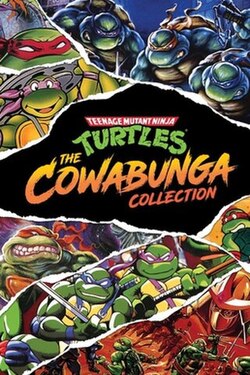 Tokimeki Memorial Private Collection on PlayStation
 Ultraman Fighting Evolution on PlayStation
 ACA Neo Geo: Art of Fighting 2 on Xbox One
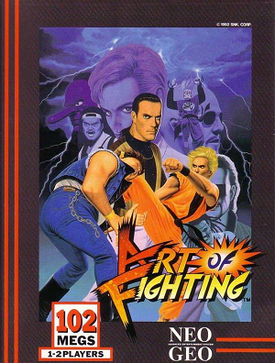 ACA Neo Geo: The King of Fighters '98 on Xbox One
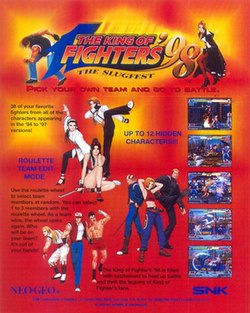 Touhou Hyoibana: Antinomy of Common Flowers on Switch
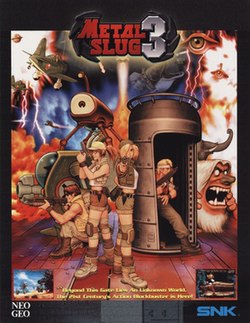 Metal Slug X on PlayStation
 The King of Fighters '98 on PlayStation
 Garou: Mark of the Wolves on PS4
 ACA Neo Geo: The King of Fighters 2002 on Xbox One
 ACA Neo Geo: The Last Blade 2 on Xbox One










 Another SquareThought Site