



Ultraman Fighting Evolution arrives on the original PlayStation as the video-game incarnation of a media franchise that, according to the source material, has been sprawling and commercially prolific since 1966. The Ultraman brand has been adapted across television, film, manga, and dozens of titles in the videogame space; Fighting Evolution is the franchise's first sizable stab at a dedicated one-on-one/arena-style entry on Sony's 32-bit hardware (the game is listed in the source's catalog for 1998). The expectation is obvious: translate the kaiju-stomping spectacle and the 'color timer' drama of the Ultra heroes into a tight, responsive fighting engine. On the technical front, the PS1 era was already mature by 1998, so Fighting Evolution's ambitions-3D models, camera management, and large special effects-offer a useful lens for examining how licensed tokusatsu properties adapted to polygonal constraints.
At its core Ultraman Fighting Evolution is a fighting game that leans on the franchise's roster of Ultras and kaiju to provide mechanical variety. The source confirms the title as part of a long list of Ultraman games, and later entries (Fighting Evolution 2, 3 and PSP/PS2 ports) suggest this first installment established an archetype that later games iterated on. From a systems-design perspective the game commits to several classical fighting subsystems: distinct move sets per character, a situational special attack with a visual spectacle, and arena positioning that matters because of scale differences between fighters. Input-to-action latency is the first technical check a detail-oriented player looks for. PlayStation controllers of the era were mechanically consistent, but software buffering, animation lockouts, and scripted hit animations determine competitive feel. Fighting Evolution generally favors clear input windows for normals and heavies-you can press a direction+button and expect that animation to start immediately. The trade-off appears in the special and super animations: big effects trigger longer animation lockouts and camera choreography, which can bloat perceived input lag if the engine doesn't use animation blending or interrupt frames. For a franchise with giant punches and beam attacks, this choice is defensible aesthetically, but it hurts tight combo-chaining and reduces bait-and-punish depth. Collision detection and hitboxes are implemented in a hybrid manner typical of polygonal fighters on the PS1. Instead of finely tuned 2D hurtboxes, the game relies on 3D bounding volumes mapped to model limbs. This is forgiving for the single-player crowd-swing a tail and you'll probably clip a nearby opponent-but it creates ambiguities when two attack animations overlap. The practical effect is that close-range trades can feel inconsistent: sometimes a swipe that visually misses still connects because of the larger bounding capsule, and other times a perceived clean hit slides off. For players chasing frame-data precision, this is the kind of thing that turns practice into guesswork. The special-resource design cleverly nods to Ultraman lore. The franchise's Color Timer concept-Ultras have a visible timer that warns of depleting energy-translates here as an energy or stamina constraint for using signature moves. This acts as a natural limiter on spamming high-impact moves and encourages positional play. The meter dynamics reward measured aggression: conserving resource grants access to a late-round super, while reckless use leaves you vulnerable. It's a smart mechanical tie-in that also simplifies balancing: instead of making every super strictly weaker, you gate them behind a shared resource. AI and single-player structure in Fighting Evolution are functionally serviceable but unsurprising. CPU opponents push scripted patterns: a wave of offense followed by a brief punishable recovery. Where the game stumbles is scalability-difficulty tends to spike via reaction speed increases rather than deeper decision-making heuristics. Versus human players, the game exposes the collision and camera issues more readily, but it still supports messy, entertaining matches: giant monsters smashing into cities look good in motion, and that visceral feedback can make a technically imperfect engine feel rewarding. On modes, the title establishes the typical arcade/versus loop you expect from fighting games of the era. The menu systems themselves are utilitarian: clear but not luxurious, built to prioritize match selection and character stats rather than narrative presentation. Load times are present (reader should remember we're on a CD-based console), but not crippling; memory-card support covers save data without surprises.
Graphically, Ultraman Fighting Evolution is a textbook example of what the original PlayStation could do when a team tried to render larger-than-life characters in 3D. The models are low- to mid-polygon by modern standards, but their silhouettes are accurate to decades of Ultraman design-important for a licensed product where recognizability is the design brief. Texture work is sparse: flat color fills and small decals give faces and chest plates their identity, while large textures suffer the typical PS1 texture warping and color banding. For players who grew up watching suitmation and miniature work, the fidelity to the source designs matters more than polygon count. Lighting and particle effects are where the hardware's limitations are most visible. Beam attacks and explosions rely on billboards and additive quads; when multiple effects stack the GPU overdraw becomes noticeable, producing framerate dips or judder on some stages. The camera system attempts to dramatize super moves with zooms and tracking, and this serves spectacle well-but it also exacerbates clipping and popping when the engine has to immediately reposition models within constrained draw distances. Level design mimics urban battlegrounds from the series; buildings are blocky but effectively convey a stage for giant combat. A technical-minded player will notice aliasing on edges, limited z-buffer precision (resulting in occasional depth-fighting), and a lack of advanced shading, all expected for a 1998 PS1 title. Audio design does the heavy lifting for immersion. Samples of Ultraman theme elements, monster roars, and crushing impacts give weight to hits that the visuals can't fully communicate. Sound compression is audible-samples are looped and compressed-but the aggressive use of impact SFX and bass-heavy punch hits ties the sensory experience together. The user interface is legible and uses chunky fonts and icons; button prompts are clean and the HUD communicates vital information (health, Color Timer/energy) without clutter.
Ultraman Fighting Evolution is not a technical revolution, but it is a focused attempt to marry tokusatsu spectacle with the fighting-game form on hardware that was already battle-hardened by 1998. From a systems and technical analysis point of view the game is interesting because it demonstrates where concessions are made: animation lockouts and camera drama favor spectacle over the micro-precision expected by competitive players; collision margins favor fun chaos over razor-sharp hitbox fidelity; resource gating borrows directly from franchise lore to create a balanced, if conservative, special-move economy. If you are a technical fighting-game enthusiast looking for frame-perfect inputs and deep, consistent hitbox logic, this entry will frustrate you more than it will enlighten. If you are an Ultraman fan or someone who enjoys giant heroes punching monsters in polygonal cities and you can forgive a few PS1-era rough edges, the game delivers on the visceral fantasy. The title also set the groundwork for later Fighting Evolution sequels on PS2 and PSP; if you're curious about how the series matured technically, Fighting Evolution is a historically useful baseline. On the 1-10 scale used here, it earns a 6.5: competent, charming for fans, technically interesting in places, but ultimately constrained by hardware-era trappings and design choices that prioritize spectacle over competitive precision.
 Ultraman Zearth on PlayStation
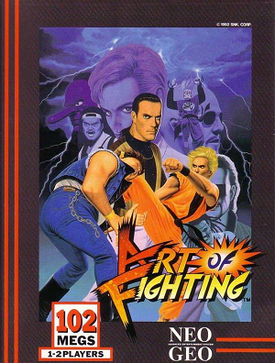
 ACA Neo Geo: Art of Fighting 2 on Xbox One
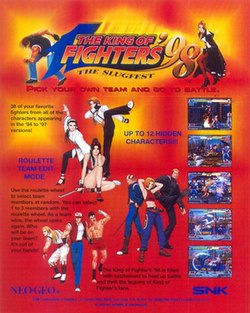
 ACA Neo Geo: The King of Fighters '98 on Xbox One
 Touhou Hyoibana: Antinomy of Common Flowers on Switch
 Tsuribaka Nisshi on PlayStation












 Another SquareThought Site