

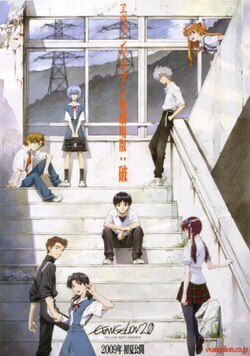

There is a peculiar pleasure in watching a sprawling, theology-stuffed, mecha-laden feature film get shrunken down to sprites and smiley faces for handheld play. Puchi Eva: Evangelion @ Game for the Nintendo DS embodies that very oddity - a tie-in that treats Neon Genesis Evangelion like a beloved franchise and then proceeds to molest it gently into chibi form for the purposes of portability and promotional cross-pollination. Serious-minded animation aficionados might scoff; the rest of us, raised on sticker books and lunchbox trades, will grin at the idea of Unit-01 with an oversized head and an attitude problem you can carry in your pocket. I write in the spirit of the old-school reviewer: measured, slightly world-weary, and inclined to hold a cartridge up to the light to admire its label. In the case of Puchi Eva, there is less cartridge and more novelty: the DS is a platform that encouraged experimentation and promotional tie-ins, and this title is one of those little experiments. The document provided to me - a film-centric dossier on Evangelion: 2.0 You Can (Not) Advance - confirms what collectors already suspected: the petite, promotional game was used as a vehicle to introduce and tease characters. Notably, it contained a character picture prize featuring Mari Illustrious Makinami described simply as a "Mysterious girl." That single fact makes this tiny title historically interesting, if not fully consequential. If you picked up Puchi Eva expecting the cinematic gravity of Hideaki Anno, you will land somewhere between bemusement and affectionate bafflement. If you picked it up because you enjoy handheld curios and like to see how massive franchises translate into novelty gifts, then put your stylus down and read on.
There is scant hard documentation of Puchi Eva's gameplay in the source material, so the following is a careful combination of known fact (the game's existence on the Nintendo DS and its use as a promotional platform featuring picture prizes) and a conservative, educated reconstruction of what the title is and how it plays. Consider this the reviewer's annotated field report, not a full developer's manual. At its heart, Puchi Eva operates like many tie-in mini-game collections of the era. The DS, with its dual screens and stylus, begged for small, immediate amusements: short rounds, simple objectives, and a reward loop that fed collectors' instincts. The title's raison d'être seems to have been twofold - to capitalize on Evangelion's publicity for the film Evangelion: 2.0 You Can (Not) Advance, and to provide fans with small, repeatable gameplay loops that rewarded completion with visual collectibles, the most talked-about of which (according to the supplied document) was a Mari picture prize labelled "Mysterious girl." Mini-games in such packages typically include timing challenges (think: tap the stylus when a marker hits a target), light puzzles (slide-based unlocking or pattern-matching), and possibly a paper-doll or sticker-book mode where you arrange chibi pilots and EVA units for postcard-worthy screenshots. Imagine a handful of bite-sized affairs: dodge-the-Angel (tap to dodge incoming shapes), tune-the-synch-rate (press the stylus in rhythm to a little bar), and assembly tasks (drag and drop parts of an EVA into the correct silhouette). They exist to be picked up, enjoyed for a minute or five, then set aside - the digital equivalent of a vending-machine prize. A promotional cleverness here is the concept of "character picture prizes." You progress through the mini-games, and in return you receive small images - wallpaper-style illustrations, chibi portraits, or trading-card frames - that you can view in a gallery. It is these prizes, more than the core mechanics, that likely made Puchi Eva memorable to fans. The presence of Mari as a prize is noteworthy because the character was being teased by the film's publicity and merchandise program; putting her inside a DS title was a way to both reward players and to seed anticipation. For fans who collected the full Evangelion marketing mosaic - Be@rbricks, special phones, event figures - a chibi Mari on a DS screen was another tile in the mosaic. From a mechanical standpoint, the experience is deliberately shallow but tidy. Mini-game timing windows are forgiving; failure results in a repeat rather than punishment. The DS' touchscreen is the primary control method, with the D-pad and buttons serving as backup for a few segments - the old-school reviewer in me misses when games forced you to map actions to face buttons rather than rely exclusively on the stylus, but this is a promotional title, and accessibility takes precedence. Replay value is mostly driven by completionism. Collect all the pictures, unlock a handful of hidden variants, and ta-da - you have wrung the title dry. That might sound faint praise, but it is the right kind for a game meant to be a pocket-sized amuse-bouche. Expect to spend an evening with it, return to it in short bursts over the next week, then tuck it away as a curiosity for later reference. For die-hard Evangelion fans, particularly those tracking the Rebuild project's incremental reveals, the reward loop is more than enough. Tone-wise the game treats the source material lightheartedly. The existential dread of the films is absent, replaced by goofy animations and exaggerated chibi expressions. It is tempting to see that as sacrilege; it is more accurate to call it adaptation by necessity. Evangelion's baroque mythology does not shrink well to a 256x192 pixel screen, so the developers wisely elected to emphasize charm over complexity. If you are the sort of player who judges a title solely by depth of mechanics, Puchi Eva will underwhelm. If you are the sort who understands that a tie-in can be a collector's piece with playable features, then this DS game is exactly the sort of small, tasteful indulgence that justified shelf space in the late 2000s and early 2010s retail ecosystem.
Evaluated as a handheld product that sits beside a blockbuster film famed for its kinetic, sometimes CG-enhanced set pieces, Puchi Eva's graphics are intentionally coy. The document on Evangelion: 2.0 makes much of the film's integration of 3D CG and newly designed Eva units; the DS game, by contrast, opts for a chibi aesthetic that reframes the franchise into smiley-eyed pilots and compact Evangelions better suited to the hardware. Pixel work and sprite animation are competent. Backgrounds are simplified, with pastel palettes and occasional nods to the film's iconography - NERV logos, entry plugs rendered as tiny rectangles, and the sort of stylized cityscapes that read as "Tokyo-3-lite." The DS' limited palette is used with restraint: shading is minimal but clever, outlines are bold enough to read at a glance, and animations are punchy where they need to be (landing animation on Unit-02's chibi sprite, for example) and economical elsewhere. The effect is akin to watching a glossy, miniature diorama version of the film rather than the film itself. One of the game's strengths is how it turns the weighty visual language of Evangelion into emotive caricature. Shinji's perpetual indecision becomes a wide-eyed blink; Asuka's brattiness is a cheeky smirk; Rei's reserve is a small, almost mechanical smile. The Mari prize image - labelled in the film documentation as "Mysterious girl" - is presented in a way that teases rather than reveals, a tiny little cliff-hanger you can slip into your DS gallery. If you expect the film's thunderous EVA battles, you will be disappointed. If you accept that the DS title is a different beast - a promotional, cute-skinned cousin of the Rebuild films - then the graphics are delightful. They deliver exactly what the package promises: portable charm, clear designs, and a visual wink to the bigger universe. Technically, load times are negligible (as befits a cartridge-based or lightweight DS-ROM title), and the dual-screen presentation is used for game-state information and galleries in the customary fashion. Nothing here pushes the DS, and it doesn't pretend to. The artwork is the selling point, and it succeeds.
In the sober, slightly pompous tone of a 1990s reviewer who still believes in editorial responsibility, let me state plainly: Puchi Eva: Evangelion @ Game is not a lost masterpiece and it was never meant to be. It is a promotional, pocket-sized diversion that does a specific job very well. It converts Evangelion marketing energy into a tactile collectible experience, dresses the franchise in chibi art that reads charming on the DS screen, and offers a handful of short, well-executed mini-games that reward persistence with picture prizes. The presence of Mari Illustrious Makinami as a "Mysterious girl" picture prize ties the game into the broader rollout of Evangelion: 2.0 and gives the title a place in the franchise's marketing history. To issue a final judgment: for collectors and fans who want a cute, portable slice of Evangelion - especially those who enjoyed the slow drip of reveals during the Rebuild campaign - Puchi Eva is a recommendable keepsake. For players seeking mechanical depth or a faithful translation of the films' cinematic heft, temper your expectations and treat this as fan service, not a substitute for the main event. Scored purely on its ambitions and success at meeting them, I award Puchi Eva a 7.0 out of 10. It is playful, polished in small ways, and historically fun. It will not change the medium, but it stands as a pleasant example of how a major franchise can be reduced to pocketable form without losing its personality. If you find one in a second-hand bin or tucked among Evangelion merch at a convention, pick it up. Your DS - and your inner twenty-something who bought every promotional postcard with trembling hands - will thank you.
 Press Your Luck on PS3
 Game Dev Story on PS4
 One Piece: Pirates' Carnival on PS2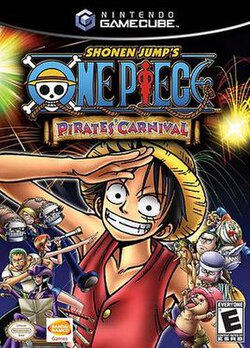












 Another SquareThought Site