

 Feb 2026
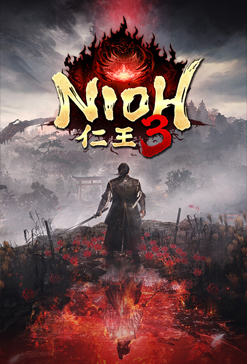

Nioh 3 takes the series out of the narrower corridors of earlier entries and into broader fields of battle while doubling down on the technical heartbeat that made the franchise a darling of the 'I-died-but-it-was-worth-it' crowd. Built on Team Ninja's Katana Engine and released for PS5 (and PC) in February 2026, this is a sequel that is unabashedly engineered around mechanical clarity: tight inputs, discrete systems that stack together (Ki, stances, guardian spirits, Soul Cores) and a new, deliberately asymmetric Ninja playstyle designed to change how you think about stamina, spacing and punishment. If you care about the plumbing of combat systems more than the poetry of story beats, Nioh 3 is a delight - and a mild physical test for your controller thumb.
Nioh 3's combat is essentially a systems design thesis with swords and smoke bombs. The game keeps the core Samurai loop familiar: three weapon stances, Ki as the stamina resource, and the Ki Pulse concept (a signature of the series) that rewards rhythm by refunding stamina immediately after an action to keep combos flowing. Where Team Ninja gets interesting is in how it deliberately bifurcates playstyles. Samurai handles the old-school Nioh cadence - stance switching to exploit move sets, risk-managed Ki expenditure, and Ki Pulse timing as the primary skill ceiling. Doing this well is about reading animation windows and committing to the follow-up; the system rewards precision and patience. The Ninja playstyle is an engineered contrast. Rather than slightly rebalancing existing systems, Team Ninja introduces a new toolkit: three ninja tools in place of stances, an evasion-forward design, better aerial and ranged integration, and the replacement of Ki Pulse with "Mist." Mist spawns a clone that acts as both a taunt and positional tool, allowing a quick dash behind enemies for burst damage. This choice is smart on a design level because it preserves the same input language (attack, evade, special) while changing the outcome space: Samurai is a stamina-combo orchestrator; Ninja is a reposition-and-execute predator. The two playstyles do not share equipment, which is an unusual but intentional constraint that forces the player to think in terms of archetypes rather than hybridizing every build into a single overpowered chimera. Complementing both styles are the familiar guardian spirit transformations, Arts Proficiency and Soul Cores. Arts Proficiency fills as you deal damage and unlocks a high-impact attack when full, giving players an additional resource to manage during fights. Soul Cores and guardian spirits add another layer of modularity - temporary transformations and passive augmentations that stack into a player's identity in combat. New to this entry is a parrying mechanic that feels less like a bandage on a stamina system and more like an alternate timing puzzle: you can interrupt aggression not only by depleting Ki but by precise parry windows. It's a welcome addition that increases the richness of enemy encounters and creates more moments where mechanical skill - not just stat optimization - decides outcomes. Level design has shifted, too. Nioh 3 abandons the near-linear mission corridors in favor of larger explorable spaces and points of interest. The result is a hybrid of focused, hand-crafted combat encounters and semi-open fields with optional side quests and combat challenges. This has engineering implications: the Katana Engine has to handle a wider spatial scope, streaming more assets and supporting more emergent enemy placement without losing combat tightness. Team Ninja's decision to include two online modes - "Summon Visitor" for summoned help on bosses and "Expedition" for co-op exploration of open fields - complements the expanded geography. Expedition, in particular, highlights the game's ambition: co-op in larger areas demands predictable sync of enemy states, damage reconciliation and netcode that keeps guard transformations and Arts activations coherent across clients. From a systems perspective the game balances accessibility and depth. Reviews and aggregate scores show a broad critical approval, and you can see why: the interface telegraphs mechanical consequences. Ki costs, Arts Proficiency meters and transformation timers are visually and audibly distinct; the PS5 demo helped demonstrate how these layers combine in real time. The decision to keep the core Samurai mechanics intact while creating a fully separate Ninja toolkit is the kind of design move that lets Nioh 3 appeal both to long-term series players and newcomers drawn to the shinier mobility toys. It does introduce a cognitive load: mastering two disconnected equipment pools and their respective meta keeps the learning curve high, and the game's reward isn't a single optimized build but the player's ability to read and switch mental models mid-run.
Technically, Nioh 3 leans on the Katana Engine to stitch together multiple historical eras - Edo, Sengoku, Heian and Bakumatsu - into a single campaign. The visual pipeline prioritizes contrast: foliage and wide fields in outdoor sections, dense, haunted interiors for Crucibles, and the shimmering aberrations of Crucinite corruption. Character customization is deeper than cosmetic, and animation fidelity is high enough that combat windows are readable; that clarity is crucial because the combat system demands frame-accurate reactions. Team Ninja's art direction helps here: enemy telegraphs are designed to be visually distinct so parries and Ki timing don't rely solely on sound cues. On PS5 the game benefits from faster asset streaming and lower background load times compared to previous consoles, which supports the larger explorable spaces. The engine's handling of guardian spirit transformations and Soul Core effects is punchy - important for moment-to-moment feedback. The score and sound design (composed by Yugo Kanno and Akihiro Manabe) play a critical role in telegraphing hits, Arts Proficiency fills and transformation states; audio cues are as much a part of the UI as meters and icons. The only caveat - one reported by some reviewers - is that the open areas occasionally highlight the series' tradeoff between spectacle and density: larger spaces are great for exploration, but they sometimes dilute the tight choreography of previous, more focused encounters.
Nioh 3 is a technically confident evolution rather than a reimagining. Team Ninja took the series' robust mechanical foundation and asked: what happens if we split the soul of combat into two distinct play philosophies and then expand the world around them? The answer is a game that respects the minute timing and systems-read mastery fans expect, while offering enough new toys (Mist, ninja tools, a parry system, larger maps and cooperative Expedition mode) to keep the metagame interesting. If you live for optimizing rotations, parsing animation windows and iterating on build identity, Nioh 3 will reward your engineering impulses. If you want hand-holding, it can feel like being thrown into a calculus exam with a katana. The PS5 release showcases how modern hardware can preserve combat clarity while expanding scope; it also highlights the design trade-offs required when going bigger. Sales and critic aggregates suggest Team Ninja mostly nailed the landing: critical praise, strong concurrent Steam performance and over a million copies sold quickly are indicators that the recipe worked. For technical players who enjoy dissecting how combat systems interlock - and who appreciate a joke about Ki being the game's least reliable energy drink - Nioh 3 is a compelling, mechanically rich stop on the way to becoming a slightly more patient, very slightly bloodier samurai (or ninja) version of yourself.
 Rise of the Ronin on PS5
 PlayStation Home on PS3
 Gaelic Football '25 on Xbox Series X/S
 Ōkami on PS2
 Together! The Battle Cats on Switch
 Ninja Gaiden 4 on Xbox Series X/S
 Ninja Gaiden II Black on Xbox Series X/S
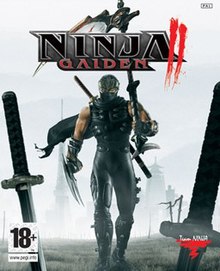 Ninja Gaiden: Master Collection on Switch
 Ninja Gaiden 4 on PS5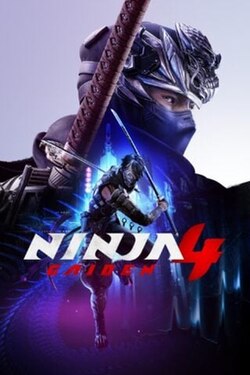










 Another SquareThought Site