

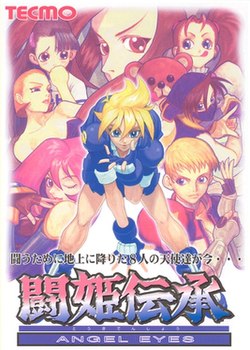

Tōkidenshō Angel Eyes arrived on the PlayStation as a slightly oddball, all-female fighting game that feels like the love child of a 90s arcade cabinet and an anime character sheet. Tecmo's first trip into the fighting genre, it is notable less for redefining how you mash buttons and more for giving each of its roster members a little narrative gravity - especially in the PlayStation port, which tacked on fully voiced intros and endings. The game's roster is an eclectic parade: a biker girl, a volleyball ace, a schoolgirl, a shadowy ninja, and someone who legitimately fights with a teddy bear. On paper it reads like a cosplay convention's warm-up act, but the PS version adds story-mode treats (and unlockables) that turn these archetypes into half-formed but recognizable people with wants, grudges, and freelance motivations. The result is a fighting game that's less Street Fighter thesis and more 'slice-of-life punch party' - a title that invites you to examine the souls behind the hairstyles even if the combat sometimes behaves like it drank an energy drink and forgot how gravity works.
Angel Eyes plays as a brisk 2D fighter with all the expected trimmings: punches, kicks, special moves, and an assortment of techniques that let the cast feel distinct. Where it gets weird - and narratively interesting - is in two design choices that bleed into character identity. The first is the so-called "reverse combo correction". Normally, fighting games nerf damage as combos grow so that a ten-hit string doesn't delete someone's health bar faster than a microwave zaps a burrito. Here the devs accidentally did the opposite: as combos chain, damage increases. The immediate mechanical effect is chaos - any character with a reliable starter and a reachable follow-up can, in theory, dispatch opponents instantly. But if you squint and put on your literary hat, this mechanic gives the game a different emotional register: fights are meant to feel decisive and final, like duels where one character's resolve overwhelms the other. It turns a schoolyard scuffle into a melodramatic moment of 'this is now personal', which fits the small-cast, high-drama roster. The volleyball player's spike combo becomes a narrative meteor; the biker's reckless rush reads as a career-ending gamble. The PS story mode, with its voiced intros and endings, leans into that finality - endings land like punctuation marks rather than ellipses. The second quirky system is "homing jumps": jumps that actively thrust you toward the opponent. This encourages aerial skirmishes and gives certain characters a predatory feel. Ninjas and volleyball players, both expected to be nimble, benefit from these homing mechanics, and it allows the story to express itself in motion. For example, the ninja's playstyle - precise, stalking, and suddenly on you - reads like a personal arc about a character learning to close distance on unresolved conflicts. The PS port also expands the roster visually, adding 2D renditions of Kiriko, Reika, and Lina as unlockables; mechanically these unlocks often feel like variations on existing themes, but they come with the narrative bonus of additional intros and endings. Because the roster is small, matchups carry narrative weight. A biker girl who rushes forward like someone charging out of a breakup will face off against a schoolgirl who is more defensive and technical; the clash becomes almost Shakespearean: speed vs. technique, attitude vs. discipline. The teddy-bear fighter is both comic relief and tragicomic icon: a character who brings a plush toy into mortal combat says something about denial, or clinging to childhood in a world that insists you decide between spiking a volleyball and slamming someone through a billboard. Story mode uses short intros and endings to tinge wins and losses with context: you don't just win, you answer a question about who you are. It's not longform character exploration, but it's enough to make you care whether the volleyball ace was practicing for redemption or just for glory. Modes are basic but functional: Arcade, VS, Training, and the story-focused mode added on PlayStation. Gameplay is frenetic and punishing; the reverse combo issue makes matches swing wildly, so learning a character's bread-and-butter string is less about style and more about survival. In a sense, this mechanical volatility mirrors the cast's emotional volatility. Fans who liked the high-risk bursts of speed and the air battles (which Famitsu called fun, if a little awkward) will find the game's systems rewarding; players who prefer meticulous balancing may be frustrated. Either way, the combat reinforces character: every move feels like it's telling you something about who the fighter is and how they resolve conflict - whether that resolution is brutally efficient or adorably misguided.
Visually Angel Eyes is a stylistic patchwork sewn together with good intentions and mid-90s tech limitations. The game blends pixel art and pre-rendered 3D models - characters were built sometimes as hands-drawn sprites, sometimes pre-rendered polygons - creating a roster that doesn't always harmonize but is charming for its contradictions. Famitsu noted the mix and shrugged that it wasn't a deal-breaker, and that's fair. Up close, some frames look like a cutout from a fight magazine while others have that polygonal sheen that screams 'early 3D experiment.' On the PlayStation port the game gains proper intros and endings with voice acting, which turns static portraits into mini-dramas and helps smooth the visual jolt between art styles. Character portraits and cut-scenes lean into anime tropes - close-ups, dramatic poses, a lot of hair wind - which is exactly the vibe you want when the plot is 'girl punches other girl for emotional closure.' Animation can be a little choppy in places, and some pre-rendered elements bring a slightly plasticky feeling, but the game's personality shines through. Stages are functional backdrops rather than set pieces: they provide color and context, but the focus is always on the fighters. The arranged soundtrack on the PS port and the drama CD release indicate Tecmo invested in giving these characters more than just sprite work; they wanted them to make noise, sing their tiny theme songs, and leave you humming a jingle about a bear-shaped grapple. If you value cohesive hand-painted animation, Angel Eyes will frustrate you. If you value characterful design and 90s weirdness, it's a visual mixtape that hits more often than it misses.
Tōkidenshō Angel Eyes is not the fighting game to learn if your dream is to become a methodical combo artist at the local tournament. What it is, however, is a compact, personality-driven fighting experience where the roster's identities matter as much as their move lists. The PlayStation port's voiced intros and endings transform the game from a set of matchups into a tiny ensemble drama: wins and losses become plot beats, and the bizarre mechanics are reframed as expressive decisions rather than mistakes. Fans of Tecmo's later work - the Dead or Alive team includes alumni from this project - can trace stylistic ideas here: a focus on character presentation, a willingness to experiment, and a penchant for spectacle. The reverse combo correction and homing jumps will either be an exhilarating roller coaster or a balance headache, depending on how you feel about instantaneous reversals of fortune. The mixed graphical styles might look uneven, but they are also the game's visual personality. If you enjoy weird 90s arcade vibes, all-female casts whose stories leak into gameplay, and narrative bite-sized character arcs, Angel Eyes is worth a spin. It's an imperfect time capsule with a lot of heart - and a teddy bear that will probably punch you into next week. Recommended for curiosity-driven players and collectors; serious competitive players should look elsewhere unless they're into intentionally chaotic rulesets. Final score: 7/10 - charismatic, occasionally brilliant, occasionally unbalanced, and always a little bit theatrical. It's a game that wants to be judged as both a fighting title and a short anime anthology, and in that dual role it mostly succeeds.
 JoJo's Bizarre Adventure: Eyes of Heaven on PS4
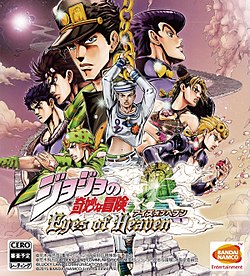 JoJo's Bizarre Adventure: Eyes of Heaven on PS3
 ACA Neo Geo: Art of Fighting 2 on Xbox One
 ACA Neo Geo: The King of Fighters '98 on Xbox One
 Touhou Hyoibana: Antinomy of Common Flowers on Switch
 Art of Fighting Anthology on PS2
 Tecmo Super Bowl on PlayStation
 Dragon Quest Builders 2 on PS4
 Nobunaga's Ambition: Awakening Complete Edition on Switch 2
 Wild Hearts S on Switch 2
 Hyrule Warriors: Age of Imprisonment on Switch 2












 Another SquareThought Site