

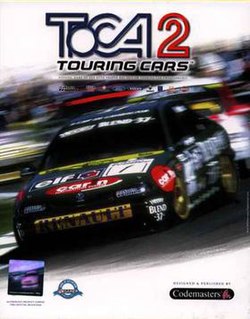

TOCA 2: Touring Cars is the sort of racer that politely asks: "Do you want a realistic driving challenge or do you want to pretend your controller is a magic Mario Kart rocket?" Released by Codemasters as the second entry in the TOCA series and based on the 1998 British Touring Car Championship, this PlayStation title sharpened the physics, added a proper damage model and stuffed the grid with proper real-world tracks and cars. If you want arcade-level forgiveness, go buy something with neon flames and ridiculous power-ups. If you want a game that will teach you (sometimes painfully) how to manage weight transfer, braking points, and the cost of hugging a wall, TOCA 2 is your guilty pleasure. This review zeroes in on the challenge aspects and the player skills that the game asks you to cultivate-because while the graphics and multiplayer are fun, it's the way the game punishes arrogance and rewards discipline that keeps you coming back.
TOCA 2 wears its racing-sim influence on its sleeve. The headline changes from the original are the tightened physics, more detailed damage, realistic UK circuits and the addition of support races, and each of these tweaks changes how the game tests you. Right away the title makes it clear that the challenge isn't just about going fast: it's about being consistent, knowing your car and respecting the consequences of contact. The core Championship mode is where most players will learn humility. Championships in TOCA 2 vary in length and difficulty, and the game ties AI density and aggressiveness to those settings in a way that forces you to adapt. Pick a short, easy championship and you'll still face cutthroat starts and aggressive mid-pack jockeying; pick the longer, tougher options and you'll rapidly learn the virtues of racecraft-defensive lines, proper braking zones, and the patience to build a position rather than steal one and get rewarded with a spun-and-dented car. Car selection matters in a way the game won't sugarcoat. The field is packed with touring-car staples like the Audi A4, Ford Mondeo, Honda Accord, Nissan Primera, Peugeot 406, Renault Laguna, Vauxhall (Opel) Vectra and Volvo S40. Each feels distinct: some carry their weight into corners and understeer, others bite on turn-in and punish you mid-corner if you are greedy with the throttle. That variety demands transferable skills-learning how to modulate throttle, sensing the onset of understeer versus oversteer, and developing a feel for which cars recover from a mistake and which will make you regret it. The damage model is a significant part of the challenge. Unlike many contemporaries (hello, Gran Turismo fans of the era), TOCA 2 tracks and punishes contact. Bump another car and you'll potentially lose downforce, steering precision, or even have your lap time ruined. The AI will also use contact as a tactic; expect late-braking divers to clip your bumper if you leave the door open. That pushes the player to clean racing: set defensible lines, be precise in overtakes, and treat collisions as a last resort. The game rewards smoothness and pays dearly for impulsive aggression. Track knowledge is another pillar of the game's difficulty. All the circuits used are real British race tracks-Thruxton, Silverstone, Donington Park, Brands Hatch, Oulton Park, Croft, Snetterton and Knockhill. These aren't cookie-cutter twisty tracks; they have unique character. Thruxton is fast and punishing, Silverstone is high-speed and requires confident commitment, Donington has that mix of long sweepers and tight braking zones, and Knockhill's elevation changes will mess with your braking markers. TOCA 2 makes finding the braking point and apex a practice in memory and measurement. You'll spend laps learning where the curb looks like it should be and where it actually is. Practice options are sensible and aimed at helping you conquer that knowledge curve. The test track mode is a quiet, almost zen-like place to learn precisely how each car behaves in corner variations. The challenge mode delivers sprint-style discipline: get to checkpoints under time pressure. It is brutally educational-forcing you to master acceleration windows, throttle control and line consistency under stress. It's a little like a driving bootcamp where the instructor is an impartial timer and a pair of unforgiving tyres. Weather and race settings in single-race mode add layers to skill development. You can toggle weather conditions and combine them with different lap counts and AI opponents. Rain and mixed conditions in this era are often simple, but TOCA 2 uses them to highlight the importance of grip management and conservative inputs. Wet races amplify the need for smooth steering, late and light braking, and a gentle return to power; the margins for error shrink and mistakes get magnified by the damage model. Support races-Formula Ford, Ford Fiesta championships, Jaguar XJ220, Lister Storm, TVR Speed 12 and other oddities-are more than palette cleansers. They force you to re-calibrate. A nimble Formula Ford teaches you commitment and precision through slow corners; a heavy-powered supercar shows you how brutal lift-throttle transitions can lead to oversteer. Rotating through different vehicle classes builds an adaptable muscle memory: once you've driven the same line in three cars with wildly different behavior, you begin to anticipate how a car will react rather than react after the fact. AI behavior is a double-edged sword. It's not the rubberband chaos of arcade titles, but it is competitive and sometimes aggressive. The opponents will attempt realistic racing maneuvers and won't hesitate to exploit a gap. That means you must refine spatial awareness and defensive driving. Watch the mirrors, choose when to yield, and learn racecraft-especially in starts and restarts where the pack tends to compress and mistakes multiply. Multiplayer on PlayStation with the link cable is a revelation if you have the gear and a friend who won't throw the second controller in frustration. The four-player mode (two consoles, two players each) creates a chaotic, human-driven challenge: humans are less predictable than the AI, and that unpredictability is the best skill test of all. Wheel-to-wheel battles against people teach negotiation, psychological pressure, and opportunistic overtakes in a way AI cannot replicate. TOCA 2 subtly encourages repetition and incremental improvement. There are bonus cars and tracks unlockable via Championship progress, rewarding consistent podiums and clean laps. That progression loop is the carrot for transforming your driving from frantic to surgical. The game's learning curve is firm but fair: it will punish sloppy inputs, but it gives you the tools-test track, single-race customisation, and support events-to get better. If the game has rough edges, they mostly concern presentation and moments where the new cars feel superficially added, but mechanically they still contribute to the learning experience. For players focused on the challenge, these are small gripes. The real struggle is internal: resisting the urge to drive like a maniac and instead mastering the patient, consistent skillset TOCA 2 rewards.
On PlayStation hardware, TOCA 2 upgraded the look from its predecessor with cleaner car models and more detailed tracks. It's not photorealism-this is late-90s polygonal charm-but the visuals do a functional job of informing the player. You can see corners, curbs and reference points clearly enough to learn braking markers, which matters more here than aesthetic sheen. Damage is visually represented in a way that's immediately legible: dent a bumper and you'll know you need to adjust your approach for the next corner. The soundtrack and opening video (E-Z Rollers' "Soundclash" on some releases) add an energetic backdrop, but the visuals are primarily utilitarian-serving the challenge-driven gameplay rather than distracting from it.
If you want a racer that handholds you through shiny menus and then hands you a participation trophy, TOCA 2 is not that game. If you want a title that will teach the core skills of real racing-precision braking, weight transfer, spatial awareness, consistent lap times and the art of clean overtakes-then TOCA 2 is a brilliant compact coach. The improved physics and damage model make every contact meaningful, the roster of real-world British circuits forces memorization and adaptation, and the variety of cars and support races gives you a versatile skillset. It's forgiving enough to be fair and unforgiving enough to be rewarding. The multiplayer options are a delightful bonus if you can wrangle the link-cable circus, and the test/challenge modes give structured ways to practice. For a PlayStation-era touring car sim that focuses on what matters-driver skill-TOCA 2 delivers. Bring patience, a willingness to learn from mistakes, and a healthy respect for curbs. You'll get faster, and when you finally out-brake that Audi at Donington without drama, the reward isn't just a win on screen-it's the warm, smug glow of earned competence.
 Project Cars on PS4
 Project Cars 3 on PS4
 Roary the Racing Car on DS
 Team Sonic Racing on Switch
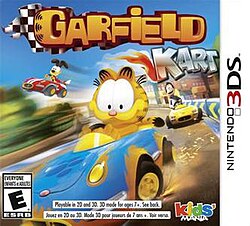
 Garfield Kart: Furious Racing on Switch
 Ben 10: Galactic Racing on PS3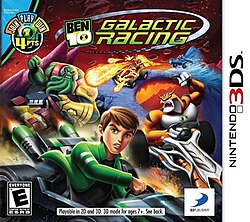
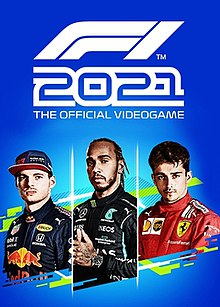
 F1 2021 on Xbox Series X/S
 Dirt 3 on PS3
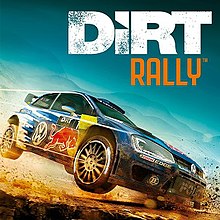
 Dirt Rally 2.0 on PS4
 Colin McRae Rally 2.0 on PlayStation
 F1 2021 on PS4












 Another SquareThought Site