

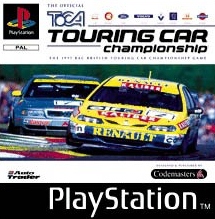

If you squint and treat a PlayStation memory card like a diary, TOCA Championship Racing reads like a glossy, petrol-scented soap opera: drivers with reputations, teams with grudges, circuits with memories. Released in North America as TOCA Championship Racing, Codemasters' 1997-98 Touring Car sim insists its characters are not just paintjobs and lap times, but personalities with arcs you can steer. The cover art - an Audi A4 duelling a Renault Laguna - is the poster for this drama: two faces in a stalled stare, each with a story. The game doesn't have cutscenes or melodramatic monologues, but it gives you the raw ingredients of narrative tension: eight works teams (two drivers each), fifteen rivals, nine circuits, and a season-long championship where every qualifying lap changes tomorrow's alliances. For people who want character development without a single line of dialogue, TOCA hands you a steering wheel and says, "Write your own tense."
Consider the player the protagonist - a rookie plucked from the grid, inserted into the first-named driver slot for any of the eight works teams. That slot is a script handed to you: take it and the original driver vanishes from the roster, replaced by your name on the livery. This is the game's subtle narrative device - identity swapping that rewrites the season. Starting at the back if you skip qualifying is the classic humbling prologue: the season barely starts before the hero must claw back respect. The championship mode is the story arc in miniature: twelve meetings, two rounds each, and a demand for consistency - 20 points needed to continue competing. It forces you to balance ambition and restraint. Push too hard and you collect warnings for unsportsmanlike conduct; accumulate six and you're disqualified. Warnings are the moral ledger of this world. They nudge the player from reckless hothead to seasoned contender who knows when to yield and when to strike. Every rival car is an antagonist with an implied biography. Fifteen AI competitors behave like individuals: the clingy front-runner who won't leave you an inch in a corner, the slow-but-calculating backmarker who ambushes you at hairpins, and the clinical teammate who moonlights as both ally and threat in the points table. The roster reads like a novel's supporting cast. Multiplayer gives the arc a communal twist: split-screen for two players on PlayStation (LAN and up to eight on PC) lets you write instant side plots - sibling rivalries, friendships tested over the chicane, or the awkward alliance where the losing player gets a speed boost and everyone pretends it's fine. Gameplay systems are the game's grammar for storytelling. You pick automatic or manual gearbox, choose between three camera views (rear, engine-bay perspective, and in-cockpit), and select weather and difficulty. Qualifying is your prologue: three laps to write your status for race day. Time trial is the inner monologue - quiet, obsessive, haunting - where the ghost car of your best time taunts you into improvement. The championship's unlockables (new circuits, secret cars, and cheat codes) serve as narrative rewards for endurance; they are the trophies and scars players carry into subsequent acts. The game subtly punishes sloppy theatrics: collisions, off-track excursions, and accumulating warnings all shape how your season is read by the scoreboard. Underneath the emotional beats is a surprisingly surgical simulation. Codemasters modeled the series with TOCA's cooperation - teams, sponsors, and the 1997 BTCC circuits recreated using Ordnance Survey data and on-site photography. Cars were laser-scanned to a quarter of a millimetre for authenticity. Those technical choices are a kind of method acting: the vehicles don't just look the part, they carry the weight of reality. Damage modelling gives each shunt a consequence; you don't just hear a crunch, you feel that the protagonist's reputation (and lap time) has been nicked. The engine even allows you to leave the track and explore circuit surroundings, which is Codemasters' way of giving setting its own narrative voice - the huts and grandstands whisper local history while you nurse a battered bumper. There are, of course, antagonistic constraints. The PlayStation version limits multiplayer to two players via split-screen, and the action moves fast enough that two-player mode sometimes collapses into visual chaos. The game runs at roughly 25 frames per second and renders cars at about 3,000 polygons; for its time this was a heroic effort, but it also means the game's faces aren't quite as expressive as later racers. Critics mostly forgave the visual sparseness because the handling and racecraft are so convincing. In short, TOCA's story is told through physics and consequence rather than dialogue - and for many players that's more than enough.
TOCA's graphics are the wardrobe department for our characters: not haute couture, but painstaking and accurate. Each car was laser-scanned, textured for both pristine and dented states, and presented with sponsor liveries that scream "this is a real team, not a generic polygon." The circuits were built from topographic surveys and photos, which gives each track a sense of place. Brands Hatch, Silverstone and the others are not interchangeable loops - they're neighborhoods with corners that remember your previous mistakes. The aesthetic constraint - 25 FPS and 3,000 polygons - is visible. Close-up, the world is a little blocky; at race speed, it feels raw and urgent. Critics pointed out the disconnect: the gameplay feels cutting-edge while the visual veneer lags behind. Edge magazine said no other PlayStation racer of the time matched TOCA's playability and excitement, while noting graphics as its weak point. That's fair: you can spot the seams if you freeze the frame and get philosophical about texture maps, but you will rarely freeze the frame because TOCA's races are kinetic, tense, and full of character. The music and sound - particularly the commentary - act as the chorus. Tiff Needell's voice is the game's Greek chorus, an ex-driver turned commentator who narrates with knowing amusement. He adds context and personality, the difference between a dry lap and a line that hints at rivalry. The development backstory reads like a production diary: Codemasters' 26-person team worked insanely long hours near the finish line, and the developers' obsession with accuracy shows. On the PC the lack of a 3D accelerator card dulled visuals, but even some PC reviewers declared TOCA one of the most exciting racers available. The game's engine later served as the basis for Colin McRae Rally, which means TOCA's visual DNA lived on and matured in subsequent projects. If graphics are the face, TOCA's facial expressions matured in its descendants.
If you approach TOCA Championship Racing as a simulation with characters rather than as a sterile car-collecting checklist, it becomes an engrossing saga. You are the protagonist: a nameless rookie who seizes a driver's slot, writes your name over someone else's, and spends a season reshaping a team's fate. The AI drivers behave like rivals with grudges, the circuits act like settings that remember your sins, and Tiff Needell's commentary stitches moments into a coherent narrative. Critics loved how it drove; they quibbled about how it looked. Commercially it was a runaway success - 600,000 PlayStation copies sold in Europe in the first six months - and it earned accolades and a Gold prize at the Milia festival. Its legacy is notable: TOCA arrived just before Gran Turismo and helped prime the market for realistic racing sims, and its engine powered future classics. Play TOCA if you want a season-long character study where every overtake is a plot twist and every mechanical sympathy is a moment of growth. It's not the prettiest storyteller on the shelf, but it's honest, demanding, and deeply rewarding. You'll leave races with more than a high score; you'll have a dossier of grudges, apologies, and hard-earned trophies - the rough-hewn arc of a racer who learned not just to drive, but to survive the little tragedies that make a champion. In short: fast, flawed, and full of personality - like any good protagonist should be.
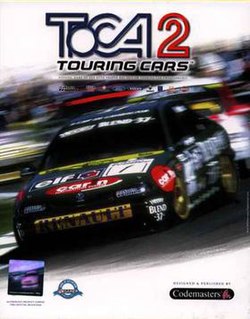 Roary the Racing Car on DS
 Team Sonic Racing on Switch
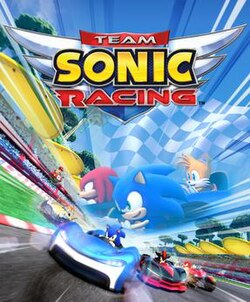 Garfield Kart: Furious Racing on Switch
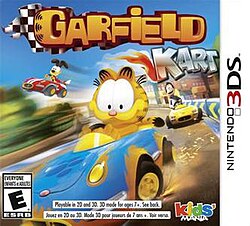 Ben 10: Galactic Racing on PS3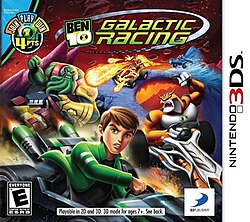
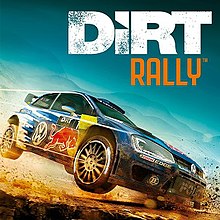 F1 2021 on Xbox Series X/S
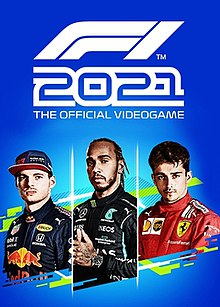 Dirt 3 on PS3
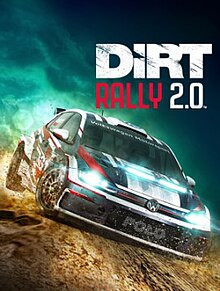
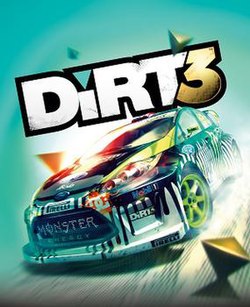 Dirt Rally 2.0 on PS4
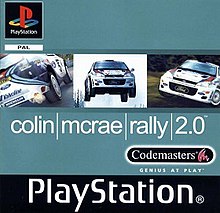
 Colin McRae Rally 2.0 on PlayStation
 F1 2021 on PS4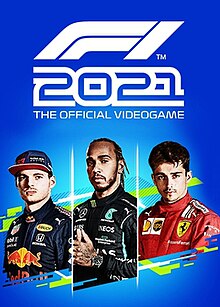












 Another SquareThought Site