

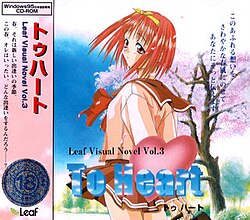

To Heart's PlayStation port is one of those transitional-era visual novels that sits awkwardly and charmingly between '90s PC eroge culture and the console-friendly, voice-acted narrative experiences that would dominate the 2000s. Leaf treated this port not as a straight copy-paste but as a rework: sex scenes excised for an all-ages audience, new scenarios and a new heroine added, and voice acting grafted into an engine that originally expected a quiet narrator and a lot of text. From a technical standpoint the PS version shows both the strengths and the limits of late-90s console ports: deliberate branching-plot architecture, sprite/CG-based presentation, constrained audio budgets that forced disc-count debates, and the clever use of the DualShock to add tactile micro-experiences. If you're into how design choices map to engineering compromises, To Heart on PS is a small textbook with pastel art and a lot of feelings.
At its core To Heart is a classical visual novel: the player's interaction is mostly reading with occasional decision points that branch the plot. But "classical" here means deliberately engineered. The game's day is split into four segments-commute, during school, after school, and evening-creating a discrete time grid. The designers used that grid to schedule four distinct event types: dated events trigger automatically; affection events depend on a heroine's current affection flag; frequency events fire after meeting a character a set number of times; and VS events if two characters' affection levels clash. This event taxonomy is a tidy example of how narrative state machines can be kept readable and debuggable: instead of a tangle of nested flags, you have event categories mapped to explicit temporal windows. It's the kind of structure that makes writing a walkthrough straightforward and makes save-file desyncs less likely when you revisit scenes.
Visually the PS release keeps the sprite-over-background approach you'd expect from a 1997 visual novel. Character sprites occupy the foreground while hand-painted backgrounds set the scene; at key moments the engine swaps to CG artwork that replaces both the background and sprites. That swap is important technically: CGs are higher-resolution, single-frame composites, which reduces the complexity of layering in the engine and gives the player a cinematic punctuation. The PlayStation's GPU and VRAM constraints influence sprite size, palette choices, and how many facial-expression variants could be resident at once. The PS team also added voice acting, which is the single largest technical change between the original PC eroge and the console port. Voice audio forced a trade-off between bitrate/quality and disc count-Leaf chose to include substantial voice data and shipped the game on two discs. That decision shows a priority: prefer richer audio fidelity over fewer physical media swaps, a sensible call for a title selling on emotional connection. The PS controller is used for more than directional input; two bonus scenarios leverage the DualShock vibration feature as a pseudo-interaction mechanic-"massage" minigames that are essentially tactile jokes but also a clever way to make the controller itself part of the user experience.
To Heart on PlayStation is less about revolutionary gameplay and more about how to shepherd a text-heavy experience onto a cartridge-era console without losing narrative depth. Technically it's tidy: well-structured event scheduling, clear branching mechanics, and a practical approach to audio/asset trade-offs. The added voice acting and bonus minigames make the PS build feel like a reimagining rather than a simple port, and the use of DualShock vibration for small omake experiences may have been gimmicky, but it was a forward-thinking example of using hardware affordances to diversify interaction. Its weaknesses are the ones you expect from the era: static presentation compared to later kinetic novels, and the branching model still heavily dependent on repeat playthroughs to experience all ten heroine routes. If you enjoy dissecting how narrative state, media budgets, and console hardware shape the player experience, To Heart (PS) is a satisfying case study-equal parts design pragmatism and earnest romance. It earns a solid 7.5/10 for marrying technical decisions to emotional payoff, even if modern players will find much of the interface and presentation quaint. If you're looking for a late-90s visual novel that actually thinks about its engineering as much as its hearts, this is one to play (or at least to study).
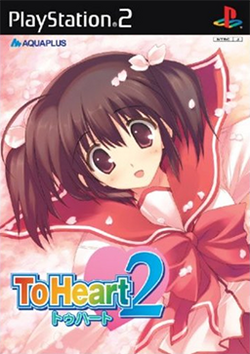 Tetris with Cardcaptor Sakura: Eternal Heart on PlayStation
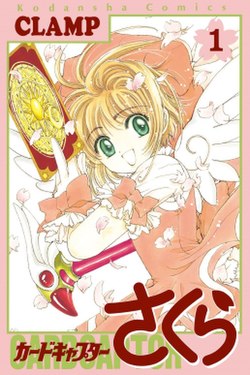 If My Heart Had Wings on Switch
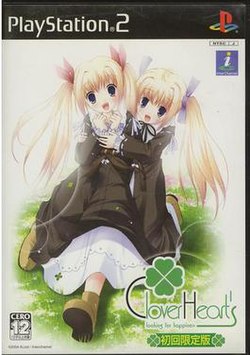
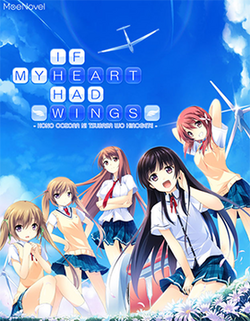 Clover Heart's: Looking for Happiness on PS2
 Tokimeki Memorial Drama Series Vol. 3 Tabidachi no Uta on PlayStation
 Oshiete! Popotan on PS2
 Tomoyo After: It's a Wonderful Life on PS3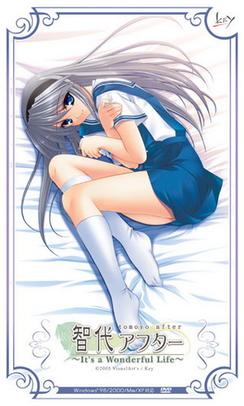












 Another SquareThought Site