

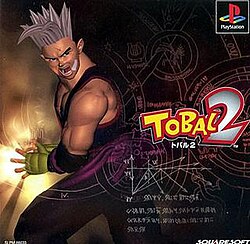

Tobal 2 is the weird, wonderful sequel that took the oddball 3D fighting formula of Tobal No. 1 and turned the dial to 'feature-rich'. Developed by DreamFactory and published by Square in Japan in 1997, it doubles down on technical ambition: a 60 fps 3D fighter with Gouraud-shaded higher-resolution models, compatibility with Sony's Dual Analog Controller on day one, and a Quest Mode that reads like an action-RPG grafted onto a versus engine. The game never left Japan officially, which preserved it as a cult object for importers and emulator aficionados, but its technical fingerprints - the massive roster of up to 200 playable characters, limb-specific experience systems, and aggressive use of PlayStation resources - make it fascinating to dissect even decades later. If you like your fighting games with a side of engineering bravado and odd mechanics, Tobal 2 is a juicy case study.
Under the hood Tobal 2 is still built around the same control philosophy as the first game: three attack heights (high/medium/low) are mapped to buttons, grappling and guarding are integral, and you can freely move in 3D arenas provided you face your opponent. That setup already rewards spatial thinking and positioning, but the sequel layers several unusual systems on top. The standout mechanical gambit is the Quest Mode, which turns the fighting engine into a light action-RPG loop. You explore six dungeons plus a town hub where you can eat, sleep, shop and save (the latter via in-town church buildings). Encounters drop items like food, stones, potions, money and weapons; those consumables and equipment affect a set of per-limb and combat-role XP values. Each arm and leg, your throw skill and your guard each gain experience independently. That means damage scaling is anatomical: a heavily trained right arm hits harder than a flabby left, and guard experience translates to damage mitigation. The effect is simultaneously clever and fiddly - the system rewards grinding specific attack types, which lets players engineer characters optimized for particular moves, but it also raises the cognitive load compared to run-of-the-mill fighters. A further meta-mechanic lets you capture monsters in Quest Mode using a purple stone when an enemy is nearly defeated. Captured monsters can be imported into versus/arcade play, swelling the playable roster to a reported maximum of 200 characters. Many of those 200 are palette swaps with stat bumps, but the system still has strategic implications: you can craft an erratic stable of fighters with wildly different hitboxes and move sets (and yes, you can obtain a chocobo for frivolity and mayhem). From a design perspective this blurs the line between 'character balance' and 'sandbox toybox', which makes Tobal 2 feel less like a competitive game and more like a playground for experimentation. Combat itself retains a pleasingly physical feel: grapples are meaningful, blocking has depth (and can be improved via food when stamina is nearly full), and DreamFactory added an unblockable fireball per character - a simple change with outsized effects on spacing and mind games. Movement is less constrained than typical 2D fighters; because arenas are fully 3D and the game keeps the camera and facing discipline, positioning becomes a stealthy third axis of strategy. Input-wise Tobal 2 shipped as the first PlayStation title compatible with the Dual Analog Controller in Japan, so analog stick precision for movement was supported at a time when many fighters were still D-pad-centric. The complexity of Quest Mode, plus the RPG-like stat management, does create a different pacing from arcade-only fighters. Instead of short sessions that hinge on memorized combos, Tobal 2 encourages investment in a character's growth and use of the save system to carry those stats into versus matches. For competitive purists that will look like scope creep; for players who enjoy mechanical depth and weird permutations of moves and bodies, it's an addictive loop. On the systems side, consider resource constraints: the game's enormous roster and the Quest Mode's persistent character data imply significant use of memory and save data. Historically this became relevant to localization efforts - Square allegedly cited limited PlayStation memory and the time cost of translating a text-heavy Quest Mode as reasons not to localize (alongside poor sales of the first game). The upshot is that Tobal 2 remained a Japanese exclusive for a long time, which helped it retain cult status but limited its competitive footprint.
Technically Tobal 2 is one of those PlayStation titles that reads like a hardware demo with a game bolted on. Ken Kutaragi's engineers reportedly measured the title as using 90% of the PlayStation's potential with their performance analyzer - where most games at that point measured <50% - and that claim is visible in the game's trade-offs. DreamFactory increased character model resolution and introduced Gouraud shading for smoother lighting transitions across polygons. The result is character geometry that pops relative to earlier PlayStation fighters: smoother silhouettes, fewer jagged normals, and improved visual fidelity for the era. Crucially, they held target framerate at 60 frames per second. Maintaining 60 fps while upping model resolution and implementing Gouraud shading is nontrivial on PlayStation hardware; it speaks to careful engineering on rendering passes, polygon budgets, and lighting calculations. The team likely optimized polygon distribution, relying on higher-res character models while keeping environments simpler - a common mid-90s tactic for keeping action feeling responsive while still looking impressive during fights. Where the engine shows its compromises is in the huge roster and Quest Mode content. To cram that much content into a PlayStation disc and memory footprint DreamFactory used tricks: many monsters are palette swaps with stat bumps (an economical reuse of animation and collision data), text boxes and limited UI memory for the Quest Mode, and itemization that leans on small data structures rather than duplicated big assets. The tradeoff is that while individual encounters and models look polished, the breadth of content sometimes feels assembled from the same mechanical building blocks rather than handcrafted unique pieces for every character. Textures and background detail are functional rather than sumptuous. Environments rarely compete with the character models for attention, which is intentional: the code budget prioritizes character fidelity and framerate. That decision makes matches readable - animation clarity at 60 fps is a huge gameplay plus - but it does give the visual impression that the game is squeezing forward-facing resources into the fighters themselves while economizing elsewhere. Audio complements the visuals with a soundtrack by Takayuki Nakamura that mixes jazz, funk and rock. It doesn't change the technical picture, but a strong OST helps sell the sense of a polished title balancing ambition and constraint.
Tobal 2 is a technical curiosity and a confident one. DreamFactory pushed PlayStation hardware in ways that made the game feel fluid and packed with content: a stable 60 fps, Gouraud-shaded higher-resolution models, Dual Analog support, and a Quest Mode that turns a fighting engine into an RPG playground. Those moves earned critical praise in Japan (Famitsu 36/40) and healthy sales domestically (over 318,000 copies in 1997), yet the game never became the international contender it might have been because of localization and resource decisions at Square. From an engineering standpoint Tobal 2 is rewarding to study. The limb-based experience system, the monster-capture crossover between modes, and the roster-management design are all interesting solutions to long-standing design questions: how to add longevity to a fighter, how to diversify move sets without exploding memory usage, and how to prioritize framerate versus fidelity. The compromise of palette swaps and simpler environments is apparent, but understandable given the ambition to hold 60 fps and pack hundreds of characters into one game. If you're into fighting game tech or the history of ambitious PlayStation titles, Tobal 2 is worth the detour. It's not a competitive mainstay like Tekken or Mortal Kombat, but it's a masterclass in making the most of constrained hardware and in grafting RPG systems onto a fighting core. That combination can produce oddball balance and chaotic matchups, which is precisely the charm here. For players who want responsive, frame-consistent fights and the intoxicating freedom to tinker with characters and monsters, Tobal 2 still hits hard.
 ACA Neo Geo: Art of Fighting 2 on Xbox One
 ACA Neo Geo: The King of Fighters '98 on Xbox One
 Art of Fighting Anthology on PS2
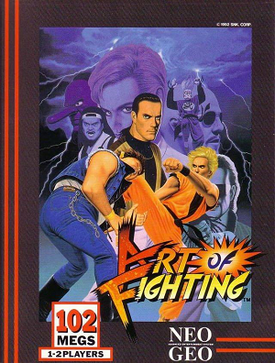 ACA Neo Geo: Art of Fighting on Xbox One
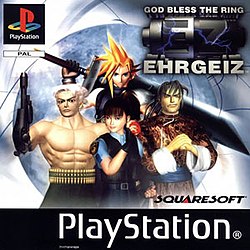 Crimson Tears on PS2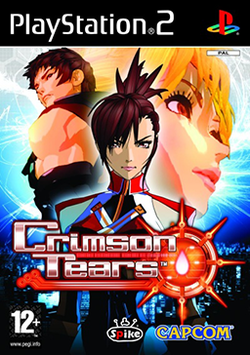












 Another SquareThought Site