

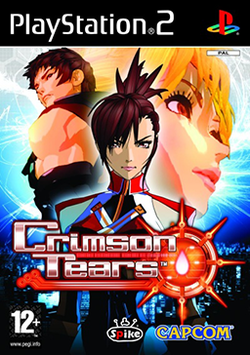

Crimson Tears arrives wearing a loud anime jacket and carrying a mysterious grudge against boredom. Set in Tokyo, year 2049, you pick from three cover stars - Tokio, Asuka, and Kaede - whose home has been destroyed and who now get to express their grief primarily through punching things until they stop punching back. DreamFactory, with Capcom and Spike handing out publisher snacks, built a single-player beat 'em up that mixes real-time combat with dungeon-crawler structure, throws on a generous coat of cel-shaded paint, and hopes you won't notice the wallpaper repeating. If you were hoping for subtlety or a sprawling open world to grieve your destroyed home in, this isn't your vibe. If you enjoy squashing wave after wave of enemies, watching slick anime cutscenes, and letting a procedural level generator decide the décor for the next five rooms, Crimson Tears will feel familiar and a little wild at the same time. Critics were split at launch - Metacritic settles on a "meh but not tragic" 63/100 - which is a polite way of saying the game has charm but also a tendency to make you repeat the same corridor until you can perform every attack with your eyes closed.
At heart, Crimson Tears is a beat 'em up wrapped in a dungeon-crawler's cardigan. Combat happens in real-time, you move through levels that feel like corridors and arenas stitched together, and the focus is on chaining attacks, moving through hordes, and scraping together whatever upgrades the game begrudgingly hands out. Instead of handcrafted levels that stay identical every playthrough, the game generates levels on the fly from templates. Think of it like procedural LEGO: the pieces are familiar, but each build arranges them in a slightly different order. This keeps things from being identical every run, but it doesn't exactly disguise a tendency toward repetition. The three protagonists - Tokio, Asuka, and Kaede - are the reasons to care about the punch-a-thon. The manual labor of combat is satisfying: enemies swarm, you respond with combos, special moves and frantic dodges. The pacing is honest about what it is: short stretches of exploration, followed by cramped meatgrinder encounters that require reflexes and pattern recognition. Since the developers went with entirely flat levels, you won't be spending time jumping between floating platforms or stumbling into awkward camera fights with cliffs. Every area feels grounded and planar, which makes combat predictable in a comforting, slightly boring way. Procedural generation means the game avoids "been here before" fatigue for a while, but the templates themselves are finite and the enemy variety isn't outrageously broad. After a handful of hours, you'll start to recognize the same room archetypes and enemy placements, and that recognition turns into a kind of autopilot: you know the attack pattern the second a baddie flickers onto the screen. Some people find this soothing; others will liken it to reheated ramen. The single-player-only design also means you're not coaxing a friend over to help carry the emotional load; this is strictly a solo tantrum. There's a rhythm to Crimson Tears that boils down to: explore until a fight starts, button-mash and strategize until it ends, get a tiny reward, then explore a little more. Items and upgrades exist, but the game doesn't pivot into deep RPG complexity. If you enjoy your action with a low-to-moderate layer of progression and an emphasis on action rather than stat spreadsheets, you'll get what you signed up for. Replayability hinges on how much you enjoy the core loop. Because levels are templated and created on the fly, there is some freshness on repeat runs, but the novelty is finite. Your attention may wander if you want a long campaign with constant narrative twists; if you want short bursts of anime-fueled brawling where you can get better at the combos and bask in the aesthetic, this will scratch that particular itch. Critics praised the cutscenes and presentation even as they groused about the repetition, which is a fair summary: Crimson Tears looks good and plays fine - it just occasionally forgets to be interesting beyond its first dozen fights.
If you buy Crimson Tears for anything, do it because it looks like someone translated an anime episode into interactive form and didn't forget the good lighting. The cel-shaded graphics are the game's strongest card; they give the characters and environments a crisp, colorful look that stands out on a PS2 library shelf. Critics at the time nodded approvingly at the visual style and the anime cutscenes, and those elements still hold up as the main reason to boot the game today. The cutscenes are particularly worth mentioning: they lean heavily into anime sensibilities, with dramatic angles and expressive character moments that actually make you care - or at least chuckle - as the plot shuffles along. These animations offer a pleasant counterpoint to the noisy combat sequences, and they help the three leads feel like actual people rather than punching bags with haircuts. Graphically, the decision to make levels completely flat is both an aesthetic and a mechanical one. It keeps the camera honest and the action readable, and combined with the cel-shading, it creates a consistent visual tone. The downside is that environments can feel a bit boxed-in and repetitive, especially once you've seen several templated rooms strung together. Still, for players with a soft spot for 2000s anime stylings, Crimson Tears' presentation is a treat that makes up for a fair amount of mechanical sameness.
Crimson Tears is a curious little beast: equal parts stylish and stubbornly repetitive. DreamFactory delivered a beat 'em up that knows how to look the part - cel-shaded visuals and anime cutscenes are the soul of the package - but sometimes forgets to keep the gameplay fresh for long stretches. The procedural levels give the game a fleeting sense of variety, but the template pool is small enough that veteran brawlers will start recognizing the same room types and enemy waves all too quickly. If you're someone who prioritizes aesthetic and mood - the game's visuals and cutscenes are genuinely enjoyable - and you don't mind grinding through similar fights to feel like you're getting better, Crimson Tears is a neat time capsule of early-2000s anime-meets-action design. If you crave deep systems, varied level design, or a multiplayer buddy to high-five after a glorious combo, you might walk away feeling underfed. Overall, critics' middling response (Metacritic around 63/100, with scores ranging from mid-5s to low-7s across outlets) is a fair reflection. Think of Crimson Tears as a stylish snack instead of a full-course meal: it looks great, it tastes good, but you'll be reaching for something else if you need that sense of culinary - or in this case, creative - satisfaction that lasts past dessert. Score: 6.3/10 - pretty, punchy, and occasionally repetitive, but definitely worth a look if you like your brawlers dressed in anime finery.
 Crimson Sea 2 on PS2
 The Legend of Zelda: Tears of the Kingdom – Nintendo Switch 2 Edition on Switch 2
 Beat City on DS
 Crisis Beat on PlayStation
 Capcom Beat 'Em Up Bundle on PS4
 Teenage Mutant Ninja Turtles: Mutants Unleashed on Switch
 Tobal No. 1 on PlayStation
 Ehrgeiz: God Bless the Ring on PlayStation












 Another SquareThought Site