



Crimson Empire: Circumstances to Serve a Noble arrives wrapped in the sort of baroque title that sounds like it should come with a powdered wig and a tiny etiquette manual. Developed by QuinRose - the Japanese studio known for otome and visual-novel fare - the game leans on story, character routes, and the slow-burn satisfaction of doing things right (or spectacularly wrong) over repeated playthroughs. Because the official details in the provided source are spare, this review treats Crimson Empire as a representative entry in QuinRose's catalog: an anime-styled, choice-driven narrative experience that trades twitch reflexes for careful reading, strategic saves, and a knack for reading people who are fictional but emotionally committed. If you came expecting Dark Souls-level difficulty, you're in the wrong ballroom. The challenge here is psychological, procedural and sometimes downright fiddly: unlocking the good endings is less about beating a boss and more about understanding cause-and-effect, exploiting branching decision points, and managing a handful of game systems that are almost always more subtle than they first appear. For players who love stories and puzzles wrapped in romantic intrigue, Crimson Empire is a training ground in the fine art of patience, memory and the heroic application of the 'load last save' button.
Crimson Empire's gameplay is the sort that makes most controllers feel redundant: you spend a lot of time staring at beautifully illustrated dialogue boxes, turning up the volume for the soundtrack, and occasionally making a single selection that will ripple through an entire route. That simplicity is deceptive. The game's difficulty curve is not measured in enemy HP or platforming precision; it's measured in the number of times you have to replay a chapter to see the five seconds of text that unlock the conversation that unlocks the path that unlocks the ending you wanted. At the very core of the challenge is branching narrative logic. Choices you make are rarely labelled 'Good' or 'Bad' - instead, they behave like social algebra. A polite deflection here, a blunt refusal there, and a late-night whisper can tip a noble from friend to rival. That ambiguity is intentional. Surviving Crimson Empire's social battlefield requires a few specific skills: reading comprehension (not just skimming), attention to emotional cues, and pattern recognition. Learn the personalities of the cast and you learn which questions wind them up and which make them trust you. Memorizing key decision points becomes a meta-skill. If you want to unlock every route, the game will demand disciplined save management. QuinRose-style visual novels traditionally reward multiple replays; Crimson Empire is no exception. Expect to be toggling between five or six manual saves like a nervous librarian, because autosave won't always capture the exact micro-decision that matters. This gives the game a quasi-puzzle vibe: you are solving a social system, and your inventory is 'previous saves' instead of potions. There are mechanics beyond dialogue, too. Based on QuinRose's catalog and the typical otome design patterns the studio uses, Crimson Empire likely implements relationship meters or hidden flags that shift with each choice. These systems force you to think like a strategist. If you want the 'noble's favor' ending, you have to shepherd several invisible variables into the correct ranges by Chapter 4. That means sometimes choosing a dull, neutral option because it keeps your alignment intact, or deliberately hurting someone's feelings to make them confess later. The moral calculus gets interesting: short-term pain for long-term route divergence. A different kind of challenge appears in timing and information economy. Some dialogue options are only available when you've seen a particular cutscene or obtained an item. Missing that prerequisite means a playthrough without access to a major branch, which in turn forces a restart. Players develop an almost forensic playstyle: note-taking, mapping branches, and deciding which choices are 'safe' to test versus which must be preserved. If you like spreadsheets, you will naturally level up at Crimson Empire. Expect the pacing to be deliberately languid. Chapters are long, and the gratification is incremental. The first few runs serve as reconnaissance missions: learn who smiles when you tease them, who recoils from direct questions, and which minor NPCs hide major information. Only after you've scouted the story landscape can you approach it like a general planning a campaign. That makes the replay loop the core 'gameplay' rather than any single session. There are also likely mini-challenges: etiquette quizzes, small puzzle sequences, or timed-choice scenarios that measure your ability to respond under pressure. Even if these are simple, they impose a different skill set - quick reading, decisive thinking and, on rare occasions, reflexes. Most of the time you won't fail out of the story for a wrong answer, but the wrong micro-interaction can lock you out of sweet scenes and precious CG art. One of the biggest implicit challenges is emotional stamina. QuinRose's stories can be melodramatic and twisty, and Crimson Empire expects you to care. The reward isn't an item drop; it's the slow build of rapport, the cathartic resolution of a character arc, the rare 'true ending' where the narrative clicks into place like a clock finally wound. If you're the sort of player who gets bored by
A QuinRose title on PS2 carries expectations: 2D anime character art, stand-out CG illustrations at key moments, and a UI that keeps your eyes glued to the text box. Given QuinRose's catalogue and the era of the PS2, Crimson Empire likely trades high-poly 3D spectacle for crisp, expressive 2D art and occasional full-screen CGs to punctuate turning points. The strength of the visuals in a game like this is not frame-rate but facial expression: an eyebrow twitch, a blush, a carefully drawn hand over a heart can carry more emotional weight than a dozen explosions. The backgrounds are the kind you come to accept as scenic stage sets: detailed enough to suggest a place, stylized enough not to distract. Character sprites shift posture to match the tone, and the CGs - those rare, fully illustrated moments - are designed to reward the effort of route unlocking. On PS2, expect palette-rich, slightly soft-shaded art that reads beautifully on a CRT and holds up decently on modern displays. If the game leans into period drama, costume design is another visual highlight. Serving a noble comes with frills, and QuinRose tends to enjoy dressing characters in clothes that tell you who they are. The game's visual language supports the gameplay challenge: subtle cues in posture or outfit hint at personality, helping the perceptive player make better choices. The technical side isn't flashy. Animation is limited and the interface is text-first. But for a game whose primary interaction is reading and choosing, good character art and well-timed CGs are more than enough. When the art clicks with the story, the emotional payoff makes all those replays worth it.
Crimson Empire: Circumstances to Serve a Noble is not a gauntlet of reflexes - it's a gauntlet of patience, deduction and emotional literacy. If you enjoy solving social systems, coaxing hidden flags into alignment, and micro-managing saves like a hoarder of narrative possibilities, this PS2-era otome will provide many quietly satisfying hours. Expect to play the same chapters multiple times, to take notes, and to experience a slow-burning payoff when routes finally snap into place. The game rewards deliberate, methodical players more than impulsive ones. It's possible some players will find the effort required to unlock certain endings a tad steep - the reward is chiefly narrative, and the path to it is padded with repetition. But for those who relish the meta-game of branching stories, who want to flex their reading-comprehension and strategic planning muscles, Crimson Empire is a charming, sometimes maddening, and ultimately rewarding challenge. It's QuinRose through and through: pretty art, romance-forward storytelling, and a difficulty curve that asks you to become a better conversationalist. Final verdict: bring snacks, bring patience, and prepare to reload. If you do, you'll walk away with the spoils of a well-earned true ending - which, in this game, feels a lot like winning a duel without drawing a sword.
 Crimson Tears on PS2
 Cook, Serve, Delicious! 2 on Switch
 Pachislot To Heart 2 on PS3
 Tomoyo After: It's a Wonderful Life on PS3
 Psycho-Pass: Mandatory Happiness on PS4
 Punch Line on PS4
 Arabians Lost: The Engagement on Desert on DS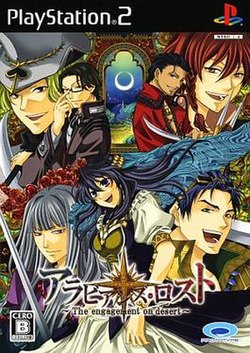












 Another SquareThought Site