


 Jan 1997


Tokimeki Memorial Drama Series Vol. 1: Nijiiro no Seishun is the sort of game that answers the question: what if a dating sim read a short novel aloud, decided to concentrate on one of its heroines, and occasionally made you worry about the starting lineup? Released in 1997 for the PlayStation as a spin-off from Konami's iconic Tokimeki Memorial franchise, Nijiiro no Seishun (Rainbow-Colored Youth, if you like literal translations) trades the series' sprawling three-year social juggling act for a tighter, plot-driven experience. The result is less calendar management and more melodrama with soccer equipment. It is cute, oddly sincere, and determined to make you care about high-school athletic bureaucracy.
Where the original Tokimeki Memorial is a time-management romance simulation - equal parts stat-building, scheduling and guessing which multiple-choice answer will increase some girl's affection meter - the Drama Series deliberately slims down the thousands of tiny decisions into a tidy, scene-led visual novel. Vol. 1 places you in the sneakers of a typical high-school protagonist whose ambitions are embarrassingly pedestrian: make the soccer team's starting lineup and, ideally, not trip over the feelings of the girls standing behind you. The heroine in question, Saki Nijino, is the game's emotional compass. She's cheerful, encouraging and exists to make you want to practice cross-field passing and possibly untangle your adolescent life. Gameplay mostly consists of reading, choosing dialogue responses, and occasionally taking part in narrative branching tied to the sports subplot. Unlike the full Tokimeki formula of balancing study, extracurriculars and relationships across a three-year calendar, Nijiiro keeps things short and focused. This is both a blessing and a mild disappointment depending on whether you came for the fiddly stat minigames or came for a compact romantic story. If you prefer your dating sims to feel like a spreadsheet full of shame, this is not the title for you. If you prefer them to feel like a compact TV drama where every choice nudges the ending, then you are the precise audience Konami had in mind. Choices do matter in the expected way: be kind to Saki, show interest in her, and the narrative branches toward her good routes; neglect her, and you see a different, gloomier ending. There are also performance moments where your ability to make the soccer team affects dialogue and the final beats, so there's a modicum of gameplay stakes beyond conversational rhythm. These sequences are straightforward - think of them as simplified visual-novel-era skill checks rather than full football simulations. The drama series' leaner design lets the characters breathe. Konami and Kojima (yes, that Kojima - the fact that his name turns up in the credits is an enjoyable trivia nugget) use this breathing room to give the supporting cast arcs and small, satisfying payoffs. The pacing is the star here: the game is compact enough that each scene feels purposeful. It sidesteps the interminable repetition common to many dating sims where you re-run months of school schedules to tweak a single stat. Instead, you move from scene to scene, and the moment-to-moment writing carries the load. The writing leans on archetypes - the enthusiastic sports girl, the dependable childhood friend, the aloof rival - but it rarely feels lazy about it. The dialogue carries a quiet earnestness, as if it knows teenage problems are simultaneously trivial and absolutely catastrophic. That tonal balance is crucial to enjoy the game; it sells the idea that whether your protagonist makes the starting lineup or gets the right apology actually matters. If there's a mechanical gripe, it's that the Drama Series sometimes flirts with the illusion of choice. Branches are present, certainly, but many roads converge on the same emotional beats. This is a deliberate design decision: the title is a drama more than a branching simulator, so thematic closure takes precedence over maximum divergence. Expect replay value if you enjoy seeing different character interactions and endings, but don't expect an endless web of radically different outcomes. In short, it's a short play with a few alternate acts rather than a sprawling open-world romcom.
The visuals are textbook late-'90s PlayStation aesthetic - hand-drawn character portraits, cheerful 2D sprites, and the kind of background art that reads like a school brochure that's been blessed by sunlight. Nijiiro does not try to bluff modern 3D graphics or photorealism; instead, it leans into character art and expressions, which matters immensely for a visual novel. Faces will tilt, eyes will glint, and a good handful of scenes rely on a single, well-drawn close-up to sell an emotional beat. For a 1997 PlayStation release, the game looks pleasant and appropriate: colors are soft, character designs are appealing, and Saki's smile will probably ruin your productivity. Cutscenes are minimal but effective. The game occasionally sprinkles in animated transitions and small event illustrations - not full-motion video, but more like tasteful storybook panels that punctuate key moments. The interface is simple, unobtrusive, and refreshingly patient. There's no HUD shouting at you, no gaudy meters, just text boxes and portraits. The sound design does the job expected of a drama game: a handful of jaunty tracks for daytime school vibes, quieter piano for private moments, and voice snippets in places where they enhance rather than overwhelm. If you are playing on original PlayStation hardware or an authentic emulation, the lo-fi charm is part of the experience. If you are the sort to judge old games by modern resolution standards, you will scoff and then secretly appreciate how much more readable the character art is than a lot of 3D faces from the same era. Overall the presentation understands its role: to focus attention on the characters. It's competent, occasionally charming, and perfectly adequate for delivering a heartfelt high-school story without distracting you with visual pyrotechnics.
Tokimeki Memorial Drama Series Vol. 1: Nijiiro no Seishun is not a grand reinvention of interactive romance. It does not try to be; it trims Tokimeki's sprawling ambitions into a short, focused narrative about soccer, sincerity and the slow comedy of junior-high emotional logistics. That tightness is its virtue: it gets to the feelings quickly and treats them with a mixture of sincerity and gentle irony. Hideo Kojima's involvement in the Drama Series adds an amusing footnote - the man later famed for espionage and surrealism once slotted into teenage romance writing with surprising competence. If you come expecting the full Tokimeki simulation - a three-year marathon of stat-juggling and elaborate calendars - you might leave mildly disappointed. If you come wanting a solid visual novel with defined routes, likable characters and a sports subplot that prevents things from getting syrupy, you'll probably enjoy the ride. This is a nice little nostalgia pill for fans of the franchise, and a tidy, character-driven introduction for newcomers who prefer stories to spreadsheets. It's charming in a low-key way, occasionally surprisingly sharp, and exactly the kind of harmless emotional training session high-schoolers never asked for but probably needed. Score: 7/10 - unabashedly earnest, compact, and modestly rewarding. Play it if you enjoy dating sims that behave like date-night TV dramas rather than time-management nightmares. Do not play it if your idea of romance requires a graph that reads like a stock market crash. Either way, Saki will cheer you on, and that alone is an oddly persuasive selling point.
 Tokimeki Memorial Taisen Tokkae Dama on PlayStation
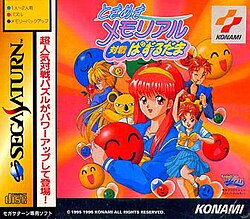
 Tokimeki Memorial: Taisen Puzzle-Dama on PlayStation
 Tintin: Destination Adventure on PlayStation
 Tokimeki Memorial Drama Series Vol. 3 Tabidachi no Uta on PlayStation
 Microsoft Xbox Series X/S










 Another SquareThought Site