

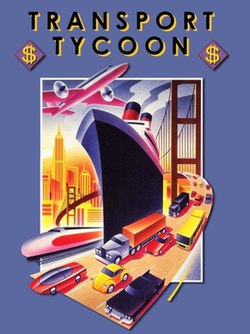

If you remember the 1990s as a time when strategy mags came with coverdiscs and a floppy could teach you the joys of fiscal cruelty, Transport Tycoon on PlayStation slips neatly into that era like a well-oiled diesel into a shed. Conceived and largely coded by Chris Sawyer and first launched on DOS, the game is the sort of rigorous, quietly obsessive simulation that turns the innocent into spreadsheet romantics. The PlayStation port brings the isometric, 2D transport sandbox-where you build trains, trundle trucks, pilot flimsy prop planes and begrudgingly captain ships-to the living room, assuming your definition of living room includes an appetite for forty hours of careful micromanagement. This is not an arcade game; it's a slow burn that rewards patience, planning and a willingness to learn the difference between semaphores and traffic lights without falling asleep. It also has that 1990s charm: chunky bitmaps, jaunty MIDI jazz, and a game economy that will punish you for optimism faster than a bank clerk with a pen.
Transport Tycoon drops you into the role of a transport company owner and then politely refuses to hold your hand. You start in 1930 with a loan, a small town map and the historical patience of a Victorian railway magnate. The aim is simple on paper: move passengers and goods around an isometric map and make money. The tools are gloriously varied: road vehicles, rail, ships and aircraft - and the genius of the design is that they all have distinct roles and temperaments. Trucks are versatile but slow and capacity-limited; ships are majestic but need ports and take time; trains are the backbone for bulk freight, and planes are your express couriers for time-sensitive goods. The interplay between distance, cargo type and delivery time creates meaningful choices. Mail decays in value rapidly, so speed matters; coal holds its value, so long-haul trains can make bank. The game world evolves from steam to diesel to electric locomotives and eventually monorails, so your network planning must consider obsolescence as a feature rather than an annoyance. Stations are the game's chess pieces. Build them in the right place and you will be showered with goods; place them badly and you will watch towns wither while your competitors smile politely and steal your subsidies. Each station and company has ratings based on service quality and environmental impact, and local authorities will block you from building if you become the ecological equivalent of a concrete blender. That single mechanic turns the sandbox into a negotiation between growth and intrusion: should you blast a four-track mainline through a sleepy town to speed up freight, or route around it to keep the mayor happy and avoid fines? The game encourages creative problem-solving. You can terraform landscapes, dig canals and mix transport types in a single route (truck→ship→train) which opens up elegant multi-modal strategies. Vehicles come from depots connected to your networks. Manufacturers periodically offer prototypes: shiny new units with better speed and capacity but questionable reliability. That risk/reward tickles the same spot in your brain that likes to buy a new car and immediately worry about breakdowns. Each vehicle carries statistics-speed, capacity, maintenance, reliability and lifespan-and the player must decide when to retire aging rolling stock. The financial model is straightforward but unforgiving: you borrow money to expand, pay interest until the loan is cleared, and must balance expansion with operating costs. Subsidies for first-to-deliver contracts appear from time to time, nudging you into routes you might otherwise ignore. Since the map's economy changes-industries open, resources deplete and towns grow-the best-laid plans must be flexible. It is a living economic puzzle where demand radiates from stations and is affected by delivery times and quantities; the reward formula ensures you chase efficiency, not just frank distance. Playing against rival companies makes the whole thing feel alive. Sawyer put effort into AI that plays by the same rules as you; rivals compete for routes, buy shares and can be acquired in the Deluxe lineage. The PlayStation version doesn't prettify the complexity; it presents it in the same patient, stats-heavy way as the original. A full century campaign (1930-2030 in the original) will take dozens of hours, and the game allows saving whenever you like-useful when your carefully balanced empire collapses because you clicked "buy new train" on autopilot. Transport Tycoon Deluxe expanded the original with new climates, better signaling, maglevs, heliports and network play, but the core of the game remains the same: build efficient, profitable transport networks and ruthlessly optimize routes while politely ignoring the moral implications of cutting down every tree between two towns. The PlayStation release is a faithful couch-friendly version for people who want to trade mouse macros for a controller and a willingness to navigate menus from across the sofa.
Graphically, Transport Tycoon comes dressed in 1990s pixels and proud of it. Simon Foster's artwork replaces Sawyer's rough early bitmaps with high-resolution sprites that look especially respectable on the PlayStation screen. The isometric viewpoint gives the illusion of depth without the false promise of 3D, and vehicles scuttle along tracks with a satisfying weightiness. It's not trying to win any awards for photorealism; instead it opts for clarity and personality. Icons, vehicles and station buildings are readable at a glance, which is crucial when you're juggling a dozen routes and a spreadsheet's worth of performance numbers. Sound and music are characterful rather than cinematic. John Broomhall's soundtrack leans into blues and jazz and was originally limited to MIDI FM polyphony, which gives it a quaint, vintage video game timbre. If you're the sort of person who appreciates ambiance over orchestral splendor, you'll find the music charming and appropriately unobtrusive. A remastered soundtrack exists in later ports and updates, but the PlayStation version retains that era-appropriate audio identity: it hums away while you micro-manage, refusing to distract you from the spreadsheets of commerce unfolding on screen.
Transport Tycoon on PlayStation is a dignified transplant of a PC cult classic; it asks you to care deeply about timetables, track junctions and the indignity of a poorly timed locomotive breakdown. For players who cut their teeth on strategy sims in the 1990s, it's a comforting, clever and unforgiving toybox. For newcomers, it will reward patience with moments of genuine strategic elegance-those blissful runs where trains glide on one-way signals and money flows like oil. The interface and pacing are period pieces, not sins, and the game's systems-multi-modal transport, evolving technology, station ratings and local authority politics-still hold up as tight design. If you want instant gratification, look elsewhere. If you like methodical planning, the satisfaction of a smoothly humming network, and the historical pleasure of watching technology progress from steam to monorail, Transport Tycoon is essential. MicroProse and Chris Sawyer built a game that wears its complexity proudly and, even on a console, rewards the sort of obsessive tinkering that made strategy games of the era indispensable. This is transport sim craftsmanship: old-school, meticulous, and stubbornly brilliant. Score: 8.5/10.
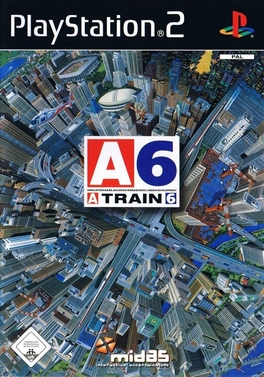 A-Train Express on PS4
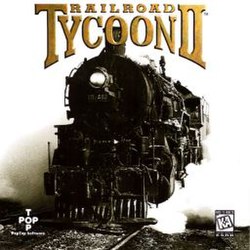
 Railroad Tycoon II on PlayStation
 Pro Evolution Soccer 2015 on PS4
 Derby Stallion 04 on PS2
 MotoGP 19 on Switch
 Power Pro Kun Pocket 13 on DS












 Another SquareThought Site