


 Aug 2016


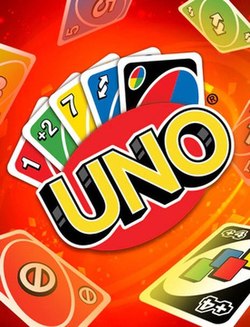
UNO on PlayStation is the videogame equivalent of inviting your friends over for a calm evening of betrayal, followed by passive-aggressive silence and the occasional triumphant scream. If you've ever enjoyed the physical card game - the one that turns polite adults into transactionally vindictive maniacs - the PlayStation port is faithful enough that you will recognise the rules, grudges and sudden reversals of fortune. Ubisoft Chengdu's version is not trying to reinvent the wheel. It mostly wants that wheel to be colourful, online-enabled and occasionally stuffed with Rabbids. The game sits where family-friendly party games live: accessible, simple to learn, and designed to be played by people who bring snacks and questionable sportsmanship. The PlayStation release adds a few modern trimmings - online matchmaking, a 2v2 mode, and a set of customizable house rules - which mostly succeed at making what is essentially a family card game feel like it belongs on your console. It also finds tasteful ways to monetise nostalgia through themed decks and DLC, which is to say you can now buy a Rayman-themed revenge card for reasons only a marketing department truly understands.
Gameplay is what you remember from the kitchen table version, only now with less sticky surfaces and better music. Standard Play is a standard four-player UNO match. 2v2 mode lets you pair up and cry into your shared victory. Online play is present and functional; you can queue up, match with strangers, and feel the same tiny rush of triumph when they forget to call "UNO." Where the PlayStation version tries to be clever is with house rules and themed decks. Ubisoft introduces six configurable house rules that can be combined in whatever chaotic permutation you prefer: Stacking (Draw Two/Wild Draw Four penalties can be stacked and passed along), 7-0 (sevens let you swap hands; zeros rotate everyone's hands), Jump-In (play out of turn if your card matches the top discard), Force Play (if you draw a playable card you must play it immediately), No Bluffing (Wild Draw Four cannot be challenged), and Draw to Match (keep drawing until you pull a playable card). These are delightful because they let groups recreate the weird regional rules everyone insists are "the right way." They are frustrating because a match with five different house rules is now essentially a fast-paced math exam. Theme decks are another way the game spices itself up. Most are cosmetic, changing backgrounds, music, and card art, but several add bespoke rule cards. The Rabbids deck supplies a handful of uniquely chaotic action cards; the Just Dance deck introduces its own special abilities; Uno Flip brings double-sided cards and entirely new action mechanics (Flip, Draw 5, Wild Draw Color). These packs are available as DLC, either sold separately or bundled in the Ultimate Edition. They work for variety: once the base game's novelty wears off - which happens alarmingly fast if you only play against predictable AI - themed decks and house rules provide enough difference to keep sessions lively. Single-player content exists but is modest. The game focuses on multiplayer, which makes sense. If you are playing alone you will mostly be pitted against AI; the AI is competent enough but not capriciously cruel the way your drunk friend is. Online performance is fine in most sessions; matchmaking gets you into games and social features like Ubisoft Connect bring the Jump-In mechanic to life. There are no deep single-player campaigns or long-term progression systems; this is UNO, not a roguelike. That said, casual players and families will appreciate its pick-up-and-play nature. Where the PlayStation version loses points is in ambition. There are enough gimmicks to make a session interesting, but the core is still a card game with limited strategic depth. Competitive players who want laddered play or tournament-style features will be disappointed. The game is honest about what it is, and that honesty is both comforting and slightly dull.
Graphically UNO on PlayStation knows it is dressing up playing cards, and it leans into that with a clean, colourful presentation. The base deck is crisp and readable, with clear icons and pleasing animations for skips, reverses and shameful pile draws. Themed decks are where the visual personality comes through: Rabbids bring slapstick chaos to the background animations, Rayman adds whimsical touches, and Uno Flip actually alters the card layout when you flip sides, which is a neat trick to announce to your opponents before you ruthlessly punish them. The menus are serviceable and uncluttered. There aren't many flourishes beyond a few jaunty tunes and some decent sound design credited in part to Maxime Goulet, but that is appropriate - you want to focus on the cards, not a cinematic cutscene about a reverse card. The Unity engine does what it needs to: smooth transitions, no eye-watering framerate dips, and backgrounds that are more charming than competitive. Graphically it does not aim to be a showcase for your console, which is fair: if you want to stare at a game's lighting engine you should probably be playing something where light knows its existential purpose. Overall, the visual package is pleasant, functional and occasionally whimsical when DLC is active. It feels like UNO tolerated by a graphics team rather than a game trying to prove a point about modern aesthetics.
UNO on PlayStation is a faithful port with modern conveniences and a handful of options that genuinely improve replayability. Its strengths are clarity and accessibility: anyone who can count to nine and has a basic sense of malice can learn it in minutes. The house rules and themed DLC provide variety and micro-surprises, giving social groups reasons to keep coming back. The Ubisoft version earned middling-to-positive reviews on release (the PS4 version holds a Metacritic score in the low 70s), which feels accurate: it is competent and occasionally charming, but not revolutionary. If you are looking for a family-friendly party game to play with friends, roommates, or relatives you tolerate out of guilt, UNO is a reliable pick. If you want deep, competitive card strategy or a solo experience with hours of content, this is not your mountain. The game does exactly what it promises: it digitises a beloved, petty pastime and dresses it in a few themed skins. For those reasons, it earns a respectable 7 out of 10 - strong enough to host a game night, not strong enough to start a new esports scene. Bring snacks. Call "UNO." Do not trust the person who always says "I'm not trying to win, just playing my cards." They are lying.
 Bō: Path of the Teal Lotus on Xbox Series X/S
 The Amazing American Circus on Switch
 Coloball 2002 on PS2
 Press Your Luck on PS3
 Game Dev Story on PS4
 Mom Hid My Game! on Switch










 Another SquareThought Site