



V-Rally 2 arrives at the tail end of the decade when PlayStation racers were maturing from chunky polygons and arcade bravado into something approaching simulation. Presented in North America under the Need for Speed banner, this sequel from Eden Studios tries to split the difference: it wants to be believable when you study it and fun when you climb behind the wheel. The claim is simple - deliver the 1999 World Rally Championship experience across dozens of stages, weather conditions and cars - and, on the PlayStation, V-Rally 2 mostly delivers. Its strengths are technical ambition and breadth of content; its weaknesses are the inevitable compromises of the hardware and a few niggling design choices that keep it from being the definitive rally title of its era.
V-Rally 2 wears its WRC credentials on its sleeve. The roster mirrors the 1999 World Rally Championship season, offering 26 cars in the Championship Edition and 27 in the Expert Edition, and the game boasts over 80 original tracks that represent nearly every rally from that season (notably omitting the Acropolis and Safari events). That bigness is the game's most persuasive argument: there is genuine mileage here, hours of stages, and real variety. The modes are familiar but well thought out. Championship Mode attempts to follow actual rally structure with multiple stages per event and the kind of time-focused discipline rallying demands. V-Rally Trophy is a neat, compact format where you race against three AI drivers across a set of rallies and chase the lowest cumulative time - a tidy alternative for players who want head-to-head rhythm without committing to a full season. Arcade and Time Trial modes provide the usual quick-hit pleasures, and the inclusion of three difficulty tiers - European, World and Expert - helps match the game to different skill levels. Driving itself sits in the middle ground between arcade snap and simulation nuance. Eden borrowed influences openly - the sensation and tuning choices of GP1, the arcade spirit of Out Run and the handling nods of Rally Masters - and that mix shows. Cars have weight and respond differently to surface changes; snow, rain, and varied lighting (day, sunset, night) matter not merely cosmetically but in how you carry speed. The physics are forgiving enough to be accessible but tight enough to reward learning lines and throttle control. On Expert settings the game tilts toward sim-like demands: poor setups and a momentary slip can cost you tens of seconds across a stage, as it would in the real thing. Technically, the track system is an interesting compromise. Rather than storing a fully modelled world for every stage, the engine stores rally routes as curved 3D lines and procedurally generates surrounding geometry from parameters like theme, incline and curvature. The approach yields a lot of variety without eating cartridge-sized amounts of storage - a pragmatic solution for the era. The trade-off is occasional visual repetition in roadside clutter and sometimes simple geometry popping into view. For players focused on driving, this is rarely a fatal flaw; for those who want fully articulated environments, it can feel like a reminder that the PlayStation had limits. A pleasant surprise is the track editor: building your own stages extends the life of the package and encourages experimentation with weather and curvature. Multiplayer supports up to four players via split-screen, which in 1999 was still a valuable feature for console racers. Controller support is generous: DualShock analog, the neGcon and Jogcon options are all recognized on PlayStation, which makes the game adaptable whether you want precise analog steering or a dedicated wheel. Where V-Rally 2 slips is in polish. The AI is competent but occasionally predictable; you will see familiar lines and late braking patterns from opponents after a few runs. The difficulty curve sometimes feels like a set of spikes rather than a smooth ramp, and audio - while serviceable - never quite conveys the raw roar and gravel crunch that the visuals promise. Still, these are largely nitpicks. The core loop - choose a car, tune it, learn a stage and try to shave seconds off your time - is satisfying and well executed.
Visually, V-Rally 2 sits comfortably among the best-looking PlayStation racers of the late 1990s. Cars are well modelled for the hardware, with recognisable silhouettes and readable damage states. The variety of track themes and the dynamic weather system - snow that slows you, sheets of rain and the long shadows of sunset - add atmosphere and practical consequences to the visuals. The engine's track-generation method creates large numbers of stages without swallowing disc space, but you pay for that efficiency in background detail. Trees, rocks and barriers are often repeated tile-style and lack the richness of a ground-up 3D environment. Draw-in and pop-up are occasionally noticeable, particularly at higher speeds, and distant scenery can look paper-thin. Against contemporaries like Sega Rally 2 on Dreamcast, V-Rally 2 can't match the latter's raw graphical headroom, but on PlayStation it is an impressive showing - crisp, fast and clear enough to serve the driving experience. The HUD is functional and unobtrusive, with clear timers and a good feel for speed. Sound design is competent: engine notes are punchy, tires squawk on loose surfaces, and co-driver pace notes do their job. Music and ambient effects are not memorable, which suits the game - this is not a title that invites long listening sessions; it wants you to drive.
If you remember 1999 as the year racing games got serious about simulation without abandoning accessibility, V-Rally 2 will feel familiar and oddly comforting. Eden Studios built a package with impressive scope: dozens of cars, upwards of eighty stages that approximate a real championship calendar, weather systems that alter handling, a track editor and split-screen multiplayer. On PlayStation, the game balances arcade fun and rally fidelity with more success than failure. It is not flawless. The graphical trickery that makes so many tracks possible is occasionally visible in repeating scenery and pop-in; the AI and audio sometimes lack the edge to make every run thrilling; and a handful of design rough edges keep the title from reaching the very top of the podium. For players in 1999 looking for a rally game that offers depth, options and a genuine sense of distance - measured in stages and hours - V-Rally 2 is a strong recommendation. It represents a confident step forward for rally racing on the PlayStation and remains an honest, workmanlike racer that rewards attention and patience. Score: 8 out of 10 - ambitious, content-rich and fun to drive; hampered only by a few technological compromises and polish issues.
 Pro Rally 2002 on PS2
 WRC 2: FIA World Rally Championship on PS3
 Roary the Racing Car on DS
 Team Sonic Racing on Switch
 Garfield Kart: Furious Racing on Switch
 Ben 10: Galactic Racing on PS3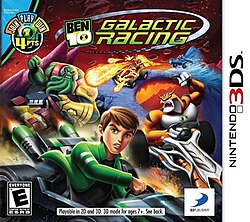












 Another SquareThought Site