



Valkyrie Profile is the sort of RPG that sneaks up on you like a tragic poem in action-RPG clothing. On the surface it's a mission-based, Norse-mythos-flavored romp where Lenneth, a newly awakened valkyrie, hops around Midgard recruiting fallen warriors to bulk up Asgard's roster for Ragnarok. Underneath that? A weird, melancholic meditation on memory, agency, and how gods are terrible at HR. The game's central conceit-Lenneth collects einherjar (souls of the dead) and either trains them for Valhalla or keeps them as companions-turns the usual leveling and recruitment tropes into plot devices that amplify character arcs rather than bury them in stat screens. Lenneth herself is the gravitational center. She's introduced as an almost blank-slate divine agent, capable in combat but emotionally distant because her human memories have been sealed. Over the course of the full story (the A ending), those memories return like a slow leak in a dam, revealing her origin as Platina and the tender, tragic thread connecting her to Lucian. That revelation recontextualizes everything: actions that once felt like duty become moral choices. Lenneth's arc moves from obedient executioner of divine orders to an anguished, then decisive, agent of change. By the time she chooses to defy Freya and ultimately remakes creation in the A ending, the cold valkyrie has become a weirdly relatable tragic heroine who understands both human love and divine consequence. Lucian/Platina can be read as the emotional punch. Platina's death as a 14-year-old is small-scale tragedy that resonates later when Lucian, hardened into a thief, recognizes Lenneth's face as Platina's and becomes an einherjar. His arc is the human counterpoint to Lenneth's divine arc: he grows from grief and poverty to brief hope and then-depending on your path-becomes a fulcrum for Lenneth's awakening. The game handles this relationship with restraint: there's no soap-opera confession every five minutes, but when they connect (the stolen earring, the kiss before he's sent to Valhalla), it lands with a melancholic weight because the mechanics have trained you to care about these people as playable units as much as people. The supporting cast doubles as both playable toys and narrative texture. Arngrim and Jelanda's subplot-revenge, capture, suicide, and the weird bureaucratic refusal by Odin/Freya to accept a soul-is a small tragedy about honor and the gods' inflexibility. Mystina and Lezard introduce a more philosophical strand: Lezard's experiments with homunculi and the notion that gods stagnate unless they take on mortal impurities (think: half-god, half-elf Odin) seeds the game's later argument that growth requires messy synthesis. Mystina's own fate-killed in a way that ties into Lezard's hubris-echoes the broader theme of souls being used, reshaped, and sometimes preserved by science or magic. Loki, predictably, plays the charmingly rotten trickster with a very particular martyr-complex: half-Æsir, half-Vanir, accepted by neither, seething about being kept in a boyish form and craving the Four Treasures so he can boss everyone around. He is the narrative engine of betrayal and escalation-his theft of the Dragon Orb, his manipulation of Lucian's death, and his eventual unfettered power in the A ending give the conflict personal stakes while revealing the upper pantheon's moral emptiness. Freya and Odin are not cartoon villains; they are metaphors for institutional coldness. Freya's explanation-that sealing valkyries' memories is for their own good-reads like every bureaucrat's excuse for paternalism. Valkyrie Profile refuses the easy moral of 'gods are wise' and mostly gives us 'gods are pragmatic jerks,' and that makes Lenneth's rebellion feel earned and not just melodrama. Other characters, from Brahms the undead lord to Surt and Fenrir, serve as mythic punctuation marks, each death scene often presented as a mini vignette that doubles as character development and playable recruitment. The game turns the einherjar's deaths into tightly written little tragedies-often symbolic, sometimes brutal-so recruitment feels oddly intimate. Instead of clicking 'accept' on a random recruit, you watch the last moments of someone's life and then decide whether they get a ticket to Valhalla or a place in your party. That mechanic is not merely clever; it forces you to weigh consequences and to watch faces as the story keeps reminding you that every number in the Hero Value column was once a human life with a messy backstory.
Valkyrie Profile's gameplay is a mirror for its storytelling choices: unconventional, occasionally impenetrable, but rewarding once you learn the rules. Dungeon exploration plays like a platformer-Lenneth jumps, slides, shoots ice crystals to form temporary steps, and generally feels nimble. Encountering an enemy triggers an RPG battle, but not the grindfest you expect: enemies are visible, fights emphasize timing and combos, and party turns are shared among characters who correspond to controller buttons. The combat system's heartbeat is the Hit Gauge and the Purify Weird Soul mechanic. Chain attacks to fill the Hit Gauge and you unlock devastating special attacks that feel cinematic and, narratively, appropriate for souls being purified or unleashed. The Charge Time (CT) mechanic for mages replaces MP and adds tactical tension: powerful spells spike CT, temporarily incapacitating casters and forcing the player to plan around downtime. Weapons can break, great magics can shatter scepters, and Lenneth-crucially-cannot be benched; if she falls in battle the party must revive her quickly or face defeat. These rules make every fight a small drama and connect to the character arcs: your einherjar's survival in Valhalla depends on the Hero Value and whether they fit the chapter's requirements. The game's chapters are time-limited, split into periods you must budget for exploring, recruiting, and questing. This countdown element lends a low-level stress that matches the narrative urgency of war preparations and the gods' impatience. The sacrifice-and-evaluation system is probably Valkyrie Profile's most polarizing design choice. Odin rewards artifacts for the war; Freya grants Materialize Points that act as currency via transmutation. Keep too many artifacts and refuse to send proper einherjar to Valhalla and your Evaluation drops-push it to zero and you earn Ending C, the worst possible result. This forces you to make hard choices: hoard a powerful sword and doom a soul, or send a hero you've bonded with off to fight in Valhalla. The mechanical decision to turn character death scenes into recruitment cutscenes makes the emotional cost of that choice unavoidable. Difficulty also alters availability of characters and the full story: the A ending-where Lenneth's full past becomes clear and the grander themes are explored-requires normal or hard modes with stricter task completion. Valkyrie Profile thus uses gameplay rules to nudge you into the kind of deliberate, sometimes cruel choices that make its narrative bite.
Visually, Valkyrie Profile is a late-PS1 melange of pre-rendered backgrounds, 2D sprite characters in towns, and anime-esque cutscenes. The original PlayStation's aesthetic gives the game a washed, mythic quality-textures are dated by modern standards but the hand-drawn character art (credited to Ko Yoshinari and Yoh Yoshinari) and cinematic direction make up for technical limits. Motoi Sakuraba's soundtrack is a highlight: sweeping, melancholic, and occasionally bombastic in the right spots, it elevates even the simplest recruitment scene into something operatic. Later ports (PSP, mobile, and PS4/PS5 emulation) tried to preserve the look while adding FMVs or cleaned-up portraits. The PSP port replaced original anime scenes with FMV and added cinematics, which are nicer in fidelity but sometimes lose the charm of the original sprite-based animations. The mobile versions add conveniences like auto-battle, but that undercuts the combat's tactical dance. Overall, the game's art direction ages like a worn tapestry: a little threadbare but still full of meaningful patterns.
Valkyrie Profile is not a comfortable game, and it isn't trying to be. It makes you juggle time-limited chapters, morally awkward recruitment choices, and a combat system that rewards rhythm and planning. Most importantly, it makes you care about characters who could easily be mere stat-slots. Lenneth's journey from sealed valkyrie to a being who understands the cruelty of her employers and the value of human love is the game's moral spine. Lucian/Platina's arc supplies the human cost that propels her growth, while Loki, Freya, Odin, and the supporting einherjar provide philosophical pressure that bends the story toward its oddly generous final reckoning (if you do the work to reach the A ending). If you like your RPGs with a side of Shakespearean gloom, clever mechanics that serve the story, and a soundtrack that will haunt your playlists, Valkyrie Profile deserves a spot in your backlog. It's melodramatic, fiddly, sometimes infuriating, but always ambitious. Also, it will make you feel weird about hoarding swords-because at some point you'll realize a +12 blade might cost someone their chance at Valhalla. And honestly, that's the kind of ethical inventory management every gamer needs to experience at least once.
 Eve: Valkyrie - Warzone on PS4
 Dark Rose Valkyrie on PS4
 Combat Elite: WWII Paratroopers on PS2
 The Banner Saga 2 on PS4
 Arcania: The Complete Tale on PS3
 Gnosia on Xbox Series X/S
 Resonance of Fate on PS4
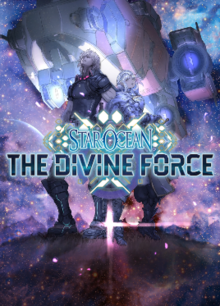
 Star Ocean: The Divine Force on Xbox Series X/S
 Star Ocean: The Divine Force on PS5
 Exist Archive on PS4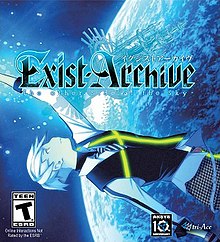












 Another SquareThought Site