

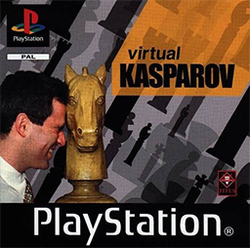

Virtual Kasparov is the kind of game that pretends to be a tidy little chess trainer and quietly insists on being a cast of characters. On the surface it's a straightforward chess sim: you sit, you move, you capture, you lament the betrayal of a pawn. Once you dig deeper, though, Titus sprinkled the game with 31 opponents, short biographies, and the major-league aura of Garry Kasparov himself - interviews and famous career games are tucked into the menus like trophies in a dusty cabinet. This review approaches Virtual Kasparov like a novelist would approach a ragtag ensemble: what are these NPCs' motivations, how do their arcs unfold over the board, and does the game give them the dramatic weight they deserve, or are we just checking squares in a very polite soap opera?
Virtual Kasparov's mechanical spine is pure chess: single-player against AI, local multiplayer for the budding trash-talker, and a tutorial system that reviewers praised for being genuinely helpful to novices. But the heartbeat that sets it apart - at least in concept - is its roster of opponents. There are 31 of them, scattered across continents in the Game Boy Advance's story mode, and although this PlayStation edition doesn't hinge on the same continent-unlock flow, the sense of progression survives: you move from approachable novices to seasoned 'champions' and finally to the personality-driven opponents who feel like stubborn little tragedies. Each opponent arrives with a thumbnail biography that reads like a one-paragraph indie film treatment. Imagine facing 'The Rural Prodigy' who learned openings by the light of a kerosene lamp, or 'The Stoic Librarian' who only plays with an expression carved from marble. These bios are short, but they allow the player to construct arcs: a novice who grows in confidence is represented by a straightforward skill curve (teaching you the openings you should have known), while so-called 'personality players' are less about brute force and more about quirks - unorthodox openings, time-pressure shenanigans, a gambler's flair for risky sacrifices. That creates an implied story in every match; you are not just beating an algorithm, you are undermining a brief human drama. It helps that the game's AI is competent. IGN's Steve Butts and other critics pointed out presentation problems particularly on handhelds, but the underlying engine still puzzles: it will punish simple tactical blunders and can defend stubbornly when a human tries to force complications. For an 18-year-old learning to beat a cousin who only knows the 'Fool's Mate' and the occasional checkmate-in-one, Virtual Kasparov is a worthy sparring partner. The tutorial is sturdy too, especially for beginners, and that's where the game earns a lot of its goodwill: it can take someone who thinks castling is a new dance move and turn them into a somewhat credible opponent. Where gameplay stumbles is in the promise-versus-delivery of personality. Those small bios give an excellent setup but rarely evolve. You can imagine a neat cinematic arc - a grizzled veteran reclaiming former glory, a plucky youngster learning to temper aggression with patience - yet the game rarely updates the biographies or reacts narratively to your victories and defeats. The match outcomes change nothing about their backstories, which means these characters end up as static headshots rather than living, evolving rivals. So the emotional payoff is mostly in the player's imagination: you will feel like you built a rivalry, even if the game didn't write it for you.
The PlayStation release offers competent 2D presentation that many reviewers, including Will Grigoratos of PlayStation Illustrated, found pleasing. The board and pieces are clear, readable, and free of visual clutter - exactly what you want from a chess game. It has the pleasant, slightly antiseptic polish of a well-made digital chess set: pieces cast decent shadows, squares are contrasted correctly, and the user interface doesn't try to pull off any needless fireworks. There is a 3D mode, but it was widely judged as underwhelming. The 3D camera and model work feel like a feature that showed up with good intentions but little follow-through; angles are oddly chosen, animations are minimal, and the whole mode eventually becomes a glossy distraction when you just want to see whether your knight fork is an actual fork or a tragic joke. Presentation issues that reviewers noted for other platforms - lack of bells and whistles, some missing modern conveniences - translate to PlayStation as a slightly dated aesthetic. This is not a problem for die-hard chess players who prize clarity over flash, but for players who expect smug cinematic cutscenes after every checkmate, Virtual Kasparov will feel like a thrift-store tuxedo: it looks fine, but don't expect sequins. The game's saving grace is readability. Clarity matters more in chess than a fur coat, and on that front the PlayStation version mostly succeeds.
If you approach Virtual Kasparov as a character study of opponents rather than a blockbuster with dramatic branching, it becomes a charming little anthology. Titus succeeded in giving each opponent a distinct flavor, and Garry Kasparov's presence - interviews and archival games - lends the package an air of authenticity. The problem is that the arcs are more implied than implemented: the bios give you character traits, but the game rarely gives those characters room to grow on screen. The AI is solid and the tutorial is genuinely useful, but presentation choices (particularly the lackluster 3D mode) and a tendency to treat opponents as static set pieces hold the experience back from feeling truly cinematic. For a PlayStation owner who wants a clean, competent chess simulator with some tasteful narrative garnish and the cachet of Kasparov, Virtual Kasparov is worth renting or buying at a discount. It's not the emotional novel of chess you might hope for, but it is a pleasant short story collection where the reader (that's you) gets to adjudicate every chapter. Final verdict: a respectable 6.5 out of 10 - a solid mentor who sometimes forgets to tell you about the sequel, but who still teaches you how not to hang your queen on move seven.
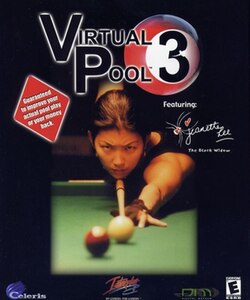
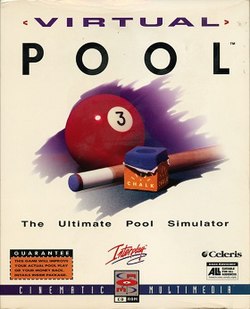 Virtual Pool 3 on PlayStation
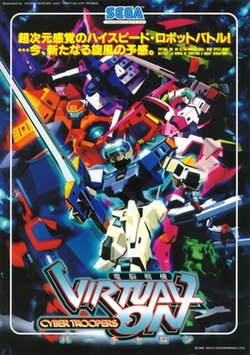
 Virtual On: Cyber Troopers on PS3
 Pure Chess on PS4
 Chess Ultra on Switch
 Learn to Play Chess with Fritz and Chesster on DS
 Chess Ultra on PS4












 Another SquareThought Site