

 Aug 2025
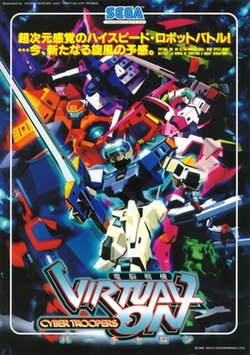

Virtual On: Cyber Troopers is the kind of game that smells faintly of ozone, stubborn heroism, and corporate boardrooms plotting in a language of spreadsheets and lasers. On paper it's an arcade mecha fighter - two virtuaroids slugging it out in arenas, twin-stick controls, chunky explosions, and a soundtrack of synthetic metal. On closer reading it becomes an oddly operatic story about creation, control, and what happens when machines inherit attitude. This review will treat the game less like a manual and more like fanfic for robotics ethics: we'll analyze the players of the drama - the corporate syndicate (DN), the rogue central computer with delusions of celestial grandeur, the virtuaroids themselves (yes, the robots have personalities), and the human pilots who animate them - and see how their arcs are told through gameplay, design choices, and the often-contradictory reactions of critics.
Virtual On's gameplay is the narrative engine that gives its cast personality. The twin-stick setup acts like the puppeteer's hands: subtle or ham-fisted inputs will alter a virtuaroid's 'mood' - dashing (the Turbo top buttons) turns a polite rifle shot into a rapid-fire burst, a jump forces an opponent-confronting pose, and pulling the sticks apart results in a theatrical airborne pirouette. The game codifies identity through action. Temjin, used in the manual examples, reads as the stoic marksman: a virtuaroid whose rifle is craftily precise when standing, but surprisingly frenzied while dashing. Raiden, mentioned in development anecdotes, is the laser-wielding showboat - its beam's wide radius is a personality trait neatly translated into gameplay: grand gestures that demand clever representation in the conversion process. There are three weapon 'voices' per virtuaroid: Left Weapon (LW), Right Weapon (RW), and Center Weapon (CW). Imagine a character's three signature moves: RW is usually the main line - the snide one-liner rifle or gun - while LW is the support act, tossing explosives with splash damage like a mischief-making sidekick. CW is the tragic soliloquy - high cost, high spectacle, limited by an energy pool so the player must pick their dramatic moments. Each virtuaroid's identity emerges from how those weapons behave under different stances and movements. Temjin's RW is one thing when standing and another when dashing; Raiden's laser had to be reworked for hardware limits but still reads as Raiden's arrogant, sweeping gesture. The human pilots are an understated subplot. The story text explains that DN assigns top personnel to take control of virtuaroids to shut down a self-aware central computer. That sets an arc that flips the usual mecha cliché: the pilot is initially a corporate-enabled instrument and gradually becomes, through conflict, a potential liberator of humanity - or at least a symptom of corporate hubris fighting back. The player's experience - learning the twin-stick controls, mastering dashes that turn aim into ballet, and figuring out when to trade a CW for survival - mirrors a pilot's rite of passage from obedient corporate employee to experienced agent of chaos. This is all done with very few words and many explosions, which is a confident form of storytelling: the virtuaroids tell their tales in movement and consequence. Multiplayer doubles as character chemistry. Two players in a match produce improvisational narratives: a Temjin's focused bursts vs. a Raiden's sprawling laser become, in minutes, a short play with surprise returns, tactical retreats, and last-second cocky wins. The game was built for the twin-stick arcade cabinet, and the Saturn conversion even inspired a twin-stick peripheral; that hardware fidelity plays into how convincing the characters feel. Critics split on whether the mechanics are deep or shallow. Supporters argue the limited move set encourages thoughtful positioning, dash timing, and weapon comprehension - essentially, reading your opponent's character - while detractors say homing attacks and few moves make things repetitive. I side with the former: Virtual On's dramaturgy isn't quantity of moves, it's clarity of roles. Each virtuaroid is a defined archetype, and part of the fun is learning the story each archetype wants to tell.
Virtual On started life on Sega Model 2 arcade hardware, and there's a raw confidence to the arcade visuals: 60 frames per second, quick camera work, and creatures of polygonal steel that move with satisfying weight. When the Saturn port arrived, the team faced the classic console war: the Saturn couldn't match Model 2 polygon throughput, so backgrounds were converted from real 3D geometry into high-quality scrolling images. The conversion headaches reveal the production-level storytelling: Raiden's laser needed rewrites because its radius made on-screen rendering a technical melodrama. The development team even wrote a custom OS to squeeze the experience onto Saturn - a production-level act of devotion that doubled as character development for the game itself. Visually, the virtuaroids carry personality through silhouette and animation more than texture resolution. Temjin's deliberate rifle pose, Raiden's laser sweep, and the explosive, splashy LW attacks make the machines readable. Critics were divided: some praised the faithful Saturn translation and smooth frame-rate emulation of the arcade's kinetic feel; others grumbled that a few reviewers found the home version looking '16-bit' compared to competitors. That complaint feels like gatekeeping: Virtual On's art direction is unapologetically Japanese arcade-mecha, prioritizing readable motion and combat clarity over photoreal polish. If the game were a comic book, it would be bold inks and dramatic panels rather than photoreal CGI - and that's fine for a story about robots and a sentient Sun Cannon.
Virtual On: Cyber Troopers presents its characters in the old-fashioned way: through what they do, not what they say. The corporate syndicate DN is a foil that spawns the conflict; the central computer is a silent, escalating antagonist that literally aims to annihilate civilization with something called the Sun Cannon (dramatic, no?). The virtuaroids - Temjin, Raiden, and the rest of the roster - are surprisingly vivid archetypes whose personalities are embedded in weapon behavior and movement. Pilots function as the human angle, their arc implicitly traced by your progress from fumbling with twin sticks to executing cinematic CW combos. This focus on kinetic storytelling makes Virtual On exceptionally playable in short bursts and magnificently rewarding for players who enjoy learning character archetypes and mechanical nuance. It falters if you expect the kind of move-library depth that modern fighters tout; some critics called it shallow, others called it cerebral. Both reactions are fair depending on whether you value spectacle and role clarity over button-memorization meta. If you can get the twin-stick experience (or at least embrace the Saturn/console control compromises), Virtual On is an electrifying mechanical drama: pulpy, immediate, and occasionally profound in its silence. It earns a solid 7.5/10 - a game whose characters stick with you not because they explain themselves, but because they explode in ways that feel narratively meaningful. Recommended for anyone who wants their fighting games with a side of existential robotics and a generous helping of dash-fired bravado.
 Laid-Back Camp -Virtual- Lake Motosu on PS4
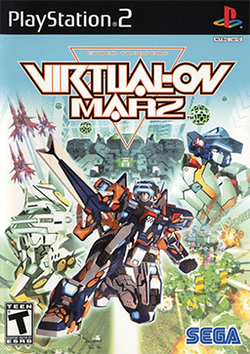
 Cyber Troopers Virtual-On Marz on PS2
 Onimusha: Dawn of Dreams on PS2
 Action Man: Operation Extreme on PlayStation
 Door Kickers: Action Squad on Switch
 Combat Elite: WWII Paratroopers on PS2
 Virtua Tennis 3 on PS3










 Another SquareThought Site