


Crazy Taxi on PlayStation 2 arrives like a caffeinated city planner with a mission: cram as many furious trips into three, five or ten minutes as humanly possible and call it entertainment. The idea is elegant in its simplicity and ruthless in its delivery - pick up oddball customers, point the taxi toward an oversized green arrow, and then drive like someone vandalized your brakes. It is arcade design in home-console clothing: short session lengths, instant rewards, and a soundtrack that either powers you into a frenzy or induces polite bleeding from the ears. The PS2 version is a faithful port of Sega's Dreamcast adaptation, handled by Acclaim for much of the world, which means it keeps the core manic loop intact while occasionally reminding you you're playing something built for a generation that thought draw distance was an optional feature.
At its heart Crazy Taxi is a glorified time-management game disguised as a driving title. The simple loop is disarmingly addictive: spot a waiting customer, slam on the roof light, and then proceed to drive at reckless speeds toward a destination marked by a big, friendly green arrow. The arrow is helpful in the way a weather vane is helpful in a hurricane - it points in roughly the right direction, blissfully unconcerned by buildings, cliffs or the existential crisis of oncoming traffic. When you hit the destination zone the fare is added to your total and the game judges you on speed with an efficiency that borders on passive-aggressive. The PS2 port retains the original game's flavours: near-miss bonuses, jumps, and other stunt-driven cash boosters that reward both precision and moral flexibility. Near misses are scored like an Olympic sport for taxis; brush past an oblivious sedan and the game dings your wallet with sweet, sweet dollars. Arcade Rules clang on the door like a coin-operated overlord - start with one minute and earn your way to more time by not sucking. If you prefer the home console experience, there are also three-, five- and ten-minute modes where the goal is simply to rack up the highest earnings before the clock mercifully ends your career. Console players get Crazy Box, a cheeky collection of minigames that are mostly excuses to teach the map while providing variety. Challenges include dropping off multiple fares within a tiny window, bowling with your car as if gravity were a suggestion, and popping giant balloons. The design philosophy here is obvious and considerate: if you master the minigames, you learn shortcuts, timing and the town's rhythms - which are precisely the skills required to make the taxi feel like an extension of your larynx. The PS2 port includes both the arcade map and the larger console map introduced in the Dreamcast version, so there's space to feel lost, find a shortcut, and feel clever about it. You may select one of four drivers - Axel, B.D. Joe, Gena, and Gus - each with slightly different cab attributes. The differences are subtle, like the difference between two caffeinated beverages made by the same vending machine; one might handle a hair better, another accelerate slightly quicker. It matters if you care about such things. Passengers are delightfully pragmatic: they teleport into your cab, request chain-store destinations like Pizza Hut or KFC (a relic of an era when product placement was still a novel flex), and will jump out without paying if the taxi becomes a very slow reinterpretation of the word 'urgent'. The PS2 port took the original formula and, for the most part, left it unmolested. That is its charm and its curfew. Critics tended to praise the loop's addictive quality - it is genuinely hard to walk away from - while noting that the technical presentation showed its age; pop-up, clipping and a tendency toward boxy traffic models make the city look like a diorama someone really liked from ten feet away. The soundtrack, thankfully, is not a technical issue. Featuring Bad Religion and The Offspring on the Dreamcast and console releases, it turns the chaotic driving into a punk-fuelled music video where cars are props and the road is choreography. Whether you love the soundtrack or want to eject it through the nearest headphone jack is mostly a personal preference, but it does help the PS2 version feel like it belongs to its time, which is also why it smells faintly of bootleg energy drinks.
The PS2 visuals wear their era with the stubborn pride of a well-loved leather jacket: scuffed, functional, and occasionally hilarious in silhouette. Character models and traffic are blocky enough to remind you that polygons once had personality rather than texture budgets. Draw distance issues plague the game at times, resulting in objects popping into view with the same timidity as a roommate discovering you used their expensive shampoo. Pop-up and clipping are present, and while they never ruin the experience they do occasionally turn a planned shortcut into a surprise three-point-turn around someone else's lunch. Where Crazy Taxi succeeds visually is in communication. The giant green arrow - directionally politically independent and always right enough - and the bright destination markers are clear, readable, and designed for a game that prioritises split-second decisions. The city layouts, particularly the coastal, San Francisco-adjacent hills and ramps, are cleverly constructed for stunt potential. Textures are low-resolution by contemporary standards, but the contrast is functional: landmarks and stores (complete with era-specific product placement) stand out, which is exactly what you want when your reward hinges on finding a KFC before the customer starts composing an angry haiku in their head. On the PS2 the frame rate is serviceable and generally holds up, though the occasional dip during the busiest sections is unavoidable. The port does not attempt to mask its arcade DNA with flashy lighting or high-resolution models; instead it opts for clarity and responsiveness. In practical terms this is a good choice. When you are threading the needle between two buses at 80 miles per hour to scrape a near-miss bonus, you are less interested in bloom effects and more interested in whether the car turns when you tell it to. The PS2 version mostly listens.
Crazy Taxi on PlayStation 2 is less a grand statement about driving as it is a very focused promise: we will entertain you in small, loud bursts. Its core is an arcade jewel - an elegant feedback loop of time pressure, risk and reward - delivered with a soundtrack that either makes you feel invincible or mildly delinquent. The PS2 port by Acclaim does an admirable job of preserving the original's chaos and charm while carrying a few inevitable technical artifacts: clipping, occasional pop-up, and character models that seem to have been designed by someone who had recently learned basic geometry. If you are looking for depth in the modern sense - sprawling progress trees, simulator realism, or character arcs with subtitles - Crazy Taxi will be an awkward appointment. If you are seeking something immediate and reliably exhilarating that rewards daring rather than meticulous planning, it remains remarkably effective. The PS2 release received generally positive reviews, and sales were healthy enough to earn it a spot among popular titles of the era. The game does one thing and does it with the moral clarity of a malfunctioning sergeant: get the passenger there, fast, and collect the money. So: buy it if you like your games loud, short, and honest. Avoid it if you prefer nuanced storytelling and photorealistic traffic. Either way you will understand the appeal within minutes, because Crazy Taxi does not ask for patience. It demands hurry.
 Crazy Frog Racer on PS2
 Plane Crazy on PlayStation
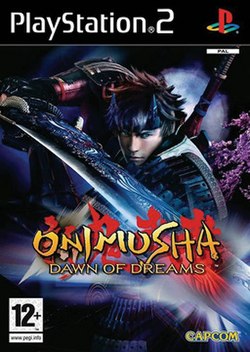
 Onimusha: Dawn of Dreams on PS2
 Action Man: Operation Extreme on PlayStation
 Door Kickers: Action Squad on Switch
 Combat Elite: WWII Paratroopers on PS2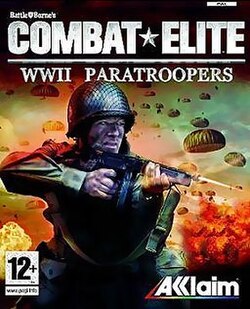












 Another SquareThought Site