

 Apr 2026
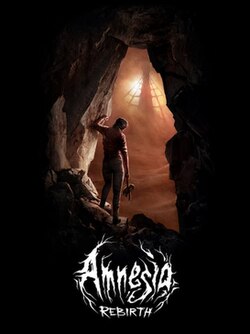

Amnesia: Rebirth on the Nintendo Switch 2 is the third major entry in Frictional Games' long-running amnesia-and-dark-crawl franchise, ported to Nintendo hardware by Abylight Studios. The game keeps the series' DNA intact: first-person exploration, resource-lite survival systems, and psychological tension generated by lighting, sound and an escalating fear state. Rebirth trades the cramped Victorian corridors of The Dark Descent for desert ruins, alien technology and a heavier narrative focus that pulls from Soma's strengths while returning to Amnesia's 'lower-level gameplay'-that is, fiddly inventory management, matches, lamps and the eternal question: should I run, hide, or accidentally trigger a cutscene? This review looks at the Switch 2 release through a technical lens: how the core mechanics translate to portable hardware, what design decisions matter most when performance budgets are tight, and where the port succeeds or stumbles when the game's mood depends on microsecond timing of sound, shadow and player movement.
At the mechanical heart of Rebirth is a deliberately simple state machine: visibility → fear → hallucination. You play as Tasi Trianon in first-person, carrying a fuel lamp and a handful of matches. The lamp and matches are not window dressing; they are the primary control knobs for the game's difficulty curve. From a systems perspective that's elegant: light is both affordance (you can see and solve puzzles) and danger mitigation (it suppresses fear accumulation). The fear meter builds when Tasi is exposed to darkness or stressful stimuli; above certain thresholds the engine triggers audiovisual hallucination overlays and disorienting audio cues to impede situational awareness. On paper this is a cheap scare; in practice the timing and smoothing of those thresholds are critical. Frictional tuned them so fear escalates gradually rather than with a single spike, which produces sustained tension instead of jump-scare whiplash. The game intentionally omits combat, which changes the design requirements for enemy AI and encounter layouts. Without a combat system the AI must be terrifying through presence, detection states and navigation rather than hitboxes and damage numbers. The monsters behave like dynamic environmental hazards: they patrol, they react to sound and light, and they create choke points that force you to use stealth and the environment. Rebirth compensates for the lack of combat with encounter design that emphasizes detection windows and multiple escape vectors, and the save/death mechanic is tweaked for modern patience: death no longer dumps you back to a distant checkpoint but nudges you forward slightly and lets you skip a repeat of the same precise encounter. This is a small but important UX decision-it's less punitive and reduces the 'trial and error until you memorize the monster's single groove' frustration that older survival horrors were built on. Puzzles are classic Frictional: physical affordances, lever puzzles, environmental state changes and inventory-mediated solutions. The feedback loop between observation and interaction is sometimes fuzzy: critics have noted-and rightfully so-that puzzle clarity occasionally interferes with tension, because you stop being terrified and start being a detective turning every candle and curtain into an object of meta-solution. From a design perspective that tension between readability and mystery is deliberate, but in a port you must keep UI and interaction fidelity high: analog stick rotation, object grab, and inventory toggling must feel crisp, or the game will feel like it's fighting you rather than the monsters. On Switch 2, responsiveness of the input stack and latency in object physics are the technical factors that make or break this relationship.
Graphically, Rebirth leans on atmosphere more than polygon count. Its horror relies on layered post-processing: localised volumetric lighting from the lamp, procedural shadows, particle-based dust motes and high-quality ambient occlusion. Those systems are computationally expensive because they interact: a moving light source updates shadows, which in turn influences screen-space reflections and SSAO; then audio occlusion and reverb zones need to match the geometry. Porting that to a portable-oriented console requires careful LOD, texture streaming and dynamic resolution policies. Abylight's job on Switch 2 is to preserve dynamic lighting behavior while trimming GPU-bound workloads. The most sensible technical path is selectively reducing shadow cascades at distance and using baked lighting in large exterior vistas while keeping dynamic shadowing in the close, horror-critical interiors. Dynamic resolution that biases quality toward the center of the screen (where the lamp illuminates) would be a smart trade-preserve the crispness where the player looks most and let peripheral pixels downscale. Another common optimization is reducing volumetric particle density and relying on clever alpha layers to simulate dust and fog; the net effect is nearly identical from a player experience point of view but saves fill-rate. Audio is where Rebirth often shines, and that's crucial on Switch 2. Mikko Tarmia's score and the environmental SFX are designed to be directional and textural. On any modern handheld, maintaining tight audio positionality and low-latency reverb transitions preserves the game's ability to hint at unseen threats. The Switch 2's audio pipeline needs to avoid buffer bloat; a sloppy port here turns subtle whispers into smeared, nonthreatening noise. Finally, memory is the unsung villain: texture streaming budgets, number of active navagents for AI, and sound event pools must be capped to avoid stutters during scripted transitions. Rebirth's pacing-long scenic desert vistas cut with claustrophobic ruins-actually helps here because it offers natural choke points where the engine can preload the upcoming scene.
Amnesia: Rebirth is a technically interesting horror game because it trades brute visual fidelity for carefully orchestrated systems: lighting as a gameplay resource, fear as a soft-state, and monsters as detective-puzzle hazards rather than fightable enemies. The Nintendo Switch 2 port, shepherded by Abylight, is a sensible addition to the platform list because the hardware's modern balance between power and portability makes those system-level compromises achievable. The game's only real tension comes from puzzle clarity versus atmosphere: at times the act of solving undermines the feeling of being hunted. Technically speaking, the port's success will hinge on maintaining low input latency, faithful dynamic lighting behavior in interiors, consistent audio positionality, and a judicious use of dynamic resolution and baked lighting to protect frame-time stability. If those boxes are checked-and based on Frictional's design choices and Abylight's involvement, they have a clear roadmap-Rebirth on Switch 2 will deliver the same slow-building dread that made the series famous. It's not perfect, but as a technical exercise in portable horror it is polished, thoughtful and frequently unnerving. 8/10: a solid horror engine with a few gameplay-clarity bumps, now packaged for on-the-go nightmares.
 Amnesia Collection on Switch
 Amnesia: The Bunker on Switch
 Obscure: The Aftermath on PS2
 Crow Country on PS4
 Green Hell on Xbox Series X/S
 Tormented Souls on PS5
 Amnesia: Rebirth on PS4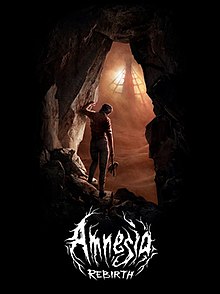










 Another SquareThought Site