

 Dec 2023
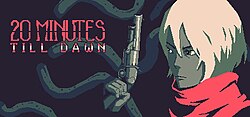

If you like being swarmed by the undead, eldritch horrors, and vaguely angry pumpkins while frantically aiming at eyeballs in the dark, then 20 Minutes Till Dawn on Switch is basically a portable panic button for your thumbs. Created by solo dev flanne and later ported to Switch by Erabit Studios, the game takes that deceptively chill 'survive waves until sunrise' idea and refuses to let your character do anything without your explicit input. Think Vampire Survivors had a baby with an old-school twin-stick shooter, and the baby learned to cuss. The core hook is almost insultingly simple: pick a character, pick a weapon, and don't die for 20 glorious minutes. Gems fall from the monsters you obliterate and double as XP and currency to unlock more characters, guns, and runes between runs. It's a compact roguelike loop dressed in a minimalist, complementary-color outfit that looks very moody in handheld mode and very loud in your brain when a boss spawns next to you. If you're the kind of person who enjoys testing whether chaos has a hitbox, this is for you.
Each run starts with a character select screen that feels suspiciously like ordering a very specific brand of doom: cute anime-inspired female characters (a deliberate design choice by flanne after demo demographics) who look adorable until they take a shotgun to a swarm of skeletons. You choose a starting weapon, map, and the difficulty - called "Darkness" - which can be cranked up to 15. Darkness isn't just for flexing: higher settings nerf you or buff the monsters, and certain achievements demand you suffer through Darkness 15. Heroic, masochistic, or both - your call. Rounds play out in either Standard (20 minutes), Quickplay (10 minutes), or Endless (no time limit). Vision is intentionally restricted at the start of each round, so monsters loom in the dark with nothing visible but their glowing eyes. That little design flourish turns the early game into a horror-comedy: you're basically a walking lantern and every set of beady eyes is a personal insult. When enemies die they cough up gems. These are both experience points and a currency for permanent unlocks. Leveling up during a run gives you one of four randomized upgrades: a new weapon effect, a stat boost, or something that makes your weapons feel like they finally got coffee. Where 20 Minutes Till Dawn truly separates itself from its Vampire Survivors inspiration is in control responsibility. There is no auto-attack babysitting you while you collect power-ups. Your character does not fire unless you tell them to, and your aim matters. This turns run-to-run flow into a sweaty ballet: you kite enemies, lead projectiles through crowds, and pray your aim takes you less time than the next boss's tantrum. Boss monsters appear as the rounds progress, and they drop treasure chests that grant major upgrades when defeated. The thrill of seeing a massive silhouette close in and knowing you either smash it or become a cautionary tale is intoxicating. The upgrade trees and weapon variety are initially delightful. Every new unlock feels like adding a spice to a chaotic stew: explosive rounds, homing darts, projectiles that turn into sentient confetti - you get the idea. That said, several critics noted and I agree that late-game build diversity can collapse into sameness. Many branches funnel into similar pickup synergies, so after enough runs you'll recognize the meta combos and default to them. For some players that's comforting; for run-limited perfectionists it can feel like watching variety slowly resign itself to efficiency. The progression loop is highly addictive. Gems you accrue across runs let you unlock new characters, weapons, and runes back at the main menu, which keeps the carrot-on-a-stick gameplay feeling fresh. The demo that preceded the full game, called 10 Minutes Till Dawn, is a clever teaser - shorter runs with limited unlocks, and apparently a naming quirk that confused at least a handful of players. The full game was cooked up fast (flanne developed and marketed it in two months) but polished enough to escape Steam Early Access on June 8, 2023. Controls on Switch feel tight for the most part, whether you're using Joy-Cons or a Pro Controller. Aiming in handheld mode adds an extra layer of difficulty and charm: it's equal parts clutches and curse words. Endless mode is where the truly deranged players live, but for most of us, Standard mode provides the right balance of tension and completionism.
20 Minutes Till Dawn dresses its chaos in a complementary-color wardrobe that looks like someone told noir and neon to have a baby and fed it gothic tea. The near-monochrome palettes make for hauntingly beautiful maps where enemy eyes look like tiny betrayals. It's stylish; it's moody; it also occasionally makes UI text a little fiddly to read (Destructoid called this out and they were not wrong). On the Switch screen this aesthetic mostly works - it feels like a deliberately limited art decision rather than a budget problem - but in cramped handheld conditions the small text and sometimes similar tones can cause a momentary squint and a frantic zoom-in. Character designs lean heavily into anime-influenced, market-friendly aesthetics: deliberately made to appeal to the demo's audience, which turned out to be disproportionately from China. All the playable characters are female, and their designs are cute-but-ready-to-make-a-mess-on-your-scoreboard. Enemy designs range from spooky Lovecraftian entities to classic undead nonsense, which gives each stage a personality. The minimalism translates to solid performance on the Switch - even when the screen is filling up with monsters, the framerate remains serviceable and the chaos remains readable, for the most part.
20 Minutes Till Dawn on Switch is the perfect little game for people who enjoy frantic, build-driven runs, tiny victories, and the occasional cinematic boss murder. It's charming, vicious, and requires you to do the one thing auto-combat games deny you: aim. The roguelike loop is addictive, the unlocks sting of progress just right, and the art direction gives the whole package a clear identity. Criticisms are minor but worth noting: late-game build convergence reduces variety if you grind too long, and the UI can be finicky on smaller screens. If you want a pick-up-and-play session that will turn your bedtime into "one more run" time, this port is a very successful catch-and-blast translation. Score: 8.5/10 - A stylish, tight, and slightly cruel little roguelike that makes every minute feel important. If you enjoy managing chaos with a joystick in one hand and misplaced confidence in the other, you'll be coming back until dawn... or until your Darkness 15 humiliation teaches you humility.
 Twelve Minutes on PS5
 Twelve Minutes on Xbox Series X/S
 Centipede: Recharged on Switch
 Time Crisis on PlayStation
 Miss Kobayashi's Dragon Maid: Sakuretsu! Chorogon Breath on Switch
 Yurukill: The Calumniation Games on PS5










 Another SquareThought Site