

 Mar 2023
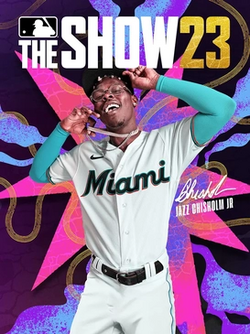

If you remember the halcyon days when reviews spoke of polygon counts with the solemnity afforded to war reports, you will find something comforting in MLB The Show 23 on Nintendo Switch. This is the eighteenth entry in a franchise that has quietly become baseball's definitive virtual rulebook: painstaking, occasionally pedantic, and stubbornly committed to realism. San Diego Studio has taken a catalogue that could have been content to iterate and instead grafted in modes and features meant to broaden the game's scope without dismantling its simulation backbone. The Switch version arrives in an era when sports titles must plead for attention among live-service beasts and annualized expectations. It wears its pedigree plainly - Jazz Chisholm Jr. splashes across the cover, Derek Jeter lurks as a Captain Edition incentive, and the menus include the sort of exhaustive options that make you wonder if the manual will stage a comeback. For a handheld-oriented audience, this release balances accessibility with the deep, hair-splitting simulation that veterans demand. It is not flawless, but it is thoughtful in ways that matter to fans of the sport and the series alike.
Gameplay has always been The Show's calling card, and 23 doubles down in places you might expect and surprises in a few you would not. The core batting, pitching, and fielding mechanics retain the familiar feel - timing and read are rewarded, while button-mash theatrics are reprimanded by the scorekeeper and the CPU alike. Those who cut their teeth on previous entries will grok the learning curve instantly; newcomers have ample tutorial scaffolding, although they should not be surprised when the game still demands attention and repetition. The headline addition is Storylines: A New Game Experience, a mode that places figures from the Negro Leagues into a narrated, vignette-driven presentation. San Diego Studio has included eight legendary players - names like Jackie Robinson, Buck O'Neil, Satchel Paige, and Rube Foster - and frames their moments with narration by Bob Kendrick of the Negro Leagues Baseball Museum. This is not a throwaway historical highlight reel; it is a respectful attempt to marry sports simulation with cultural archaeology. For players used to the flashier spectacle of card packs and microtransaction menus, Storylines is a palate-cleansing reminder that baseball's human stories are why the box score still matters. Diamond Dynasty receives practical, sometimes contentious, adjustments. Core Seasons are introduced so that 99-overall players can be available from day one during certain rotation windows, and the CORE set remains evergreen. This approach attempts to balance immediate gratification with cyclical freshness: every 6-8 weeks the eligible pool shifts, which naturally nudifies team-building strategies. Captain Cards add a layer of meta‑management - assemble teams to meet a captain's constraints and reap meaningful stat boosts. The system is clever, though it flirts with the same design tension that plagues any collectible mode: how do you reward dedication without simply rewarding wallet depth? The initial implementation errs on the side of player agency rather than pay-to-win, a decision that will keep competitive communities more content than not. A welcome rules update is the proper implementation of two-way play. The mechanics now allow players such as Shohei Ohtani to function as genuine two-way stars: start on the mound, return to the lineup, and carry both burdens without placeholder hacks. It reads like a small technical victory but matters enormously for roster authenticity and for players who enjoy building fantasy squads grounded in reality. Commentary and presentation are serviceable, with Alex Miniak as public address commentator and the play-by-play pair of Jon Sciambi and Chris Singleton returning to provide the broadcast sheen. The booth does its job: the calls are competent and occasionally incisive, though anyone seeking the kind of endlessly clever banter found in modern narrative-driven sports productions will find the commentary practical rather than poetic. As with any annual sports release, iteration is the rule. MLB The Show 23's greatest strength is that its iterations are mostly useful; they refine rather than reinvent, and when the developers dare to expand - as with Storylines and true two-way play - the change feels considered rather than gimmicky. The Switch build occasionally betrays hardware limits in load times and texture fidelity, but not in gameplay fidelity. In other words: expect the same winning fundamentals, and a few smart new plays that change how you manage a franchise or craft an online squad.
Veteran readers of 1990s reviews were conditioned to measure a game's worth in sprite density and texture aliasing. By that standard, the Switch version of The Show is an exercise in pragmatic engineering. Stadiums, uniforms, and player models are recognisable and, for the most part, well-proportioned. Lighting does much of the heavy lifting - dusk games, for instance, sell atmosphere even when distant crowd details blur into impressionistic blobs. Close-ups and player faces vary in fidelity; marquee players receive better scans, while lesser-known roster pieces sometimes look as if they were assembled in a hurry between innings. Performance is reliable though not heroic. Frame pacing is generally smooth during gameplay, which is the crucial piece; the engine prioritises simulation integrity over photorealistic spectacle, a sensible trade-off on Switch hardware. Texture pop-in and longer load times are the price paid for portability, but these annoyances rarely interrupt a nine-inning rhythm. Menu design leans toward the dense and functional - it is clearly aimed at players who appreciate a full stat sheet rather than someone who wants a simplified pick-up-and-play arcade romp. Presentation flourishes - scoreboards, crowd noise, and the occasional cinematic moment - inject life into the proceedings. The soundtrack and ambient audio do not try to steal the show; instead, they act like competent stagehands, supplying atmosphere without grandstanding. Graphically the game will not cause Switch owners to abandon nostalgia for their OLED panels, but it will satisfy any fan who values gameplay and faithful recreations of the ballpark experience over hairline photorealism.
MLB The Show 23 on Nintendo Switch is both a continuation and a refinement. San Diego Studio knows its audience: this is a title built for people who study box scores for breakfast and tinker with lineups like they are dismantling a pocket watch. The additions - Storylines' respectful tribute to Negro Leagues history, Core Seasons and Captain Cards in Diamond Dynasty, and true two-way player support - demonstrate the team's willingness to add meaningful features rather than seasonal glitter. The Switch compromises are present but not pernicious. Where other ports simply neuter features to shoehorn a game into weaker hardware, The Show 23 retains the series' tactile excellence: batting remains a contest of patience and timing, pitching is an exercise in chess disguised as reflex, and roster construction will still make you feel like a general manager without a budget restraint. The reception was broadly favorable (Metacritic hovering in the low 80s across platforms) and the game's D.I.C.E. trophy for Sports Game of the Year is a respectable nod to its balance of simulation and presentation. If you already own prior entries, the question is whether the new modes and the two-way authenticity are worth another season's investment. For most dedicated players - and especially for a Switch owner wanting a portable, serious baseball sim - the answer will be yes. This is not a revolution; it is a carefully coached double play: efficient, reliable, and occasionally brilliant. For those who want their baseball with a rulebook in one hand and a historic narrative in the other, MLB The Show 23 is an emphatic, well-hit single that gets you into scoring position for the next big play.
 MLB The Show 24 on Switch
 The Price Is Right on DS
 Press Your Luck on PS3
 Accolade Sports Collection on Xbox Series X/S
 Deca Sports DS on DS
 Alan Hansen's Sports Challenge on PS2
 EA Sports MMA on PS3
 MLB The Show 23 on PS4
 MLB The Show 25 on PS5
 MLB The Show 24 on Xbox One
 MLB The Show 22 on Switch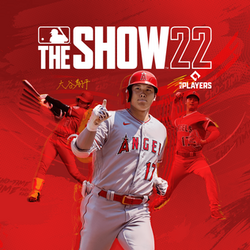










 Another SquareThought Site