

 Aug 2025
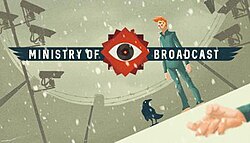

Ministry of Broadcast throws you into a dystopian game show where your every misstep is rewarded with spikes, piranhas, or a suspiciously aggressive guard dog. It's a cinematic pixel-platformer that borrows the tight, unforgiving choreography of classics like Prince of Persia and dresses it in Orwellian dress robes. If you play on Switch, expect a portable trial-by-error experience - one part platforming gauntlet, one part puzzle box, all wrapped in a story about a totalitarian country divided by a wall and a protagonist named Orange who's trying to get home by surviving the "Wall Show." The game has been praised for its art, tone, and character work, and it didn't arrive out of nowhere: a small studio made it with a love of pixel art and old-school challenge. If what you want from a Switch title is brain-and-thumb training with a dash of social commentary, this is the place to sign up.
Ministry of Broadcast is built around the idea that the player will fail - repeatedly - and that each failure is both a lesson and a punchline. The core gameplay loop is a compact, well-designed mixture of platforming precision and puzzle logic. Imagine the methodical momentum and ledge-grab tension of Prince of Persia, then add modern puzzle beats where an NPC doubles as a movable weight or sacrificial stepping-stone. The result is a game that tests two broad categories of player skill: pure mechanical execution and situational problem solving. On the mechanical side, timing is king. Platforms swing, floors collapse, spikes surprise, and water is usually full of curious piranhas that aren't in the mood for a swim lesson. The tightness of Orange's movement means you will need to master jump arcs, momentum control, and occasionally the cruel ballet of air-dodging enemies while lining up for a ledge grab. The controls are not floaty; they reward muscle memory. That's great when you've learned a sequence and can repeat it cleanly, but it also means the game isn't shy about exposing sloppy inputs. If you've ever been irritated by a platformer that lets you wiggle your way out of mistakes, Ministry of Broadcast will be refreshingly merciless: sloppy execution gets punished. Which is to say, it's a little like being tutored by a very bitter parkour coach. The puzzle elements layer on a different set of skills. Many puzzles rely on environmental reading and leveraging other contestants - the game's cast of background extras who, in more than one sense, become tools. You might have to coax another contestant into standing on a pressure plate, use their body as a step to reach a higher ledge, or manipulate timed switches while coordinating with moving platforms. This asks you to think in terms of sequences of events rather than isolated actions: what happens if I move this person, then wait for the platform, then jump? These are logical-planning skills, plus a tolerance for watching the same sequence play out until you perfect the timing. A second, underrated skill the game rewards is observational patience. Ministry of Broadcast frequently telegraphs danger, but in subtle ways: shadowed spikes, a twitch in a guard's patrol, or a short audio cue before a trap triggers. Rushing through a section because you're confident you can 'react' is a fast way to meet a piranha. Instead, the game asks you to scout, to watch the rhythms, and to map a safe line in your head before committing. That combination of scouting and rehearsal is a skill more players should rediscover - it's old-school puzzle-platforming ethos wrapped in modern lighting and pixel polish. The learning curve is not forgiving but it is fair. The difficulty comes more from clever level design than from artificial stat walls. You'll often think a section is unsolvable until you notice the small interactable object or remember that a defeated contestant isn't gone forever - they might be exactly the tool you need. Expect to die in a way that makes you groan at first and laugh later, because the design encourages experimentation. There's an element of trial-and-error, yes, but deaths usually feel informative: either you mistimed a jump or you missed a puzzle cue. One of the more interesting design choices is how the narrative keeps you invested in the challenge. Orange isn't just a blank avatar; the game uses cutscenes and character moments to make you care. When the stakes are both moral and literal (your character could get skewered), surviving the most ridiculous contraptions feels like a small personal victory. That's a useful trick: your empathy with the protagonist lightens the sting of repeated deaths and turns perseverance into storytelling currency. If you play on Switch, control mapping matters. Joy-Con inputs are serviceable and the handheld mode works fine for precise sections, but you will probably appreciate using a Pro Controller for the most exacting segments. The camera and animation cues are intentionally cinematic - the game likes to set you up with well-framed shots before the gauntlet begins - and those cinematic beats are often where you'll need to translate intention into pixel-perfect execution. Some levels escalate into set-piece-like sequences that feel almost rhythmic: you learn to treat them like a pattern to be memorized and executed, similar to a boss rhythm in a rhythm game without the music. A handful of critiques about challenge balance: there are difficulty spikes, where a new mechanic is introduced mid-run and the game expects you to immediately incorporate it into an otherwise flawless sequence. That can lead to a couple of cheap deaths until you reset and adapt. Also, while the puzzles mostly reward lateral thinking, a tiny minority can feel a bit too fiddly - requiring near-perfect positioning or reliance on a fluke from an NPC. These moments are few, but when they appear, your patience meter will ding loudly. Overall, the skills Ministry of Broadcast asks of you are muscular and cerebral in equal measure. You need the twitch reflexes to survive the traps, the spatial awareness to navigate tricky platforming sections, the logic skills to repurpose contestants and environmental objects, and the patience to watch, learn, and repeat sequences until you nail them. If you like games that turn problem-solving into a physical sport, this one will happily bench-press your thumbs.
The pixel art in Ministry of Broadcast is one of its more celebrated features, and the Switch handles it with aplomb. The aesthetic leans cinematic: widescreen compositions, careful use of lighting, and fluid character animations that make Orange's stumbles and triumphs feel weighty. The art team - one half of a small co-op studio - clearly loves little details: the way an NPC shivers before being shoved, the grim utility of the show's set pieces, and the visual nods to totalitarian iconography that set the tone without devolving into caricature. The result is an atmosphere that sells both the story's bleakness and the dark humor of televised survival. Performance on Switch is steady; this isn't a game trying to flex with ray tracing or 4K textures, it's about style and clarity. Pixel work and animation timing matter more than raw horsepower, and the game delivers. Cinematic camera work and well-designed level framing help guide the player's eye toward danger, which is important because good visual language is half the puzzle. When the game wants you to notice a pressure plate or a moving platform, it often sets it up visually first. That's design meeting art to assist gameplay, and it works. Ministry of Broadcast was even nominated for Best Art at Game Access and took home Best Gameplay at the same show - not a bad CV for an indie team. The visuals reinforce the challenge rather than obscuring it, which is exactly what you want from a puzzle-platformer.
Ministry of Broadcast is a compact, clever, and occasionally vicious platformer that succeeds because it trusts the player. It trusts you enough to punish sloppy timing and reward careful observation and planning. If your ideal Switch session is a breezy couch romp, this might sting; but if you enjoy getting into a groove where your thumbs and brain sync up and you feel genuinely clever after solving a sequence, you'll love it. The narrative and pixel art give the brutal challenge a human heartbeat, so every victory feels earned and every failure has context. The game's main weaknesses are a few fiddly puzzles and sporadic difficulty spikes that demand instant mastery of a newly introduced mechanic. Those moments can be frustrating, especially if you come in expecting a pure storytelling walk. They matter less if you came for the challenge and the satisfaction of refining your runs. Recommendation: buy if you want a Switch game that treats platforming and puzzling as equal partners. Prepare for trial-and-error learning, sharpen your timing, and cultivate patience. With its cinematic presentation and solid design, Ministry of Broadcast is a rewarding bootcamp for anyone who thinks their thumbs are smarter than they actually are. Score: 8/10.
 Felix the Reaper on PS4
 FA Premier League Stars 2001 on PlayStation
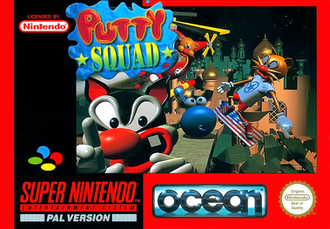
 Putty Squad on PS4
 Invizimals: The Lost Kingdom on PS3
 Aero The Acro-Bat: Rascal Rival Revenge on Xbox Series X/S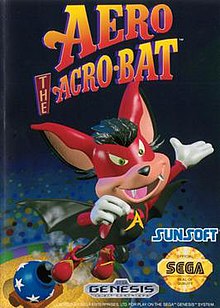










 Another SquareThought Site