

 Nov 2018
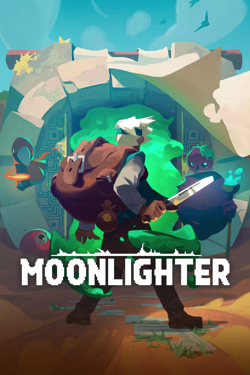

Moonlighter is the sort of game that manages to be both an existential meditation on capitalism and a pleasantly bite-sized dungeon crawler. You play Will, a 17-year-old orphan who runs a shop called the Moonlighter by day and ignores all social norms by looting interdimensional dungeons by night. The village of Rynoka, built around mysterious doors to other realms, once thrived on what came through those portals; then it stopped thriving, which is how small towns become charming in videogames. The Nintendo Switch version of Moonlighter arrived on November 5, 2018, carrying the indie DNA of Spanish studio Digital Sun and wearing it in pixel-art. The game was reasonably well received across consoles, with Metacritic showing mixed feelings on PC and warmer ones on the other platforms. It also earned nominations in a couple of fan-driven award categories, because nothing says validation like people voting for what they like on the internet. If you want a game where economics and swordplay coexist in a thoughtful, low-drama package, Moonlighter is for you. If you want to be lauded as a hero while you undercut the local market, the game will let you achieve that complicated moral status with only minor repetitive motion issues.
Moonlighter splits its life into a neat day/night schedule, like a normal person with a very dangerous second job. During the daytime you manage your shop: stock items, set prices, haggle with customers (mostly by way of a simple pricing minigame), and invest earnings into the infrastructure of Rynoka. These investments are meaningful because they unlock services you will need for your nocturnal extracurriculars. Spend coin on a blacksmith and you can upgrade equipment. Invest in a potion-maker and you stop dying quite as often. Hire a part-time shopkeeper and enjoy the rare luxury of being away from your own inventory during store hours. At night you switch hats - literally and figuratively - and descend into dungeons. The game is structured around four main dungeons: Golem, Forest, Desert, and Tech. Each contains multiple floors, mini-bosses at intervals, and a final guardian at the bottom who is both determined and hard to reason with. Clear rooms for chests, defeat enemies for loot, and return home with enough oddities to make the townsfolk suspiciously interested in your suddenly eclectic wares. The tension in Moonlighter is not merely between you and the monsters; it is also between you and the consequences of your own commerce. Every run into a dungeon is an exercise in risk management. Will you push floor after floor to find that special item, or will you stash your loot and limp home before a poorly judged charge turns you into a grisly exhibit? That question becomes more engrossing because your profits are the very thing that let you progress. If you want better gear, more town services, and the option to craft better swords and armor, you have to sell the things you fight for. It is a tidy loop: explore, loot, sell, upgrade, return to explore. The early game teaches you this loop gently, but it also plants curiosity. While rummaging through the first dungeon you find a body with a note from Crazy Pete, a friend of your grandfather and a man who seems to have had worse luck with interdimensional hygiene than you. The note hints that each of the four dungeons hides a guardian who wears a key. Collect all four keys and you get access to the fifth dungeon, which has been closed since the doors first appeared. It is the story equivalent of being told there is one more unopened drawer in your grandparents' house. When you finally unlock the fifth dungeon, the plot takes a feverish left turn into sci-fi. The place is full of the remains of an alien species, and buried notes explain that the earlier dungeons were essentially supply lines for interdimensional pirates who looted other realms. Crazy Pete, in an act of apparently vigorous curiosity, got involved and did not win that encounter. The pirates' base eventually crashed into our world, and the four keys were meant to reopen their primary vault. Naturally, your character, being a merchant with surprisingly heroic stamina, defeats the captain of these spacefaring brigands and is celebrated as a hero-merchant. There is a bureaucratic ending to this adventure, of course. A government body called the ICT arrives, offers to fold the planet into a Dimensional Commerce Treaty - which sounds like the sort of paperwork that would require a stamp and an uncomfortable signature - and promises to make the use of dungeons illegal while opening regulated trade instead. Will returns to Rynoka, hopefully to reopen the Moonlighter but now with official trade routes and fewer surprise monsters crashing into reality. If that progression sounds tidy, it is intentionally so. Moonlighter's core is its loop and the decisions the loop forces on you. The DLC Between Dimensions adds extra challenges and content for people who want to chew on the loop a little longer, but the base game already provides a satisfying cadence: you plan your shopfront, you prepare for a night run, you survive or spectacularly fail, and you spend the proceeds on incremental improvements that make your next attempt marginally less likely to become an anecdote involving a monster and a regretful last stand. Mechanically, it is an action-RPG in the sense that combat is real-time, and it rewards learning patterns and managing resources. Rooms have mini-bosses and guardians. Progression is more about incremental competency and smart spending than about grinding an arbitrary stat into oblivion. The result is a game that entertains both the people who enjoy methodical economic systems and the ones who enjoy stabbing things until they stop moving.
Moonlighter dresses its world in a tidy pixel aesthetic that manages to be readable and charming on the Switch's screen. The infobox credits David Fenn and Pablo Caballero for the sound, which is a polite way of saying the audio complements the visuals without trying to be the star of the show. The presentation is tidy; menus are clear, items are distinct enough to avoid late-night misclicks, and environments have just enough personality to sell the idea of multiple dimensions worth looting. On Switch, the game is comfortably portable. The art direction works well in handheld mode, where the balance between detail and silhouette is important. Enemies read clearly, loot pops, and Rynoka feels like a place you can invest time into without losing your place. If you are the sort of person who likes map recognition and charming little pixel flourish, Moonlighter gives you enough visual cues to feel rewarded without taxing the machine or your sense of taste. There is no pretense of hyperrealism here, and that is fine. The game's look serves its loop: you need to identify treasures, understand threats, and feel the small victories of a good sale. The composers and artists did their jobs in a disciplined way, like competent shopkeepers who keep the lights on and the shelves tidy.
Moonlighter is quietly clever: equal parts shop management and dungeon crawling, it finds personality in the friction between making a living and risking life and limb to do it. Will's story - from orphaned shopkeeper to hero-merchant who inadvertently foils interdimensional pirates - is narrated in gameplay loops rather than lengthy cutscenes, which will be a relief if you suspect long speeches are the true final boss. The Switch release makes this indie formula portable, and the game's sensible pacing and clear presentation suit both short sessions on a commute and longer late-night runs when you have convinced yourself just one more floor will not end badly. Reception has been mixed on PC and warmer on consoles, which probably reflects taste more than quality; Moonlighter is less about radical innovation than about doing a few things with quiet competence. If you want a game that rewards tidy risk-taking, cares about the economics of your choices, and lets you be a reluctant civic hero without trying to make you feel guilty about it, Moonlighter is worth the trip to Rynoka. It will not reinvent action-RPGs, but it will give you a charming shop to ruin and a set of dungeons to blame for what comes next. And if you are wondering whether bureaucracy shows up at the end of your looting career, it does - because you cannot have universal trade without someone forming a committee to put a stamp on it.
 Moonlighter on Xbox One
 Combat Elite: WWII Paratroopers on PS2
 Onimusha: Dawn of Dreams on PS2
 Action Man: Operation Extreme on PlayStation
 Project Sakura Wars on PS4










 Another SquareThought Site