

 May 2025


Mosa Lina markets itself as a game without plot, a hostile interpretation of the immersive sim, and an official enemy of pristine polish. Read that as: it will not hand you a neatly tied bow of narrative, but it will force you to improvise your own soap operas out of floating balls, gravity fields, and a suspicious number of boxes. On Switch, the game keeps its pixel-minimalist skin and ambient soundtrack while handing you a rotating cast of 48 mischievous tools that read like the best indie theater troupe you never asked for. If you came for characters with dialogue trees, you will be disappointed in the literal sense. If you came for emergent, improvised character arcs built from physics and player incompetence, welcome to the improv show.
Mosa Lina's runtime is structured like a short anthology series: every new run spawns nine levels drawn from a large pool, then the game tweaks them - move the exit, toggle platform physics, add spiked blocks - and assigns you nine potential tools. When you spawn into a level you get three tools from that pool, each with limited uses. The objective is basic and brutal: collect one or more fruits scattered through the level and reach the exit without going off-screen or getting skewered. The fruit is a physics object, so sometimes the fruit becomes the diva who refuses to cooperate and has to be pushed out of the stage to count. Treating the game's mechanical cast as actual characters helps make sense of the chaos. The Player (your avatar) is a silent, forgiving protagonist designed for loose edge control - a method actor whose performance centers on getting shoved around and surviving. The Tools form the supporting ensemble. There is the Box: reliable, boring, occasionally heroic. The Floating Ball: comedic relief that bounces into trouble. The Gravity Inverter: the secret melancholic antagonist who can upend the entire emotional tone of a level. The Butterfly - which teleports you forward and then yanks you back - plays an unpredictable trickster in every scene it appears in. Each tool's arc is short and episodic: they enter your run, do their bit, then die from misuse or cleverness. The run itself supplies a rising-action structure. Early levels are brief sketches where you experiment, invent solutions, and discover relationships (Player + Ball = trust issues). Death is not terminal in the narrative sense; it's a scene cut. When you die you are dropped into an incomplete level elsewhere in the run. This shuffling creates a fractured, modular plot that eventually collides into the 'boss' level: the final stage gets extra sections, more boxes that act like deus ex machina machines, and a pile of fruit that amounts to the season finale where all unresolved threads are either resolved or spectacularly ignited. Mosa Lina intentionally subverts the 'key-and-lock' logic of many immersive sims. Instead of handing you the ability that exactly matches the obstacle, the game hands you random tools and asks you to improv. That can be glorious - Mark Brown of Game Maker's Toolkit praised the game for creating recurring emergent stories - and it can be maddening when your current toolset literally cannot solve a level. That possibility is part of the game's personality: sometimes the story is tragic and you must restart the run; sometimes it's a triumph of duct tape and luck. The multiplayer modes shift this drama from a one-man show to ensemble theatre. Local or online co-op turns tool management into an argument about who gets the Butterfly and who has to babysit the Gravity Inverter. The level editor and Steam Workshop support let you write your own episodes, cast in whatever ridiculous combo you prefer. The game also received multiple free updates that added tools, levels, and modes like speedrun - a reflection of a developer that keeps rewriting the script long after opening night. If you're looking for a character-driven narrative in the traditional sense, Mosa Lina will refuse to provide it. But if you view the player's attempts, the tools' interactions, and the run's randomized structure as characters with arcs - entrance, conflict, limited agency, and exit - the game becomes a constant series of short, memorable vignettes. Each run is less a single story and more a collection of micro-dramas where the punchline is usually physics.
Visually, Mosa Lina wears minimalist pixel art like a discreet but stylish blazer. The environments are sparse and abstract by design, which serves the core mechanic: physics must be legible and interactions must be readable at a glance. That minimalism helps the emergent narratives breathe - you're not distracted by ornate backstory textures when the Floating Ball starts its tragic descent. The soundtrack and SFX, crafted by hip-hop producer Silkersoft with a push toward an ambient, The Caretaker-like aesthetic, paint the edges of each micro-drama in eerie neon. Early prototypes encouraged a darker, horror-adjacent soundscape; the final game sits comfortably between alien and dreamlike. Ported to Switch by Anton Klinger and collaborators, the presentation holds up. Nothing about Mosa Lina calls attention to itself with technical flash; instead, it uses its visual and audio restraint to prioritize clarity and mood. Optional toggles (many added, removed, and re-added across post-launch updates) let players reintroduce chaotic flourishes like moon blocks and backflips for those who want more operatic movement, while purists can keep the default, more controlled toolkit.
Mosa Lina is a weird, generous little machine that writes short, often hilarious stories out of physics and player experimentation. It refuses to be tidy: levels can be unsolvable with a given toolset, the Butterfly will betray you, and the fruit will sometimes act like performance art rather than an objective. But that stubborn refusal is its selling point. The developer's stated anti-polish, anti-Mona Lisa stance is present in every jittery teleport and every triumphant shove of a piece of fruit into oblivion - it's a declaration of creative chaos. If you prize authored narratives with character arcs spelled out in cutscenes, Mosa Lina will feel like a book where all the chapters are written in lipstick on the back of a napkin. If you enjoy making stories out of systems, watching tools evolve from comic relief to tragic heroes in ten seconds, and then laughing when their arcs end in splinters, this Switch port is a riot. The game's co-op and editor further extend the cast, and the post-launch support shows its makers weren't done with the script. There's frustration here, for sure, but also genuine moments of emergent brilliance. Score: 8/10 - for anyone who wants their characters implied through interaction rather than exposition, and for those who enjoy being the director of chaotic short films where gravity is the main antagonist.
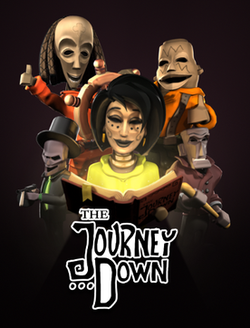
 The Journey Down: Chapter Two on Switch
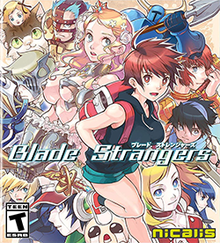
 Blade Strangers on PS4
 Coloball 2002 on PS2
 Press Your Luck on PS3
 Game Dev Story on PS4
 Mom Hid My Game! on Switch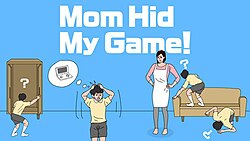










 Another SquareThought Site