

 Jun 2021
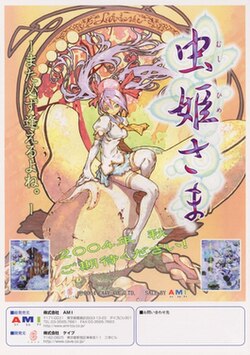

Mushihimesama is the kind of game that wears its mechanics like a jeweled gauntlet and its story like a tiny, mysterious bracelet - both ornate, but only one really helps you survive onscreen. On the Nintendo Switch this insect-themed bullet-hell classic from Cave returns in HD, complete with Original, Arrange, Novice and Version 1.5 modes. For a title that is, at heart, a manic shooter, it still manages to hint at a surprisingly operatic little narrative: the royal daughter Reco, a telepathic golden beetle called Kiniro, a sacrificial tradition in the village of Hoshifuri, and a forest full of Koujuu (giant arthropods) whose life force, Levi-Sense, poisons human settlements as the Miasma. This review is less about frame-rates and more about feelings with machine guns attached: I take the limited plot the game gives us and stretch it like spider silk into an in-depth - and, yes, slightly ridiculous - character study. If you came looking for a nuts-and-bolts guide, detailed_gameplay has your number. If you came for a melodrama involving beetle-brides and environmental metaphors, stay for the character arcs. Either way, you should probably have a refillable energy drink at the ready.
At first blush Mushihimesama is pure CAVE: vertical scrolling, merciless bullet patterns and a screen that occasionally looks like a Jackson Pollock painting made of luminous wasp stingers. Gameplay modes on the Switch include Novice, Original, Arrange and Version 1.5, giving players a spectrum from approachable to 'am I actually a small, very heroic insect?' On top of that it preserves mechanical curiosities from earlier ports: the PS2's Arrange mode tweaks the rules by giving the player explosive firepower at the cost of no continues and an interesting defensive trick - holding a bomb negates a fatal hit and sprays the screen with a safety bomb instead. Xbox 360 and PC ports introduced HD visuals while keeping the arcade blood in the water; the Switch release bundles those modes so both newcomers and masochists can co-exist in the same cartridge. From a character-analysis perspective, the way Mushihimesama forces you to play is narratively revealing. Reco's journey into Shinju Forest to save Hoshifuri mirrors how the player must learn to navigate hostile patterns: slow, observant practice evolves into confident rhythm. The telepathic link with Kiniro is reflected mechanically by how the game asks you to manage proximity - sometimes hugging enemies is the safest bet for point-farming or clearing a path, and other times you need to bail out and fire from a distance. That push-and-pull is Reco's arc in micro: hesitant girl, then bonded rider, then sacrificial hero who learns the contours of an ecosystem she cannot fully control. Difficulty is not just an obstacle but a character test. Novice mode acts like the early chapters of a coming-of-age novel: warm, forgiving, and designed to teach you that patterns repeat. Original and Version 1.5 (the latter a significant arcade revision) are where the game shows its teeth - these are the sequences where Reco's stoicism faces the forest's indifference. Bombs are more than a panic button; they are narrative punctuation marks. Dropping a bomb is the equivalent of Reco using a last-ditch trait learned years ago - a cultural memory, an ancestral trick. The PS2 Arrange mechanic where a bomb absorbs a hit for you translates as a moral choice within the story: hold onto hope and sacrifice it when needed, or burn it early and charge forward like a reckless prince of beetles. Collaborative modes and the multiplayer options in some ports give a second layer to the characters: side-by-side runs feel like two villagers trying to carry Reco's burden together. Reviews across platforms praised the replayability and varied modes - critics on PC and Switch aggregated around the mid-80s on Metacritic - and that goodwill stems from how every run reinterprets Reco's arc. A beginner run is apprenticeship, an Arrange run is youthful recklessness, a 1.5 Hard run is the mature tragedy / triumph combo. Controls on Switch are modern and responsive; the game still demands split-second positioning, danmaku reading and an intuitive sense of how the screen will fill up with hostile life. The soundtrack (Manabu Namiki and Masaharu Iwata) colors these moments: bright, driving tracks that could soundtrack a sprint through a phosphorescent insect marketplace or a desperate final stand on the back of a gigantic beetle. The audio cues are as much a part of the story as the minimal cutscenes: when music swells you feel Reco's resolve harden, and when it quiets, the Miasma feels closer. If you want mechanical advice that doubles as character coaching: learn the rhythm of each stage and treat bombs as narrative beats - they should mark turning points, not be background noise. Use Novice to learn personalities of bosses (yes, a boss is a personality) and then graduate to Original to test whether your Reco is merely brave or actually wise. Version 1.5 is for those who want the forest to tell them its secrets in a dialect of bullet patterns and survive anyway.
Mushihimesama's insect aesthetic is an argument in favor of elegant grotesquery. The creatures are variously beetles and butterflies, rendered as gigantic, ornate homologues of real arthropods; forests shift from arid dunes to verdant overgrowth as stages progress. The Switch HD port smooths and brightens the arcade's sprites, and while the game keeps the art direction faithful to Cave's original, the added resolution gives Kiniro's golden sheen and the Koujuu's chitin a tactile presence. This is important for a game where distinguishing enemy hitboxes and bullet colors can be the difference between a triumphant flourish and a frantic Continue screen. Visual storytelling is sparse but efficient. The bracelet Reco carries and the telepathic connection to Kiniro are conveyed through a few well-timed portraits and in-level motifs: flora growing around exoskeletons, the Miasma's sickly haze rolling in like an environmental villain. The way stages layer insect shells and fungal growth around ancient Koujuu carcasses creates a cyclical ecosystem backdrop - visually reinforcing the Levi-Sense/ Miasma idea that the world is both beautiful and lethal. On Switch the color palette pops without becoming gaudy, preserving the original's intent: this is a world of wonder that will also try to shoot you into another plane of existence. Performance-wise the Switch handles HD visuals admirably. Frame pacing is stable, and the clarity helps players parse dense bullet patterns. Presentation menus expose modes and options clearly, and the inclusion of Version 1.5 as a standard mode is a welcome move that lets players experience both the arcade's refinement and its alternate, harder rhythm. If the game were a theater production, the graphics are the costumes - ornate, functional, and occasionally flashy enough to distract you from the existential dread of surviving Stage 5.
Mushihimesama on Switch is a love letter to shmup devotees wrapped in the surprisingly poignant skin of a nature myth. The plot, while minimal, provides a scaffold for a surprisingly rich character study. Reco's story - the girl chosen for sacrifice who rides the golden beetle Kiniro into a forest that is equal parts cradle and grave - serves as an emotional map for the player. Each mode is a chapter: Novice is the prologue, Arrange is the youthful spree, Original is the steady middle, and Version 1.5 is the alternate ending where the forest rewrites itself and you have to adapt. The game's strengths are its dense, thoughtful design and the way its mechanics mirror the narrative beats. Bombs, movement, and risk management aren't just systems; they're Reco's decisions made tactile. Cave pairs a gorgeous insect palette and driving soundtrack with staggeringly disciplined level design, and the Switch port's HD sheen makes the world more immediate without blunting its bite. Critics have been generous across platforms for good reason: this is a shooter with a soul, even if that soul sometimes communicates through curtains of bullets. If you're new to bullet hells, Mushihimesama offers an accessible path in Novice and enough depth in other modes to keep you coming back; if you're a hardened veteran, Version 1.5 and Arrange will scalp your confidence and put it politely back on. Either way, you get to ride a telepathic beetle, confront a god of Koujuu, and - eventually, perhaps - understand why a 15-year-old princess is the one who must walk into the forest. The moral of the story is messy and ecological: humanity coexists uneasily with forces it neither created nor wholly comprehends. The mechanical lesson is simpler and more fun: learn the patterns, honor your bombs, and never underestimate a golden beetle. Mushihimesama doesn't reinvent the genre, but it refines it into something that feels mythic and immediate. On Switch it's an essential pick for anyone who loves their shooters challenging, beautiful, and, yes, willing to let a princess and her beetle teach you a thing or two about sacrifice and timing. Keep your hands warm, your thumb steady, and remember: in this forest, sympathy and skill are both required to survive.
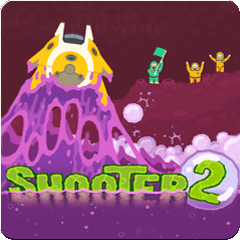 PixelJunk Shooter on PS3
 Plants vs. Zombies: Garden Warfare on PS3
 PixelJunk SideScroller on PS3
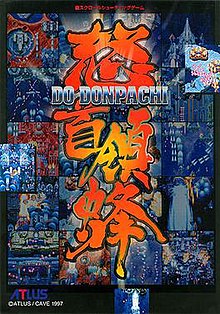 Ketsui Deathtiny: Kizuna Jigoku Tachi on PS4
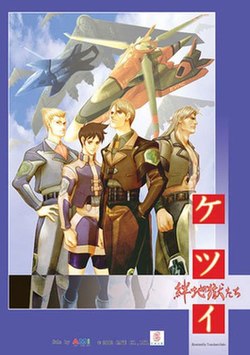 Espgaluda II on Switch
 Akai Katana Shin on Switch
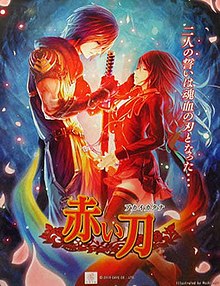 Deathsmiles I & II on PS4
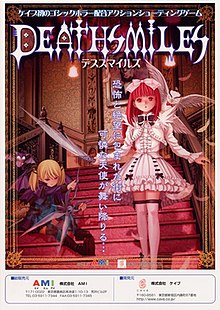 ESP Ra.De. Psi on PS4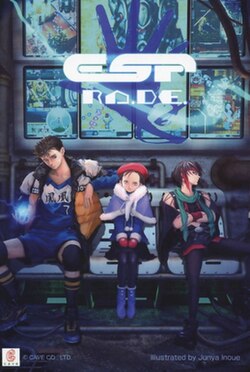










 Another SquareThought Site