

 Jul 2020
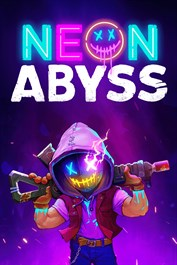

Neon Abyss is the kind of game that hits you like a disco ball full of bullets: loud, ridiculous, and somehow stylish while being borderline catastrophic. Developed by Veewo Games and published worldwide by Team17, it mixes side-scrolling run-and-gun action with roguelike randomness. You play a member of the Grim Squad, dive into the Abyss, and murder your way through procedural rooms in search of the aptly named New Gods. On Switch it feels like a portable bullet ballet - chaotic, bright, and very unforgiving. This review zeroes in on what players who cradle a Joy‑Con at 2 a.m. really care about: the challenge and the skillset Neon Abyss asks you to bring to the nightclub of death.
At its core Neon Abyss is a twitch skill shooter with a roguelike brain. Each run is built from procedurally generated rooms, which keeps things fresh but also teaches you to become a world-class improviser. The fundamental skill here is aim: guns come fast and shouty, and your ability to point the weapon where enemies will be in 0.3 seconds (or where their bullets will be) determines whether you live to see another neon sunrise. Movement is your second religion. Unlike some twin-stick shooters that hand you a dedicated dodge button, Neon Abyss assumes you can slide, jump, and reposition quickly using precise platforming inputs. That lack of a dedicated dodge was a common gripe on other platforms, and it subtly raises the bar: you can't just meme your way out of patterns by mashing evade - you need positioning, timing and a flair for lateral thinking. If your console fingers tremble like a caffeinated raccoon, expect a steep learning curve. A huge part of the game's challenge comes from its stacking synergy system. Weapons and items can change the rules - literally. You can pick up passive and active effects that alter damage types, shoot patterns, spawn side-projectiles, or transform enemies into explosive confetti. The catch is that everything stacks, and not always in ways that make sense at first glance. Developing a sense for which combinations elevate a run and which are a cursed novelty is a long-term skill. Early runs will be a delightful chaos of spaghetti synergies; after fifty runs you start to build intuition: ring items that multiply projectiles pair well with high‑fire‑rate weapons, certain pets scale into dependable DPS, and some effects actively ruin your day (and your run) if left unchecked. Pets are a deceptively deep mechanic. Eggs float in a line behind your character and will hatch into small companions that offer passive bonuses or active effects. The longer you keep them alive, the more evolved and useful they become. Pet management forces you to juggle immediate survival against long-term gain. Do you let your pet tank a little damage so it evolves into something badass, or do you play conservatively and miss out on late-run power spikes? This is where risk assessment becomes a tangible skill in Neon Abyss - not just 'run faster and shoot more', but 'I can play greedy now and cash out later'. Procedural generation is a double-edged sword for challenge. It keeps each descent surprising - you never fully memorize a room - but it also means you must become a rapid pattern recognizer. Enemy varieties include floating orbs that look deceptively simple but can tile your screen with homing nonsense, plus mini-bosses whose attack telegraphs are subtle and require instant reaction. You learn to read enemy tells, memorize projectile arcs, and prioritize threats (I promise the little glowing orb that looks harmless is lying to you). Good players lock onto threat priority: which enemy to kill first, which corner to funnel them into, and when to push forward vs. reset the room. Resource management is another challenge vector. Health, bombs, coins, and the special teleportation stones that let you backtrack to previously sealed rooms - everything matters. Knowing when to backtrack and risk exploring a locked chest or sealed area for a powerful item is a judgment call that separates casual runs from expert ones. The game's unlock system (new rooms, bosses, and rules) is progression-focused, so perseverance and smart risk-taking are rewarded. There are moments when the game feels like a grind: PlayStation Official Magazine warned that accruing the perfect stack can be a long slog. That's true - but if you enjoy the chess of incremental power progression, the slog becomes satisfying. Adaptability is arguably the most important meta-skill. Because of the unlimited stacking and the random items, no two runs play the same. One run will make you a walking shotgun of death with ricochets and bees, the next will turn you into a glass cannon that needs perfect execution. Flexibility in playstyle - switching from aggressive bullet-spongeing to hyper-conservative kiting - is necessary. And because rooms can be chaotic, situational awareness (where the exits are, which corner to kite into, where a pet is obstruction) becomes second nature. Difficulty spikes and boss fights demand good resource conservation, pattern memorization, and emotional control. The New Gods and their followers force you to apply everything you've learned about movement, item synergies, and threat prioritization. The learning loop is tight: die, unlock something useful, run again with slightly better odds. If you're the kind of player who learns by failure, Neon Abyss is a masterclass; if you hate being punished for experimenting with weird item combos, it can feel brutal. Performance-wise, some versions of the game had trouble on certain consoles at launch, but on Switch the overall experience is generally stable and portable, which actually changes how you approach runs. Playing on the go encourages shorter runs and faster acceptance of failure - both of which are very compatible with improving the game's required skills: quick assessment, instant adaptability, and sharpening muscle memory under pressure.
Visually Neon Abyss is a neon-drenched fever dream. It borrows Hotline Miami's gritty neon-religious aesthetic while wrapping it in a more colorful, cartoonish coat. The pixel-art enemies, bright particle effects, and garish HUD make each room feel like a nightclub brawl staged inside a laser pointer. This helps readability in crowded firefights - projectiles and enemy types are distinct enough that, if you're paying attention, you can parse threats quickly. The presentation also helps sell the chaos: when the screen explodes in color, it's still relatively legible, which is crucial for a game that expects split-second decisions. DLC like the Alter Ego Pack adds cosmetic and ability options, which are nice flourishes but don't change the core skill demands.
Neon Abyss is a delightful, ruthless package for players who love learning by dying. It demands precise aiming, slick movement, sound resource judgment, and a willingness to embrace RNG so you can turn it into a strategy. The stacking synergies and pet evolution systems reward experimentation and long-term thinking, while procedural rooms force rapid pattern recognition and adaptability. If you enjoy roguelikes that make your heart race and your thumb ache in a good way, Neon Abyss on Switch is a bright, punishing playground. If you prefer predictable arenas, a dedicated dodge button, or hand-holding, you might find it infuriating. For everyone else who likes their difficulty served with style and a soundtrack, this game is worth the plunge.
 Tales of the Neon Sea on Xbox Series X/S
 Neon Chrome on Switch
 PlayStation Home on PS3
 Gaelic Football '25 on Xbox Series X/S
 Together! The Battle Cats on Switch
 Crash Bandicoot: The Wrath of Cortex on PS2










 Another SquareThought Site