

 Jan 2021
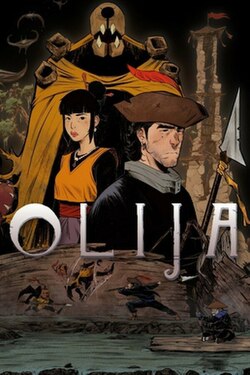

Olija opens like a sea-weathered folktale told by someone who has drank one dram too many and still remembers the important bits. You play as Faraday, a penniless lord whose fishing luck is so cursed he could probably go bankrupt buying bait. After a storm, a whale, and an unfortunately timed window jump, Faraday finds himself washed up in Terraphage, an archipelago of marooned ships and even more marooned egos. This review isn't here to walk you through every puzzle or every pixel; it's here to interrogate the little human (and not-quite-human) stories that make Olija more than a clever harpoon trick. The game's narrative is compact, sometimes improvised (its creator Thomas Olsson admitted the story was written late and on the fly), but the relationships it sketches feel deliberate: Faraday's hunger to return home, the Boatman's weary stewardship, the resigned community of Oaktide, and the looming, almost mythic promise of the Shadow Gate. These elements form arcs that are short and bittersweet rather than sprawling epics, and Olija often finds powerful emotional mileage in tiny, pixelated moments.
Faraday's arc is inseparable from the harpoon. On paper the harpoon is a traversal and combat tool - a mechanical icicle you can fling to teleport, pull yourself around, or jab into an unhelpful eldritch specimen. But narratively it functions as Faraday's tether to agency. At the start he is a man who lost everything to the sea; by the end he's someone who learns to pull the world toward him rather than simply drifting. Every moment you hook across a yawning gap feels like a line of character development: hesitance becomes confidence, desperation becomes ingenuity. The harpoon's mechanical duality - both a weapon and a means of movement - mirrors Faraday's internal split between the need to survive and the yearning to go home. The Boatman is the quieter half of the duet. He ferries Faraday between islands, and in that role he serves as both exposition device and emotional ballast. He doesn't get a Hollywood 'big reveal' speech, because Olija prefers implication to melodrama: the Boatman is patient, capable, and slightly ominous, a guide who reminds you that returning home might be an administrative task as much as an emotional one. The relationship between Faraday and the Boatman charts a small but meaningful arc. Faraday arrives bewildered and needy; by spending time on Oaktide - watching the Boatman ferry other passengers and listening to half-told stories in cramped cabins - he begins to see the cost of wandering and the cost of waiting. The Boatman rarely changes, but his constancy underscores Faraday's growth: someone has to pilot the voyage, and Faraday must choose whether to be the passenger or the helmsman of his own destiny. Oaktide itself is a character in miniature. The marooned sailors, merchants, and travelers who populate its ramshackle lanes are sketched with economy but surprising warmth. Each survivor is roughly drawn - in both the literal pixel-art sense and the narrative sense - yet their interactions form the emotional spine of the middle act. You don't get in-depth backstories for all of them, but the way they accept one another's oddities, barter hope in the form of stories and maps, and slowly give up on certain illusions captures a communal arc: people who survive long enough together either knit or fray. Faraday's role in that micro-society is as a catalyst. He arrives with a compass and a plan; the villagers respond as people do when someone brings the possibility of movement back into their world. The stakes the game sets are simple - collect map pieces, find keys, unlock the Shadow Gate - but the human cost that hangs on these objectives is felt in small dialogue beats and the quiet way characters watch Faraday prepare to leave. The Shadow Gate is the story's MacGuffin, but it's not empty. It embodies both the narrative's literal goal and a thematic question: what does 'return' mean when the thing you came from has changed or when you have changed? Collecting keys to open the gate is a linear objective, but each key often requires interacting with people and places that test Faraday's priorities. This design choice forces story and gameplay to cooperate: combat, exploration, and the crafting of hats (a small but charming mechanic that grants perks) all feed into how Faraday is able to approach his final decision. Hats are hilarious in practice - a tiny absurd coronet for a broke lord - but they also function symbolically. Crafting a hat that grants a new perk is like stitching a piece of identity back onto a character who has been stripped by the sea. Enemies, and how they relate to Faraday, contribute to the arc too. Many critics praised the harpoon for making traversal and combat feel cohesive; others complained enemies could be too immobile to meaningfully contest Faraday's newfound mobility. From an arc perspective this is a clever power play: as Faraday masters the harpoon, the world feels increasingly malleable. Enemies that can't catch up highlight his growth, but they also underscore a narrative emptiness - that mastery can make conflict less meaningful. The game balances this with puzzles and episodic encounters that force Faraday to apply his growth in different contexts, so progression is rarely just about hitting 'attack' harder. When it works, the interplay of movement, weaponry, and small NPC beats creates emotional payoffs that land harder than you'd expect from an 8-bit façade.
Olija dresses its relatively contained story in 8-bit pixel clothes, and those clothes are tailor-made for mood. The animation is a standout: reviewers compared it to Prince of Persia and Another World for good reason. Movements are fluid where pixel games often feel clunky, and the harpoon animations make traversal feel cinematic. That sense of 'old-school, remastered with modern control' suits the game's liminal, folktale tone. The aesthetic choices also serve the character work. Faraday and the Boatman are roughly rendered, but their gestures and the tiny portrait panels during conversations sell a surprising amount of emotion. A slumped shoulder, a hesitant hand, a weary blink - Olija gets more drama out of a three-frame expression than some blockbusters do in a full-motion cutscene. There is one visual complaint worth mentioning: the minimal palette and compact sprites occasionally make enemy types hard to distinguish, which can undercut both gameplay clarity and narrative tension. If an enemy looks like the background, the encounter loses its narrative urgency - the world stops feeling dangerous when danger is indistinct. Even so, the audio accompaniments (including shakuhachi and saxophone flourishes in the soundtrack) and environmental design help the visuals punch above their pixel weight, creating an atmosphere that sits somewhere between Lovecraftian dread and a Japanese folktale.
Olija's story ambition is compact and focused, and it mostly spends its word count on the relationships that matter. Faraday's arc - from desperate, shipwrecked lord to someone who can aim his own fate with a gleaming harpoon - is the heart of the game, and the Boatman and the citizens of Oaktide give that arc a social frame. The Shadow Gate offers a tidy objective that doubles as a thematic question about return and change, and smaller systems like hat crafting and map-gathering are cleverly woven into that question. The gameplay rarely feels divorced from the story; when it does, it's usually due to an enemy design quirk or a momentary clash between mobility systems and combat depth. For players who like their platformers to carry a bit of narrative weight without asking for a master's thesis, Olija is a rewarding voyage. It is also a reminder that a small team - in this case a largely solo developer - can craft characters who linger in your head after the credits. If you're on Switch and you enjoy tight controls, gorgeous pixel animation, and characters whose arcs are told in small, effective beats rather than epic monologues, Olija is worth boarding. Bring a hat. You might earn one.
 Roblox on PS4
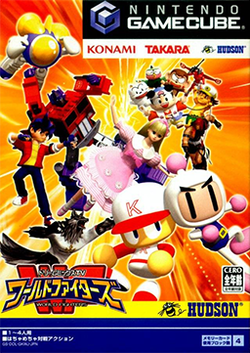
 DreamMix TV World Fighters on PS2
 Toki Tori on Switch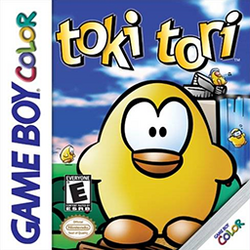










 Another SquareThought Site