

 Feb 2019
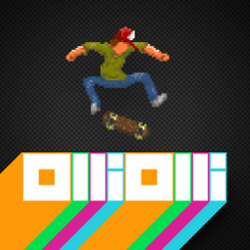

OlliOlli started life as a pocket-sized, Vita-first experiment in twitch precision and score-chasing; the Switch Stance collection bundles those lean, 2D skate runs into Nintendo's hybrid hardware. The game's DNA is brutally minimal: a two-dimensional course, a handful of controls, an obsession with landing windows and combos. If you like your games to punish a millisecond of inattention but reward the muscle memory that follows, this package is a tidy delivery. This review looks less at whether the game is 'fun' in a vague way and more at the technical plumbing: input fidelity, mechanic granularity, level gating, and the porting considerations that matter when moving a timing-led design from Vita to Switch.
At its core OlliOlli is a timing engine. Levels are side-scrolling sequences populated by ramps, rails and gaps; the player's interaction set is intentionally small - originally described as using only a face button (X on Vita), shoulder buttons, and the left analog stick - and that design philosophy survives in Switch Stance. A tight control vocabulary makes the game readable: ollies, grinds, flips and manuals are chained into combos, and the scoring model encourages riskier setups that end in clean landings. The 'perfect landing' mechanic is the single most important technical pillar. Rather than a binary landed/fail state, the game grades landings, and only the 'sweet spot' yields full combo continuation and maximum score. Everything else yields a fractional return and, crucially, breaks combo flow. That fractional model is elegant because it quantizes player precision into a predictable reward curve; it also forces players to internalize not only sequences but precise timing windows. Level progression is gated by achievements: each stage contains five specific challenges that, when completed, unlock a harder stage. That design doubles as a difficulty curve and a content-sorting mechanism: instead of scaling difficulty through parameters, the game scaffolds player skill by boxing levels behind mastery checks. There are no checkpoints inside runs; falling at any point sends you back to the level start. From a systems perspective, this absence of mid-run checkpoints shifts the game's feedback loop toward memorization and risk budgeting. The designers intentionally remove tolerance for recovery, so the economy of a run is: build combo → maintain perfect landings → execute final trick. Fail anywhere and repeat. This is a deliberate trade-off: the lack of checkpoints sharpens focus on level layout analysis, but it also multiplies repetition cost for longer stages. Mechanically, the unlockable 'RAD' mode and the perfect landing window interaction were conceived after the team pivoted away from touch-based inputs to physical controls. That decision matters technically. Touch interfaces would have blurred the input latency and tactile feedback needed for consistent timing; physical buttons allow deterministic input events with clear press and release boundaries. For the Switch, that mapping is critical: Joy-Con sticks and face buttons must preserve the original's low-latency feel. Porting a game that depends on millisecond-perfect inputs means the emulator layer, controller polling rate, and any added input buffering have to be tuned carefully to avoid softening those windows. Scoring encourages a combinatorial approach: individual tricks are low-value unless stitched into combos via manuals and grinds. The combo multiplier is implemented as a running state that resets on poor landings or falls, which means the engine must compute stateful multipliers while preserving consistent hit detection for rails and ramps. The game's physics are not trying to be a full skate sim; instead, they provide deterministic, replayable interactions that focus on timing rather than emergent ragdoll. That reduces the number of variables players must model but increases the importance of reliable collision boxes and predictable animation frames. One final note on progression systems: the original release was delayed due to issues with the 'Daily Grind' system, an indication that online-linked daily challenge infrastructures can be deceptively brittle. Synchronization, leaderboards and daily seed generation add an entirely new layer of QA for a game whose core loop is so timing sensitive.
Graphically OlliOlli is unapologetically 2D: pixel art and vector-clean levels prioritise readability over flourish. The technical design goal is immediate level legibility at a glance - ramps, rails and hazards must be distinguishable at high speed. That places pressure on contrast ratios, sprite edge clarity and animation frame timing. On handheld hardware like the Switch, that clarity scales well because the art style doesn't rely on high resolution textures; instead, it benefits from consistent frame spacing and crisp sprite scaling. From a porting standpoint, the main graphical challenges are anti-aliasing choices on different outputs (handheld versus docked) and ensuring the UI and timing-critical visual cues remain pixel-perfect. Any dropped frames or inconsistent delta timing would directly impact perceived input windows, so stable framerate is more than cosmetic here: it's a gameplay requirement. Because the original design favored tight input windows, the animation frames that telegraph trick states (pre-ollie, in-air pose, landing wind-up) are part of the telegraphing system. Porting must preserve frame counts and timing of those animations; even minor frame-skipping or interpolation can shift perceived windows for a perfect landing. Texture fidelity and shader complexity are largely irrelevant to the game's success - the technical emphasis should be on preserving deterministic update loops and consistent rendering times across docked and handheld modes.
OlliOlli: Switch Stance is a textbook example of a timing-first design that benefits from minimalism. Technically it's a study in constraint: small control sets, deterministic landing windows, and level-locked progression combine to create a game where the smallest input jitter is meaningful. As a port, the most important metric is fidelity to that original timing model. Curve Digital's Switch release bundles the series' two lean run-and-score games into one cartridge or download, and the net result is the same razor-sharp loop adapted to Joy-Con ergonomics. If you're the kind of player who loves tuning muscle memory and squeezing points out of a small set of mechanical levers, OlliOlli rewards the investment. If you prefer broad forgiveness or lengthy, persistent exploratory sessions, the lack of checkpoints and the repetitive re-run structure can feel cruel. From a technical perspective, though, that's the point: the design trades persistence for precision. For anyone curious about how much a good game depends on preserving input fidelity through ports, OlliOlli is an instructive case - and on Switch it still feels like a timing puzzle wrapped in skate shoes.
 Nintendo Switch
 MLB The Show 22 on Switch
 Test Drive Unlimited Solar Crown on Switch
 Accolade Sports Collection on Xbox Series X/S
 Deca Sports DS on DS
 Alan Hansen's Sports Challenge on PS2
 Olympic Games Tokyo 2020 - The Official Video Game on Switch










 Another SquareThought Site