

 Oct 2022


No Man's Sky on the Nintendo Switch is a remarkable feat of engineering: a procedurally generated cosmos-built around deterministic 64-bit seeds and complex RNG-driven pipelines-shoehorned into handheld silicon and shipped with years of post‑launch refinements. When Hello Games first launched the title on PS4/PC it was a polarizing blend of aspiration and technical roughness; on Switch, the story is mostly about tradeoffs and optimization. This review looks less at whether you should explore yet another purple planet and more at how Hello Games translated massive procedural systems, rendering pipelines, and multiplayer architecture to a lower‑power platform, and what compromises were required to make the dream run on a Nintendo handheld.
Mechanically, No Man's Sky remains exactly the same beast that Hello Games described during development: you are a Traveller with an exosuit, a multitool and a starship, and the game scaffolds four pillars-exploration, survival, combat and trading-across a deterministic, procedurally generated universe. The technical heart of that universe is a 64‑bit seed value that drives deterministic algorithms to synthesize planets, flora, fauna, star systems and NPC encounters. That one seed strategy is simple in concept but fiendish in execution: it means the client can re‑compute content on the fly from compact inputs rather than streaming large world datasets, which is critical for a platform with limited storage and RAM like the Switch. On Switch the gameplay systems themselves are intact: scanning fauna to earn units, managing exosuit inventory slots, crafting via blueprints, refueling suit and ship systems and flying between procedurally generated star systems. The game still uses an item/slot architecture across multiple inventories (exosuit, ship, freighter, exocraft, base storages) that forces resource management decisions-an important design that both reduces brute force resource hoarding and aligns well with constrained hardware budgets. Since the Switch port includes all updates through the "Endurance" update, you get base building, freighters, exocraft, living ships and a large swath of the combat and quality‑of‑life improvements that Hello Games released over years. However, there is a significant multiplayer caveat: the Switch launch build arrived without multiplayer/cross‑platform features enabled. Technically this stems from the networking model and matchmaking infrastructure used for cross‑platform play introduced in 2020; it appears Hello Games held back the extensive netcode plumbing on Switch to focus first on a stable single‑player experience. From a systems design perspective the Switch port is interesting because Hello Games had to adapt procedural content pipelines and human‑authored asset sets to a constrained L2/L3 cache and slower GPU. The procedural generation pipeline still relies on parameterized equations and seeded randomness, but the asset streaming logic, LOD selection, and culling rules on Switch are clearly more aggressive than on PC/PS5. That means you get fewer simultaneous unique entities in view, coarser LOD transitions and generally smaller bucket sizes of active world objects. Those are deliberate engineering choices to keep CPU/GPU budgets sane and prevent I/O spikes during system transitions (planet fallouts, base entry, docking). The result: gameplay loops (scan → mine → refuel → trade) are preserved while the visual density can be lower. Performance-wise the Switch version shows sensible technical tradeoffs. Expect dynamic resolution scaling, simplified shading models, reduced particle budgets, and tuned AI tick rates. Frame pacing is prioritized over raw resolution; the engine favors consistent simulation steps to ensure systems like inventory recovery after death, Sentinel AI and procedural spawn determinants behave predictably. I experienced occasional hitches when entering complex base constructions or approaching generated space stations-these are symptoms of CPU‑side generation and texture decompression catching up. That said, the net effect is a playable, handheld‑friendly rendition of No Man's Sky that retains the game's loops and expansion systems, even if the always‑online Atlas interactions and cross‑play had to wait. Hello Games' post‑release update approach is a major part of the technical story: they shipped a product and then iteratively expanded the procedural asset library, engine features and network code via free patches (Foundation, Path Finder, Atlas Rises, Next, Beyond, Origins, etc.). On Switch those accumulated updates mean you're not getting a trimmed down 2016 vision-you are getting years of pipeline evolution, albeit adapted to the Switch hardware envelope. If you value systems depth, fleet management, base networking (local only on launch Switch) and a procedurally evolving tech tree, that continuity matters more than framerate glory.
No Man's Sky is, at its root, a procedural rendering problem, and the Switch port shows the practical engineering calculus of porting a high‑end procedural renderer to a mobile‑class GPU. The original PC/PS5 builds benefit from high texture budgets, advanced volumetric cloud systems, HDR pipelines, and post‑processing like DLSS on NVIDIA hardware or Vulkan API on Windows. On Switch those features are adapted rather than replicated. Expect lower texture resolutions, simplified PBR materials, and fewer shader passes. Volumetrics and large‑scale water reflections are approximated with cheaper screen‑space and fakery methods. Creature complexity is constrained by a reduced mesh/skin budget and fewer simultaneous animation bones. What makes the Switch version impressive is how Hello Games preserved the aesthetic: the procedural rules still combine mathematical shape generators with human‑authored art assets, producing alien silhouettes and terrain profiles that read as varied even when the GPU is doing less per frame. The audio system-procedurally generated ambient soundscapes built from Paul Weir and 65daysofstatic samples-remains intact and helps sell the environment regardless of pixel density. There are obvious compromises: aliasing and softer textures on the handheld screen, less detailed shadows, and occasional pop as lower LODs swap in. But the engine's deterministic content generation makes those tradeoffs palatable because the gameplay content-biome rules, fauna behaviours, resource distribution-still feels consistent. From a user‑perceptible standpoint, the Switch version's visual fidelity trades spectacle for reachability: if you care about raw graphical fidelity, PS5/PC are still the places to be. If you care about bringing an enormous procedural world into a portable context while retaining gameplay systems and the atlas of updates, Switch delivers a smartly engineered slice of the infinite universe.
If you're picking up No Man's Sky on Switch you're buying into a technical saga as much as a game. Hello Games has taken a complex, deterministic procedural engine and pared it down intelligently to match Switch hardware constraints while shipping years of feature updates. The price is predictable: reduced shader complexity, lower texture budgets, occasional LOD pop and no cross‑platform multiplayer at launch. The reward is a complete, evolving sandbox-base building, exocraft, fleets, improved planetary generation and the Atlas narrative-tuned to run on handheld silicon. For players who want the full philosophical picnic of exploration in a pocketable machine, the Switch version is a triumph of optimization and systems engineering. For the pixel purists chasing ultra‑high fidelity, the PC/console versions will remain technically superior. In practical terms, Hello Games' ongoing post‑release development and the inclusion of major updates through Endurance mean that Switch players get a mature, technically coherent experience. That earns the Switch port a solid 8.5 out of 10: a bold, technically savvy adaptation that respects both the procedural ambitions of the original and the real limits of Nintendo's hardware.
 Pac-Man World Re-Pac on PS5
 Iron Man 2 on PS3
 Mega Man Anniversary Collection on PS2
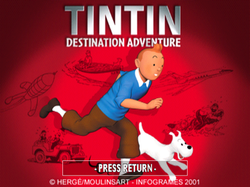
 Tintin: Destination Adventure on PlayStation
 Disney's Chicken Little: Ace in Action on PS2
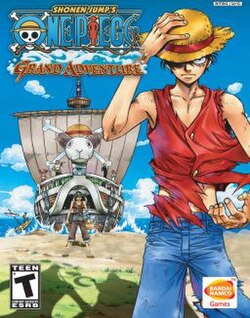
 One Piece Grand Adventure on PS2
 Taiko no Tatsujin: Dokodon! Mystery Adventure on Switch
 Joe Danger on PS3










 Another SquareThought Site