

 Jan 2025
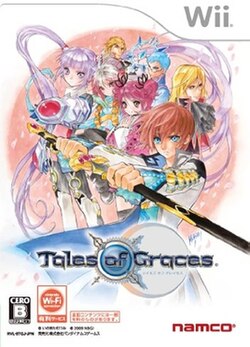

Tales of Graces f Remastered arrives on Switch bearing the smells of nostalgia, the baggage of a decade of JRPG clichés, and a heart determined to keep beating for its characters. This is not a review that wants to re-litigate every battle mechanic tweak or the pros and cons of porting PS3 visuals to a modern handheld; instead, it's a guided tour of why the cast of Ephinea - and the emotional scaffolding holding them together - remain the real reason you'd press "Start." If you care about story arcs more than fashion DLC (and let's be honest, you're going to care about both), this remaster hands you QoL upgrades, a full bundle of DLC, and new scenes that were previously Japan-only, wrapped in a package that lets these characters breathe and, in some cases, finally get the closure they deserve. Tales of Graces f was always a game split into two tonal halves: a childhood prologue that asks you to invest emotionally, and a seven-year-later campaign that expects you to have. The Remastered edition keeps the theme Hideo Baba wanted - protecting what matters, the pressures of growing up, and moral choices that feel like being stuck between a knight's oath and a family obligation - and adds a sheen of accessibility so you can focus on the people rather than the padding. For Switch players who skipped Graces the first time around, this is the version that says: "Yes, you can have the whole experience, and yes, Sophie gets some new lines."
A word on the engines of play before we dig into hearts: Graces' combat is the Style Shift Linear Motion Battle System, which is a fancy way of saying "action combat with strategic layers." Each character juggles Chain Capacity (CC), Assault Artes (preset combos), and Burst Artes (player-mapped skills), and there's an Eleth Gauge that temporarily gives a character near-divine stamina. The PS3-era f additions - Accelerate Mode and after-story Lineage and Legacies - survive the remaster, and the Switch build includes all downloadable costumes and challenge battles. That's convenient, because once you start caring about the characters you'll inevitably want to see them in every ridiculous outfit available. But here's the part that matters: the gameplay is designed to support character moments. A duel that follows a personal reveal doesn't just test your inputs - it reframes what the character has learned. Asbel's combat identity evolves alongside his arc. Early Asbel is a young man trying to be stronger to atone for a childhood failure; his moves feel earnest, sometimes overreaching, like a guy who leans too hard into leadership. You can practically feel his Style Shift being a narrative lever: he learns that being a leader isn't just about raw strength, it's about protecting those who aren't you. That is reflected in Titles - systems that unlock skills and passive traits - which reward story progression and choices. Grind for Titles and you end up mechanically echoing emotional growth. Sophie's presence is the game's beating, particulate heart. She opens as an amnesiac enigma, later revealed to be Protos Heis, a distributed humanoid composed of tiny particles. This sci-fi twist could read as cold science-exposition, except the game keeps Sophie's emotional core intact: she's terrified of immortality and the loneliness that comes with outliving loved ones. In combat, Sophie's powers literally split and rejoin, healing and protecting others in ways that mirror her willingness to sacrifice. The moment she fractures to save Asbel, Cheria, and Hubert remains one of the game's most provocative uses of mechanics-as-metaphor: her dissolution and later reintegration mirror themes of identity and belonging. Remastered scenes that clarify her inner life are welcome; Sophie isn't just a plot device, she's the emotional compass that the party orbits. Hubert's arc is the study in resentment and reconciliation. Adopted into the Oswell family to secure Asbel's future, he returns seven years later carrying a bruised sense of betrayal. His combat style starts clinical and disciplined - understandable for a military lieutenant - but as the story peels back, his choices gain warmth. Battles where Hubert must face his anger are punctuated by gameplay shifts that reward players for tempering aggression with defense. In short: Hubert's mechanical journey from resentment to duty mirrors his human pivot from blunted hatred to reluctant empathy. Cheria is often dismissed as the archetypal love interest, yet she is essential in grounding Asbel. Her early sickness and subsequent healing via Sophie's powers create a power-dynamic that's about dependency and mutual protection, not just cuteness. When Asbel proposes and the game moves toward their after-story marriage, it's less fanservice and more the culmination of two arcs learning to face adulthood and family. In combat, Cheria's healing and supportive roles lean into that: she cements the team's cohesion, reminding the player why protecting your party is narratively prioritized. Richard is the game's tragic fulcrum. Introduced as a guarded prince, he is later revealed to be host to Lambda, an advanced lifeform from the planet Fodra who harbors a legitimate grudge against humanity. Richard's descent into madness and his subsequent actions - absorbing valkines' eleth and attempting planetary-scale retribution - are handled with surprising nuance. Lambda's backstory reframes Richard's villainy from plot-armor-of-evil to a grief-fueled puppet scenario: Richard is the man Lambda saved and then used. Where many JRPG antagonists are cardboard, Richard is the messy result of trauma plus godlike influence. The fight with him on the Lastalia becomes less about defeating "the prince" and more about exorcising a moral rupture: can empathy redeem something that has already done monstrous things? Lambda himself is a highlight. Born of Fodra and mistreated by humans, his hatred is credible. Instead of being a mustache-twirling villain, Lambda acts like an exhausted moral argument given form. The game's resolution - Asbel absorbs Lambda and convinces him to let humanity live - is a bold, arguably risky ending: it asks the player to accept that a human (and the friends surrounding him) can bridge the gap between killer logic and feeling. The Remastered edition includes additional scenes that better convey Lambda's suffering, turning an otherwise abstract cosmic villain into a sympathetic, if conflicted, being. Lineage and Legacies, the after-story content, is not mere epilogue fan service. It forces the party back together to root out an ecological/eleth issue tied to Fodra's reactivation. It's where the game ties its character work to planetary consequences: characters who learned to protect their village now must protect entire ecosystems. Sophie's later choice to merge with the Little Queen and watch over Fodra is bittersweet, and mechanically it's paired with the party's quest-style battles that emphasize coordination over solo heroics - a final, coherent message about empathy and stewardship. All of this is woven into a combat system that is rewarding, if sometimes fiddly. The alchemy and collectibles can feel cumbersome - the remaster trims some menus and adds QoL changes, but if you hate backtracking and inventory micro-management, there will still be moments where you sigh and think of another game. Still, when a boss fight resolves a personal arc, the payoff lands. That's intentional; this is a game where systems exist to make you feel the story, not just watch it from the sidelines.
The Remastered visuals on Switch are a pragmatic update rather than a radical overhaul. The original PS3 Graces f got praise for graphical improvements over the Wii release, and the remaster carries that DNA forward with better textures, cleaned-up character models, and Unity under the hood. Lighting is improved in many areas and the character portraits in skits retain their anime charm while avoiding the "plastic" look some early PS3 JRPGs suffered from. Animations are smoother than the Wii original but still occasionally hit the uncanny valley during lip-syncing; the Remaster mitigates this by inserting additional skits and scenes that let the characters emote in non-battle contexts, which is where the game truly shines visually. The art direction - Mutsumi Inomata's character designs - remains the anchor. Each character silhouette is distinct, and the DLC costumes are ludicrously fun, which matters when the game asks you to care about the same faces for 40+ hours. Towns and dungeons are serviceable and occasionally gorgeous, but the world still prefers linear, story-directed pathways over wide-open exploration. That fuels some criticism: the environments can feel "designed for scenes" instead of discovery. But the remaster's polish on particle effects, Eleth Gauge flashes, and final-boss spectacle give mechanical moments a cinematic weight that complements the character drama. If you came for the faces and the flare-ups of magic, the Switch version delivers; if you wanted a sprawling, Breath-of-the-Wild-sized map, this isn't the patch for you.
Tales of Graces f Remastered on Switch is first and foremost a character study wrapped in an action-JRPG. It's a game that asks you to care: about a boy who runs away to become a knight, about an amnesiac who doesn't want to outlive her friends, about a brother angry at being traded for political stability, and about a planet with reasons to hate humanity. The combat supports those stories rather than overshadowing them, and the remaster's QoL improvements and restored scenes make it the definitive way to experience Graces on a modern handheld. It isn't flawless - the pacing, backtracking, and occasional visual hiccups keep it from being a true classic - but the emotional through-lines are compelling. If you play for people over polygons, pick this up. If you play for perfectly open worlds, look elsewhere. For those willing to invest in its themes of protection, sacrifice, and the weird alchemy between people and planets, Graces on Switch is worth the trip: it will occasionally make you laugh at the costumes, occasionally make you roll your eyes at JRPG tropes, and fairly often make you feel something honest. That is exactly the kind of game a remaster should preserve and, ideally, improve.
 Tales of Symphonia Remastered on Switch
 Cris Tales on Switch
 Combat Elite: WWII Paratroopers on PS2
 Onimusha: Dawn of Dreams on PS2
 Action Man: Operation Extreme on PlayStation
 Project Sakura Wars on PS4










 Another SquareThought Site