

 Jul 2018
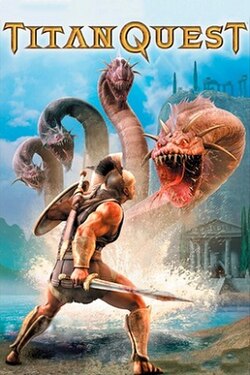

Titan Quest arrived in 2006 as a love letter to ARPG fundamentals: tile-based navigation, hybrid skill trees and lobbed piles of randomized loot. The Switch release is not a remaster so much as a series of surgical grafts: the original Iron Lore engine, iteratively patched and modernized across Anniversary/Legendary releases, repackaged by Black Forest Games for a handheld/TV hybrid. If you care about systemic design and engineering decisions rather than just "press X to demolish skeletons," the Switch port is an interesting case study in porting a mouse-first PC action-RPG to a console environment with limited CPU/GPU headroom and a controller interface that screams for UX attention.
Under the hood Titan Quest is classical ARPG architecture wearing archaeological robes. The core systems - XP-based leveling, attribute point allocation, two-Mastery skill trees, and database-driven randomized loot - are intact and, crucially, deterministic in their constraints. Masteries are the game's primary mechanical canvas: eight themed trees (Defence, Warfare, Hunting, Rogue, Earth, Storm, Nature, Spirit) that let players combine two at once to form hybrid classes. This is effectively a dual-skill-tree system where cross-tree synergies produce emergent builds; from a systems perspective it trades the complexity of dozens of rigid classes for combinatorial depth. The game exposes skill cooldowns and energy budgets, and it forces you to think about ability cadence, sustain (energy potions/recovery), and tool timing - all elements that port well to controller mapping provided the input layer is handled cleanly. The engine's content pipeline is modular: enemies, loot and environments are tied to databases that enable the "over 100,000" item combinations the devs bragged about. Loot generation was context-aware; weapon and armor drops tend to align with the types of creatures that drop them. The spawn system uses player-level scaling and environment tags so encounters scale smoothly across zones; this avoids the jarring progression cliffs that plague some older ARPGs. Pathfinding was outsourced to PathEngine - a mature middleware solution - so enemy navigation and crowd movement feel coherent even on the Switch, as long as CPU load is managed. Where the Switch port earns and loses points is the input and UI translation. Titan Quest was designed for mouse-directed point-and-click movement and keyboard hotkeys for abilities. Console controllers force a reduction of precision: the devs mapped movement to the left stick, camera zoom is fixed, and context-sensitive interaction is handled through a radial or hotbar interface. These are the right moves in principle, but the original UI's density and inventory micromanagement remain problematic on a 6-button controller and a 720p/1080p Switch screen. Inventory navigation and item comparison are slower on Switch than on a mouse-and-keyboard setup, which is a structural issue rather than a bug. The port does add local co-op and supports up to two players on a single Switch - a smart use of the platform's strengths - but networked online multiplayer still suffers from the historical lack of a robust, secure infrastructure for Titan Quest multiplayer; Bruno from the original team even lamented that secure multiplayer was underfunded in the original release. Another important technical consideration is the cooldown-and-particle budget. Titan Quest uses a lot of particle-based VFX for mastery skills; Storm and Earth masteries, for instance, spawn many temporary effects. On the Switch, the renderer has to balance draw calls, overdraw from particles (especially in cramped combat), and shader complexity. The eredition switch manages by dialing down some effect densities and LODs, but players sensitive to framerate dips will notice the occasional micro-stutter in crowded encounters. Save/resume and rebirth fountain logic are stable and well-implemented: death penalties are mechanical and predictable, which is what you want when juggling multiple attributes, respec costs and a hard-earned gearset.
Titan Quest's art direction is the project that age forgot to stop complimenting. The models and textures are from an era when artistic craft compensated for limited texture memory: carefully designed helmets inspired by Bronze Age artifacts, region-appropriate flora and architecture, and creatures that read as archetypes pulled from myth. Black Forest's console build preserves geometry and textures but reworks LOD transitions and shadows to fit the Switch's thermal and power envelope. The proprietary Iron Lore engine uses a hybrid tile-plus-heightmap world editor, which produced believable terrain cross-sections and cliffs. That editor also allowed authors to tune tile stitching so bridges, cliffs and path boundaries read naturally - a non-trivial technical achievement that still shows in how levels flow. Particle systems and lighting are where the hardware budget shows. The Switch port reduces particle counts and uses simpler lighting approximations compared to a modern PC Anniversary build, which is pragmatic but visible if you know what to look for: less bloom, softer shadow cascades, and less dense volumetric smoke. These are conscious trade-offs to hold frame pacing and battery life within acceptable limits. UI scaling is generally serviceable; font rendering is slightly softer on docked vs handheld mode, but the bigger issue is the inventory grid itself. The original inventory was designed for mouse-quick pickups and stack management; it feels fiddly on Joy-Con. Graphically the game holds up because of strong shader-friendly textures and well-composed environmental palettes, but it's not a blind-port miracle - it's a careful set of compromises.
For players who fell in love with Titan Quest on PC or who seek an old-school ARPG that emphasizes hybrid skillcraft and careful loot optimization, the Switch version is a competent and often charming way to take that systems game on the go. The port keeps the core simulation intact - the database-driven loot, PathEngine navigation, mastery synergies and editor-made levels are present and functional. Black Forest Games made the pragmatic choices you'd expect for a CPU/GPU-constrained platform: reduced particle density, LOD tuning, controller-friendly hotbars, and local co-op support. If you are a technical perfectionist, two things will nag at you. First, the console UI/UX friction: inventory micromanagement and skill-tuning are slower on controllers, making repeated loot optimization feel like a chore. Second, performance is good most of the time but not ironclad; dense fights with many particle effects can induce frame dips that remind you this is a fifteen-year-old codebase running on modern but modest hardware. Overall score: 7/10. Titan Quest on Switch is not a reinvention; it's a responsible engineering port that preserves the game's systemic strengths while acknowledging platform constraints. If you prioritize deep mastery synergies, a rich loot database, and local couch co-op, you'll find a lot to like. If you want ultra-smooth modernized presentation, instant inventory flow, and flawless online infrastructure, you'll be reminded of the game's lineage: a brilliant, well-researched ARPG that occasionally shows its age. Either way, there's value here for the methodical loot fiend and the curious systems-player - and that, in the world of action-RPGs, is still worth a day or two of tablet-tossing excitement.
 Quest of Dungeons on PS4
 Dragon Quest X Offline on Switch
 Elliot Quest on PS4
 Combat Elite: WWII Paratroopers on PS2
 Onimusha: Dawn of Dreams on PS2
 Action Man: Operation Extreme on PlayStation
 Project Sakura Wars on PS4










 Another SquareThought Site