

 Jul 2024


Tousouchuu: Great Mission is the videogame cousin of that gleefully cruel Japanese TV format Run for Money - the one where adults play an enormous, televised game of tag while surrounded by cameramen and an army of Hunters. The property has mutated into an entire multimedia ecosystem (variety show, anime titled Tousouchuu: Great Mission, and now this Switch game), and the result is a surprisingly thoughtful attempt to graft character drama onto the adrenaline-fueled chase mechanics the show made famous. If you approach this expecting only sweaty sprints and cheap thrills, the game will still make you sprint in real life from your responsibilities. If you look a little closer, you'll find it cares about the people getting chased: who they are, why they run, and what they discover about themselves when there's nowhere left to hide. That's unusual for a license-driven action game, and it's the main reason Tousouchuu: Great Mission is worth talking about beyond the adrenaline.
Tousouchuu's gameplay is built around short, intense mission pods that feel ripped straight from a television schedule: three-minute panic bursts, ten-minute puzzle hunts, and a handful of longer 'specials' with narrative weight. The core loop is simple - you are a Fugitivist (the game's earnest term), placed into a semi-open urban playground, given a shrinking list of objectives and a steadily increasing number of Hunters who treat you like a living heat-seeking missile. What keeps things interesting is how each playable character's arc is matched to a mechanical twist. Take the Stoic Strategist: their arc is about control and the quiet terror of being seen. Mechanically, they get a gadget suite that rewards planning - silent takedowns, temporary camouflage, and an area-marker that baits Hunters into predictable patterns. You play them like chess; when their story beats land (a cry for help, a private admission about why they left home), the game forces you to choose between pursuing the safe extraction route or risking everything to save a co-actor NPC. That choice turns the chase into a moral fork: preserve your own streak or act on someone else's narrative need. The Wildcard, by contrast, has a redemption arc that starts obnoxious and ends painfully sincere. Their toolkit is noisy and chaotic - flash-bangs, improvised distractions, the kind of kit that breaks paths and makes new ones. Playing the Wildcard is a riot, and storywise they push you to consider whether bravado is a coat you can take off. The developers cleverly encode interpersonal drama into co-op and single-player modes. When you team up, the personalities clash in ways that matter mechanically: trust-based stealth moves require synchronized inputs, while betrayals (deliberate or accidental) temporarily alter Hunter behavior toward the remaining Fugitives. The game stages a handful of narrative sequences where one character's weakness becomes another's growth opportunity: the Reluctant Runner (anxiety-focused arc) learns to trust the Stoic's timing; the Stoic learns to let the Wildcard provoke a Hunter away for a clean escape; the Hunter - yes, playable in certain modes - has a short arc that reveals why they signed up to hunt people for television, and it's honestly the most unsettling thing here. Stealth is not just 'hide behind crates' stealth; Tousouchuu layers social stealth into the mix. During daytime missions you can blend into crowds, use bus routes, or hide in panoramic tourist photo lines. The AI treats crowds as living cover: Hunters hesitate to shoot in a crowd (network censorship reasons, apparently), forcing players to become actors in a city play. This is where the game's story ambitions pay off: characters who were previously defined as 'loners' are suddenly forced into the social mechanics, and the accompanying voice lines and inner monologues reveal small, humanizing beats about their pasts. Missions occasionally present moral dilemmas that are harsher than your typical pick-a-dialogue moment. Will you sacrifice airtime to save an NPC who once betrayed you? Will you choose to reveal a painful truth on live broadcast in order to break the rules and expose the Game Master's crueler machinations? Those decisions alter the end-of-episode epilogues, which double as character closers: short, bittersweet vignettes that tell you whether a particular person healed, hardened, or simply kept running. The difficulty curve is realistic: Hunters learn. If you spam the same trick, the next round's Hunters will adapt. That creates a nice synergy with the arcs: the Stoic's 'control' learning to improvise, the Wildcard's 'chaos' learning restraint. For a licensed title, Tousouchuu actually makes your choices matter beyond a high-score table, and that gives the chase both heart and teeth.
Graphically, Tousouchuu wears its anime tie-in with pride. The art direction opts for a cel-shaded, slightly saturated palette that mirrors the Tousouchuu anime's bright, pushy colors while keeping textures soft enough to let character expressions read from awkward camera angles. The character models are expressive: you can see the Wildcard smirk mid-sprint, the Stoic's jaw tighten, the Reluctant Runner's shoulders collapse at the end of an episode. Cutscenes feel like short TV inserts rather than passive cutaways - quick, oblique angles, grain overlays, and on-screen score graphics designed to mimic the original broadcast. The urban playgrounds look lived-in and cinematic; the camera really earns its paycheck during chases, swooping, wobbling and occasionally flipping into a first-person dash to sell the panic. On Switch handheld, there's occasional texture pop-in and a few frame dips during the largest 'special' missions, but nothing that breaks the momentum. The UI makes a cheeky nod to broadcast design with ticker-like mission updates and a 'sponsor' slot that plays for mock-ads during loading screens. If you were hoping for photorealism, this isn't your game - but if you wanted a showy, presentational style that helps sell the concept that you're a character on a reality TV stage, Tousouchuu nails it.
Tousouchuu: Great Mission surprises by being more than a chase simulator with licensed branding slapped on top. It uses the source material's obvious strengths - frantic, camera-friendly chases and the public spectacle - as scaffolding for surprisingly personal stories. The game's best moments come from small emotional beats: a phone call where a character apologizes to someone they hurt, a rooftop confession right before the alarm bells sound, a final cutscene that subverts the 'winner takes all' TV trope into a melancholy tableau. It's not flawless. Some character arcs resolve a touch too neatly, and the reliance on archetypes sometimes flirts with cliché. The AI can feel merciless if you've relied on one trick for too long, and that will make some missions feel like gatekeeping. Still, the mixture of social stealth, character-driven choices, and presentational flair lifts Tousouchuu above many tie-in titles. If you like your action with a side of identity crisis, and you want a Switch game that feels like a guilty-pleasure TV night with consequences, this is a very good sprint. Score: 7.5/10 - entertaining, occasionally profound, and dangerously replayable when you want to see how different characters' endings change when you refuse to play it safe.
 Tousouchuu: Hunters vs. Runners! Can You Win as Either? on Switch
 Re:Zero -Starting Life in Another World-: The Prophecy of the Throne on PS4
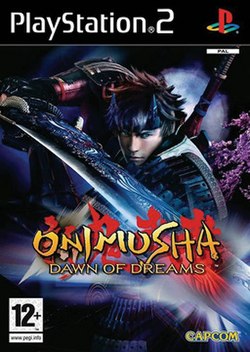
 Onimusha: Dawn of Dreams on PS2
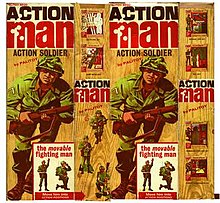
 Action Man: Operation Extreme on PlayStation
 Door Kickers: Action Squad on Switch
 Vividred Operation: Hyper Intimate Power on PS3










 Another SquareThought Site