

 Nov 2020


Welcome to Tropico 6 on Switch, the game that hands you sandy beaches, a brittle economy, and a population of simulated citizens who will absolutely judge your leadership choices - and then start a revolt if you get too cocky. If you like your strategy with a side of satire, this is the island builder that lets you be El Presidente across four eras (Colonial, World Wars, Cold War, Modern) and - new for the series - across an archipelago of tiny islands. The Switch version squeezes a sprawling political sandbox into a handheld, which is impressive until the hardware reminds you it has limits. This review focuses on the real meat: what kinds of challenges Tropico 6 throws at you on Switch and the actual player skills required to survive (and prosper) while wearing sunglasses and a ridiculous hat.
Tropico 6 is less "build-a-pretty-city" and more "balance-a-ticking-time-bomb-of-society-management." The core loop rewards planning and adaptability: you lay down infrastructure, lure in trade, placate political factions, and keep your citizens fed, healthy, and loyal enough not to storm the palace with torches. The archipelago setup changes the challenge calculus significantly. Instead of one island, you manage multiple small territories linked gradually by bridges (available from the World Wars era onward). That forces you to think like an island CEO: which islands will be industrial hubs, which will be tourist paradises, and which will be resource-mining nightmares you regret later? Bridge placement becomes tactical - you either create efficient supply chains or elongated pain trains of goods waiting to swim to market. One of Tropico 6's most significant challenge elements is its "fully simulated" Tropicans. Citizens have lives and needs; your policies ripple through their productivity and mood. This isn't a numbers-only spreadsheet: if you ignore housing or overwork a class of workers, they stop punching timecards and start rioting. That elevates the game from cold macro-management into human-centred juggling. You need to read feedback, prioritize problems, and triage quickly when strikes and unrest flare. Economic complexity is another toothy challenge. Tropico 6 leans into trade routes, specialization, and multi-tier production chains. Export raw goods or build factories to refine them? Invest in tourism for cash flow but risk cultural decay? The game pushes you to make trade-offs that feel meaningful. You'll need budgeting discipline, an eye for supply-and-demand, and the patience to babysit industries through era transitions. Missions sometimes nudge you into risky choices - PC Gamer praised how missions force you to take actions that "upset the delicate balance of economic growth" - and that means you must be willing to pivot fast. Political skills are equally tested. Factions - communists, capitalists, religious groups, military, and foreigners - all have agendas. Success is not just about making money; it's about handing out enough perks, hooks, and plausible deniability so everyone stays mostly content. Diplomatic skill matters: foreign powers and raids are part of the tapestry, even if not all threats scale into dramatic consequences. Being a good Tropico leader means mastering the art of plausible compromise - give the voters bread, give the generals a few guns, and keep the aristocrats distracted with statues. Micromanagement versus systems thinking is constantly at odds. Early on you will micromanage: place clinics, set wages, and fix power lines. Later, you're architecting logistic networks, establishing trade routes, and thinking five buildings deep about how to get bananas into a boat that turns into money. Good players graduate from hand-holding to scripting systems: segregating labor, using specialized islands for production, and automating exports. Multitasking and time management are crucial skills because crises rarely wait politely for you to finish a renovation. There's a mild learning curve: objectives can be oddly unclear at times, and the single-player mission structure is intentionally non-linear (only the first and final missions are strictly linear; the rest happen in unspecified time). That ambiguity is part of the game's charm if you like experiments, but it can be frustrating if you prefer clearly signposted goals. On Switch, controller support is functional but not perfect - plan for slightly slower navigation than on PC. Core gameplay remains satisfying for players who enjoy juggling long-term strategy with immediate firefighting.
The Switch port is a mixed bag visually. Tropico 6 looks great on higher-end platforms: detailed buildings, cheeky animations, and a soundtrack that sells the beach dictator fantasy. On the Switch, however, the visuals are noticeably downscaled. Several reviewers and players called out subpar graphics and occasional performance hiccups. Expect lower-resolution textures, choppier frame pacing, and sometimes awkward pop-in when your island empire gets ambitious. That said, the aesthetic design - the character models, the island layouts, and the little comedic touches - still carry through, and the UI is generally crisp enough for handheld play. If you're the sort of person who forgives a few rough edges for deep systems and portable convenience, the visual compromises won't ruin the experience. If you demand pristine presentation, this isn't the platform to admire Tropico's tropical sunsets on. Controller navigation has been improved from earlier console ports but still requires patience. Menus can feel clunky when you're trying to micro-manage multiple islands and queues of tasks. The interface is usable, and the music helps smooth over frustration, but be ready to invest time learning the shortcuts and menu rhythms to avoid accidental misclicks that lead to angry Tropicans and ruined trade deals.
Tropico 6 on Switch is a strategic sandbox that rewards patience, attention to detail, and political cunning. It challenges you to balance competing needs - economic, social, diplomatic - across a multi-island nation with simulated citizens who will let you know exactly when you've messed up. The skills you'll sharpen are real: strategic planning, economic reasoning, multitasking, crisis management, and political compromise. The Switch port trims the technical coat to fit the hardware, so visuals and performance aren't as sharp as on PC or console, but the underlying systems and the addictive 'one-more-minute' gameplay remain intact. For players who relish micromanagement evolving into elegant systems, Tropico 6 is a portable classroom in how to run (and occasionally ruin) a country with style. For those who want a flawless handheld spectacle, you might want to wait for a more powerful platform. Either way, bring stamina, a sense of humor, and a willingness to console-bribe your factions - El Presidente's job never gets easy, but it is gloriously entertaining.
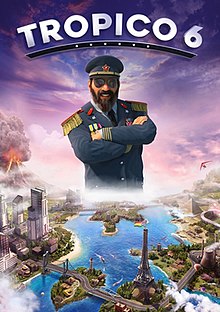 Tropico 6 on PS5
 Park Beyond on PS5
 PlayStation Home on PS3
 Gaelic Football '25 on Xbox Series X/S
 Together! The Battle Cats on Switch
 Theme Park World on PlayStation










 Another SquareThought Site