

 Sep 2018
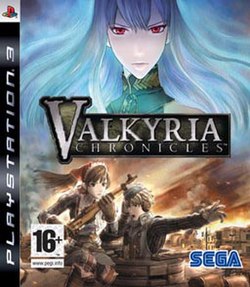

There are games that shout for your attention and games that unfold like a well-worn history text with illustrations repaired by the hand of an enthusiastic schoolboy. Valkyria Chronicles is emphatically of the latter sort: a tactical role‑playing experience that arrived on the PlayStation 3 in 2008, then later found new life in remastered form for modern platforms, including the Nintendo Switch. Its conceit is simple and bracing - a fictional Europa teetering on the brink of a war that smells faintly of the 1930s and early 1940s - but it dresses this tale in something far less ordinary than beige tanks and canned explosions. The game uses Sega's CANVAS engine to render its world like pencil-and-watercolour panels in motion, while Hitoshi Sakimoto supplies a score that swings between stately romance and the clanging percussion of the battlefield. If you pick up the Switch edition today you will be playing a game conceived when developers still debated whether 'next generation' meant 'faster polygons' or 'new ways of telling stories.' The remaster bundles previously released DLC and preserves the full BLiTZ battle system that made the original stand out: an elegant, oddball hybrid of tactical planning and direct player control. For veterans of square‑based war games and newcomers alike, Valkyria offers a tactical experience with a soul - and a fair amount of emotional collateral damage when you lose a soldier you rather liked.
At the heart of Valkyria Chronicles is BLiTZ (Battle of Live Tactical Zones), a hybrid system that reads like the notes of an experimental strategist and plays like a comfortable set of boots on a muddy parade ground. In Command Mode you view an overhead map and decide your moves; in Action Mode you zoom in and personally shepherd a single unit across terrain, spending AP (action points) as if each step might be your last. Target Mode freezes the action so you can line up a headshot or a desperate toss of a grenade. The result is a game of measured breath and sudden violence: the tension before you step out from soft cover is the game's quiet signature. Units fall into clear classes - Scouts, Shocktroopers, Lancers, Engineers, Snipers and the like - each with a defined role in the rock‑paper‑scissors economy of combat. Tanks, led from within by Welkin Gunther in the Edelweiss, are devastating in frontal assaults but slow; Lancers melt tanks with a single long‑range shot; infantry can outmanoeuvre anti‑tank guns in certain conditions. What keeps these systems from feeling mechanical is the Potentials mechanic: tiny personal quirks and stat modifiers that make Private A different from Private B, even if they wear the same uniform. This, coupled with permadeath anxieties in tougher missions and the limited pool of Command Points, forces you to rotate personnel and to care about the cast rather than single out a handful of favourites. Environment matters. Rooftops become sniper perches; walls crumble under tank fire and open new avenues; foliage grants soft cover that can mean the difference between discovery and stealthy advance. Control points feel important - capture them and you buy yourself breathing room, reinforcements and the tactical initiative. Orders issued by Welkin - artillery strikes, medic supervision, temporary buffs - add a strategic layer that reads like a board game's special card played at precisely the right moment. There are moments when the system shows its age. Enemy AI can be inconsistent; opponents sometimes act with the wisdom of chess pieces or the confusion of NPCs in the wrong script. Still, the game frequently produces 'nail‑gnawing' scenarios - as contemporary reviews called them - where one wrong step costs a favourite squad member. Missions reward money and experience used to upgrade materiel and class levels, so one mission's narrow victory feeds the next chapter's possibilities. For players who enjoy thinking two moves ahead and sweating them in real time, Valkyria remains a rare and satisfying hybrid.
The game's most arresting feature is its visual identity. The CANVAS engine gives the world the texture of a hand‑drawn war diary: textures that look like pencil shading, cel‑like outlines and watercolour washes that soften the brutality of the subject matter without diminishing it. It is a stylistic gamble that pays off; the battlefield reads as a living diorama, and the onomatopoeic effects and bold line work lend the experience the charm of a comic book about fallen empires. Development anecdotes reveal that the engine was a stubborn beast - demanding hardware in its early guise and requiring clever choices from the team to achieve the non‑photoreal look they wanted. On Switch the remaster preserves the aesthetic rather than trying to out‑photograph reality. If you play docked the game looks crisp and faithful to the original's art direction; handheld mode naturally compresses resolution, but the presentation is so deliberately stylised that the handheld compromises feel forgiveable. Character design draws on European interwar motifs and the World Masterpiece Theater sensibility, producing uniforms and faces that are distinct, memorable and often strangely humane. Do not pick this title expecting cutting‑edge shaders. Instead, regard it as an illustrated novel that moves, with each map composed like a postcard sent from a country at war. The visuals do the unusual thing of making you care about geography: turning a street into an ally, a ruined wall into a plan.
Valkyria Chronicles on Switch is a reissue of an idea both old and stubbornly original: marry tactical depth with direct control, dress it in a hand‑crafted art style and let human stories be the reason you risk your soldiers. The remaster package is generous - it collects the DLC and restores the game for modern audiences - and the core experience still stands alongside the best strategy RPGs of the last two decades. Hitoshi Sakimoto's score furnishes the proceedings with gravity and occasional tenderness, while the story of Gallia, Ragnite and the Edelweiss gives context to the battles so they feel consequential. This is not a perfect game. The enemy AI can be uneven, and modern players used to instant polish may find some pacing creaky. Even so, Valkyria's courage is to be different in a medium that often confuses spectacle for substance. If you favour tactical games with atmosphere, if you respect artful presentation and if you can tolerate a few old‑generation rough edges, this is a title that rewards patience and thought. It was a bold experiment in 2008 and it is a still‑worthy classic in 2018. Give Squad 7 a try: they will likely do the honourable thing and often ask you to do the same. Final score: 8.5/10.
 Re:Zero -Starting Life in Another World-: The Prophecy of the Throne on PS4
 Final Fantasy Tactics: The Ivalice Chronicles on Switch
 Utawarerumono: Itsuwari no Kamen on PS3
 Combat Elite: WWII Paratroopers on PS2
 Rainbow Moon on PS4










 Another SquareThought Site